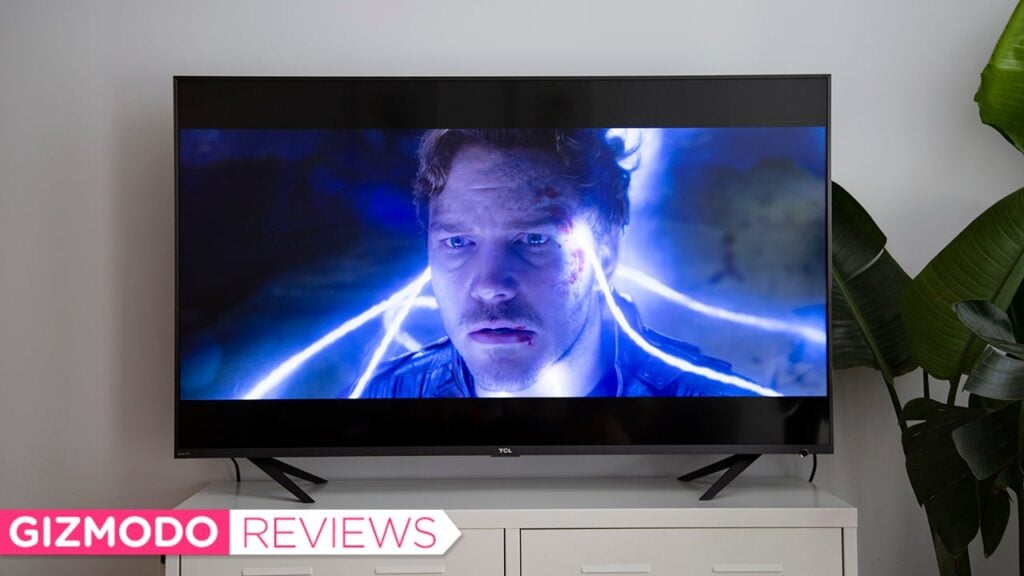
Just as there are "super noses" who can detect the slightest variation in a million wines, or people who can tell you exactly which frequency they're hearing, there will be people who can see blur in most LCDs.
Personally I haven't seen LCD blur since around 12-15ms response times became the norm. I see MPEG artifacting and trailing, and even dim afterimages in HDMI signals on PS3 and 360, but motion is not an issue. #motionblur
Umm isn't the 60Hz important because it exactly matches broadcast HD framerate? And 120Hz is because both 60Hz(for the reason above) and 24Hz(because movies are filmed at 24Hz) both go evenly into it? I always thought the issue was more with dropped frames and the like due to mismatched frame rates. #motionblur
@MarcusMaximus: Stop with the curveballs. This is any easy yes or no question. With that in mind, you can never tame the beast. Moving on... #motionblur
@N@tedog: How is that a curveball? The article says that 60 and 120Hz refresh rates aren't necessary to not have motion blur, and I responded saying It was my understanding they were mainly for a different, unrelated function, and one which they do actually perform. As far as I can tell that's perfectly on topic and a valid response. #motionblur
But I guess if it took into consideration directors, actors, writers, etc. it would work.
I would just find it really hard to believe it would do such a good job at organizing it, that it would be more useful than knowing the channel and time that it is on. Or even doing a simple title search to find your show.
I really dont see the point. and I am a guy that shuns people that "dont see the point" in gadget extras.
@masteroffm: there's a format that is supposed to work without glasses that I've seen before that's in the works for this kind of situation. I want to say keep an eye out for it..but I don't want to seem insensitive.
I clicked on one of the articles on the right and realized that a 3D TV would be great for gaming. I don't know why it wasn't obvious before. I would buy a 3D TV for gaming.
Bah, I don't even watch Bluray, nevermind Bluray with 3D, Smellovision or w/e other faddy thing the big boys want to sell us. I'm happy with my low def MST3K netflix DVDs.
Are those meant to be greater-than signs? You're arguing that the majority would be willing to pay over $200 extra for the TV, and two thirds would pay anything over $50 extra for the player.
However you then say that those same people will only pay $5 or less extra for the discs?
@Sockatume: I see how you read this, but it really means that the survey asked people if they'd pay within the ranges of $200, $50 or $5 more. So no, they aren't meant to be greater than signs.
I don't think 3D TV will become common place until they start making video walls. If I had a whole wall for a screen then I would want it to be 3D, and if I could afford to get more than one wall then I defiantly would want them in 3D. My dream would be to have all four walls of my TV room to be 3D video walls then I could be closer to my TV family.
And with more and more movies being complete swill, there's even less incentive. Would any of you masochistic folks out there want to pay extra to see Transformers in 3D? You'd probably feel like Bay is massaging the back of your eyeballs with a Sharper Image abortion of a vibrating doohickey. It doesn't add much value to the picture itself, little more than a first-time whiz-BANG effect.
@Kaiser-Machead: I think you're going in the wrong direction with that. Would "Gone with the Wind" in 3D be more of an incentive? It's certainly not swill. I think the issue isn't so much the quality of the movies being made, as much as it is that 3D isn't taken into account when actually putting the idea of the movie and the setup of the scenes down when beginning said movies. Good movies as well as bad ones will need to take such things into account.
Even if the movie is good, often the 3D effects do not add to the quality of the film. Sometimes it even detracts. For example, Up was a great movie, but the non-3D version (in my opinion) was superior.
Part of the reason that can happen is that there has to be a compelling reason to sit with those obnoxious glasses on for hours at a time. While there may occasionally be a great 3D movie, it is hard to believe that it will happen enough to warrant purchasing a new TV and wearing 3D glasses.
Perhaps when sports programs start broadcasting in 3D it may be compelling. But, even then, I just can't imagine having twenty buddies over to watch a game and all of us wearing those ridiculous things.
@Kaiser-Machead: Oh, I'm with ya. ROTF popularity is a clear sign of our nigh end. But 3D tech, as so many pop techs before it, will be financed up front by those wanting more than just their eyes to pop out.
Okay I get that 33% will pay up to $49.99 more than for a tv without 3D.
But what about the other 67%? would they pay more than $50? would they pay $0? would they pay $0-$5.
Am I the only one who is confused? I mean if it said that 33% would pay more than $50 then we would know that 67% would pay less or nothing at all. But the way it is originally said, it leaves a lot of ambiguity.
Here's the thing with this: We need movies/tv shows made with 3d in mind before it's at all important. Currently it just seems slapped on as a nifty little gimmick, but doesn't really add anything. 3d needs to actually add something to the experience and be an integral part of it from the instant they start filming or it's just a pointless gimmick. Hopefully Avatar will do this and lead the way for 3d in movies to actually be worth paying more for.
@MarcusMaximus: Well, if you take a look into the tech it takes to make a 3D movie, it would hardly qualify as "slapped on" by any stretch.
That being said, it is actually a very well-thought-out, planned gimmick. Heck, the CEO of Dreamworks was even recently saying that theaters need to be charging *more* at the door for 3D movies because the movie-going public hasn't shown any resistance yet.
You're right, though, for it to matter in real life is for it to stop being treated as "Oooooh! That ball almost hit me in the face!" and more like an actual element of movies, as much as color or motion is. Depth is yet another aspect of the world we see that's thoroughly unexplored in movies. And right now, it's like the world is getting a 101 class in Photoshop geeking out because they can have multiple layers. There's more than that.
A dude over at /film seems to think that the Toy Story 3D makeover did that: [www.slashfilm.com] We'll see, though.
Oh, and also, as always: get rid of the glasses. THEN you have my attention.
11/06/09
Personally I haven't seen LCD blur since around 12-15ms response times became the norm. I see MPEG artifacting and trailing, and even dim afterimages in HDMI signals on PS3 and 360, but motion is not an issue. #motionblur
11/04/09
11/04/09
11/04/09
10/14/09
But I guess if it took into consideration directors, actors, writers, etc. it would work.
I would just find it really hard to believe it would do such a good job at organizing it, that it would be more useful than knowing the channel and time that it is on. Or even doing a simple title search to find your show.
I really dont see the point. and I am a guy that shuns people that "dont see the point" in gadget extras.
10/14/09
10/14/09
10/06/09
People just know that even AFTER they paid more for the technical upgrade they'd STILL have to pay more for the artificial premium.
At least the hardware gets cheaper eventually, the artificial premiums never end.
Look at Blueray. Pay more for the player, then pay more for the disks.
10/05/09
That, I would GLADLY pay more for.
10/05/09
10/05/09
10/05/09
10/05/09
10/05/09
10/05/09
However you then say that those same people will only pay $5 or less extra for the discs?
10/05/09
10/05/09
10/05/09
AMAZINGATASTIC!
10/05/09
10/05/09
10/05/09
10/05/09
Even if the movie is good, often the 3D effects do not add to the quality of the film. Sometimes it even detracts. For example, Up was a great movie, but the non-3D version (in my opinion) was superior.
Part of the reason that can happen is that there has to be a compelling reason to sit with those obnoxious glasses on for hours at a time. While there may occasionally be a great 3D movie, it is hard to believe that it will happen enough to warrant purchasing a new TV and wearing 3D glasses.
Perhaps when sports programs start broadcasting in 3D it may be compelling. But, even then, I just can't imagine having twenty buddies over to watch a game and all of us wearing those ridiculous things.
10/05/09
@Kaiser-Machead: I think the *ahem* bulk of folks aren't in this for the eye-bleeding Optimus Prime effects nor how it can *cough* raise the plot.
10/05/09
10/05/09
10/05/09
10/05/09
10/05/09
it means they're willing to pay up to $49 extra.
10/05/09
Okay I get that 33% will pay up to $49.99 more than for a tv without 3D.
But what about the other 67%? would they pay more than $50? would they pay $0? would they pay $0-$5.
Am I the only one who is confused? I mean if it said that 33% would pay more than $50 then we would know that 67% would pay less or nothing at all. But the way it is originally said, it leaves a lot of ambiguity.
10/05/09
10/05/09
That being said, it is actually a very well-thought-out, planned gimmick. Heck, the CEO of Dreamworks was even recently saying that theaters need to be charging *more* at the door for 3D movies because the movie-going public hasn't shown any resistance yet.
You're right, though, for it to matter in real life is for it to stop being treated as "Oooooh! That ball almost hit me in the face!" and more like an actual element of movies, as much as color or motion is. Depth is yet another aspect of the world we see that's thoroughly unexplored in movies. And right now, it's like the world is getting a 101 class in Photoshop geeking out because they can have multiple layers. There's more than that.
A dude over at /film seems to think that the Toy Story 3D makeover did that: [www.slashfilm.com] We'll see, though.
Oh, and also, as always: get rid of the glasses. THEN you have my attention.