
1945: Elevator Operators
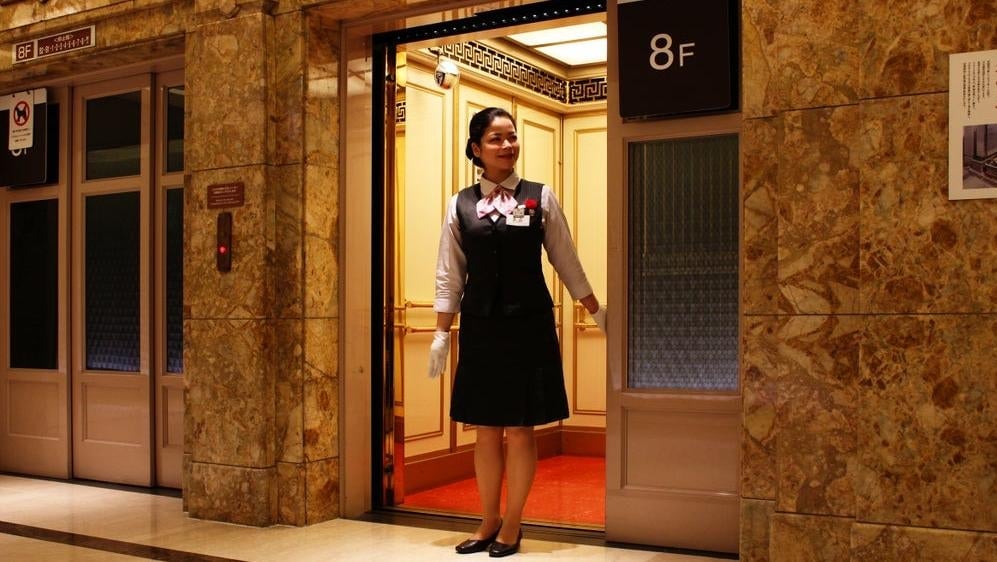
Elevator Operators were essential to getting from one floor to the next in high-rise buildings in the early 1900s. The elevators worked on a pully system, necessitating a paid worker who guided the car to each stop by hand. These old-school elevators were not the safest technology, with a gap between the floor and the car, meaning if a person misjudged the distance and fell, the operator wouldn’t have time to stop.
To combat this problem, the elevator industry added safety bumpers and an automatic stopping feature, before finally creating the driverless elevator. Much like the uncertainty over driverless vehicles today, the new-age elevator did not make a splash for people who feared using it. “People walked in and looked and walked right back out,” NPR contributor Lee Gray said on a podcast. “They would quickly step back out and try to find someone to say where’s the operator?”
But in 1945, everything changed. That year, New York City elevator operators went on strike, costing the city $100 million in lost taxes and preventing 1.5 million office workers from getting to their jobs. It was then that driverless elevators replaced hand-operated ones, effectively eliminating the position for good.