Most people start looking for a VPN for an everyday reason: a hotel network shared with every other guest, a local game that’s blacked out where they live, or a bank that flags logins made from abroad. A VPN helps in each case. It encrypts your connection and swaps your IP address for one in the country you choose, so other guests can’t read your traffic and websites see you in that country. The hard part is choosing one.
App stores list dozens of VPNs, each promising to be the fastest, the safest, and the only one that keeps no logs. Those claims are easy to make and much harder to check: a VPN can be quick and still fail on streaming, or private on paper with no audit behind it. We’ve put 40+ VPNs through the same speed, privacy, and streaming tests in search of the best VPN service, and 10 made our ranking. The short list is below, with the details after it.
Best VPN Service: Top 10 VPNs Ranked
- NordVPN: Best VPN service overall
- Proton VPN: Most secure VPN for privacy
- ExpressVPN: Most consistent speeds worldwide
- Private Internet Access: Best cheap VPN software
- Surfshark: Most features for the price
- CyberGhost: Best VPN for TV and console setup
- Hide.me: Good for MultiHop connections
- IPVanish: No device limit, weaker streaming
- TunnelBear: Easiest starting point
- Hotspot Shield: Fallback for filtered networks
Our VPN testing method explains each step.
VPN Comparison: How the Top VPN Services Line Up
Compare VPN pricing, speed, and streaming access in one place. Speed loss is the average across the three server locations we tested, and streaming counts how many of our 9 test platforms each VPN unblocked.
| VPN | Price | Speed loss | Streaming | Countries | Devices | Refunds |
|---|---|---|---|---|---|---|
| NordVPN | $3.49/mo | 7.8% | 9 of 9 | 152 | 10 | 30 days |
| Proton VPN | $2.99/mo | 10.2% | 7 of 9 | 149 | 10 | 30 days |
| ExpressVPN | $2.99/mo | 7.8% | 9 of 9 | 113 | 10-14 | 30 days |
| PIA | $2.19/mo | 12.7% | 6 of 9 | 91 | Unlimited | 30 days |
| Surfshark | $2.49/mo | 9.6% | 8 of 9 | 100 | Unlimited | 30 days |
| CyberGhost | $2.19/mo | 13.3% | 8 of 9 | 100 | 7 | 45 days |
| Hide.me | $2.69/mo | 15.9% | 7 of 9 | 57 | 10 | 30 days |
| IPVanish | $2.49/mo | 21.7% | 5 of 9 | 105 | Unlimited | 30 days, yearly only |
| TunnelBear | $3.33/mo | 23.9% | 2 of 9 | 47 | Unlimited | Case by case |
| Hotspot Shield | $2.42/mo | 22.2% | 5 of 9 | 80 | 10 | 45 days |
Best VPN Services: Detailed Reviews
1. NordVPN: Best VPN Service Overall
Pros
- Panama jurisdiction
- Repeated Deloitte audits
- Double VPN routing
- Post-quantum encryption
- Next-gen antivirus
- NordWhisper obfuscation
- Apple TV app
Cons
- Steep renewal price
- Windows connection failures
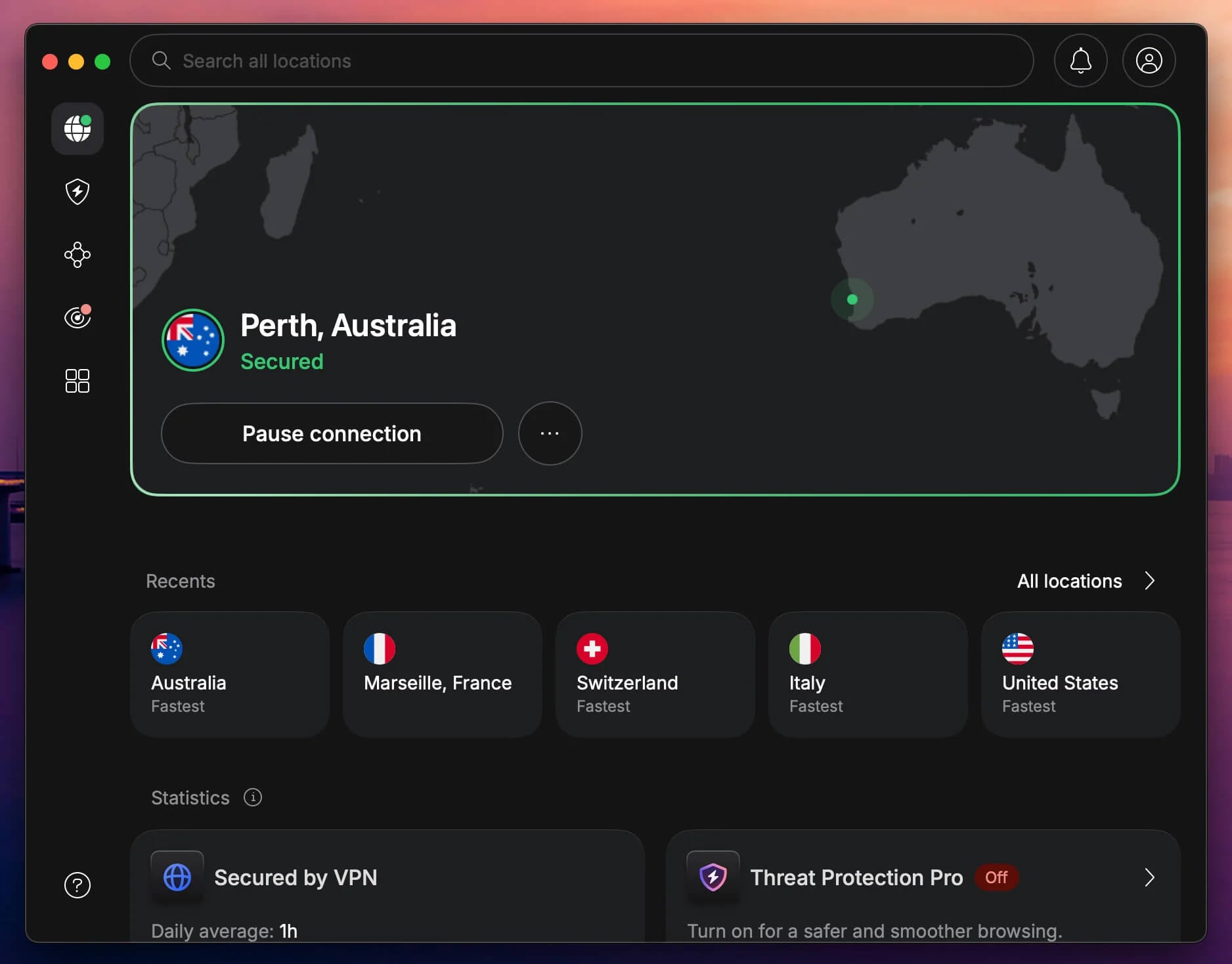
NordVPN was the fastest VPN on US servers, at 181.50 Mbps, and its 7.8% average speed loss is too small to notice in daily use. It unblocked every platform in our streaming set, though it was detected a few times on Pluto TV and Prime Video. If that happens, connect to a different server in that country. On privacy, Panama doesn’t require VPN companies to keep user records, and six independent audits have confirmed the no-logs policy, the last four by Deloitte.
NordWhisper connects you on hotel or work networks that block VPNs, and Double VPN servers encrypt your traffic twice, across two servers, for sensitive work on public networks. P2P works on every standard server, so torrenting doesn’t require a special location. Next-gen antivirus, formerly Threat Protection Pro, blocked 96% of phishing links in AV-Comparatives testing, so a fake login page from an email is likely stopped before it loads.
Its NordLynx protocol adds post-quantum encryption, a defense against future code-breaking, and there’s a VPN app for Apple TV and a full Linux app. On our Windows 11 PC, NordVPN sometimes failed to connect if the ExpressVPN app was also active. Restarting the app fixed it but signed us out, so close other VPN apps before connecting. NordVPN sells three plans on the 27-month term:
- Basic plan: $3.49 a month, $94.23 up front
- Complete plan: $4.49 a month, adding next-gen antivirus, a password manager and 1 TB of storage
- Prime plan: $7.49 a month, adding identity theft cover
Each allows 30 days for a refund, and the Basic plan renews at $139.08 a year.
2. Proton VPN: Most Secure VPN for Privacy
Pros
- Swiss jurisdiction
- Open-source apps
- Secure Core routing
- Stealth obfuscation
- Tor over VPN
- Port forwarding
Cons
- Slow support replies
- No Smart DNS
- No post-quantum option
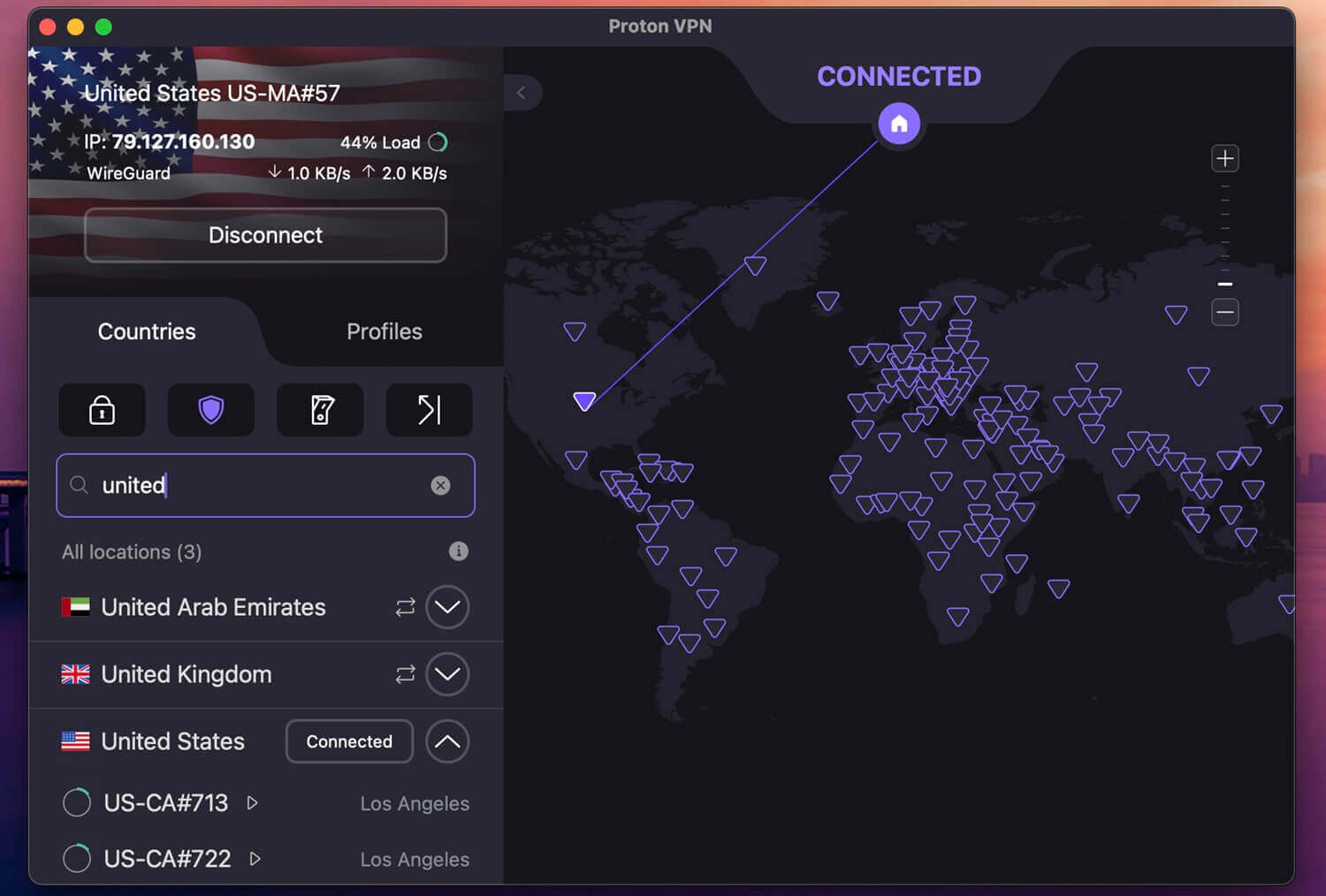
With VPN Accelerator, its speed-boosting feature, enabled, Proton VPN’s download speed dropped by 10.2%, which is still more than enough for 4K streaming. It also had the lowest US ping we recorded, 109 ms. Ping is the delay you feel in calls and games, so a low figure keeps calls to the US responsive. It couldn’t unblock Pluto TV or ITV, but the other 7 platforms worked.
On privacy, Switzerland isn’t a member of the 5, 9, or 14 Eyes intelligence-sharing groups, and its apps are open source, meaning the code is public, so experts can compare it with Proton’s claims. Secure Core directs traffic through a second protected server first, which helps journalists and travelers in surveillance-heavy countries. Stealth disguises VPN connections on networks that block them, and there’s Tor over VPN.
NetShield blocks ads and trackers, and the network covers 149 countries. Its servers use full-disk encryption instead of RAM-only storage, which wipes everything on a reboot, though the audits back up its no-logs claims. Support was slower than expected. Live chat took about a minute to connect me to a person, and my email query went a full day without a reply.
That’s slow for a no-logs VPN of this standing, so use live chat when you want a quick answer. Committing to two years brings the VPN Plus plan under $3 a month, and a single year is about $4 a month. Both plans cover ten devices and come with a 30-day refund window.
3. ExpressVPN: Most Consistent Speeds Worldwide
Pros
- Automatic obfuscation
- RAM-only TrustedServer network
- KPMG-audited policy
- One-click apps
- Post-quantum Lightway
- Split tunneling
Cons
- No multi-hop feature
- Limited customization
- Expensive renewal
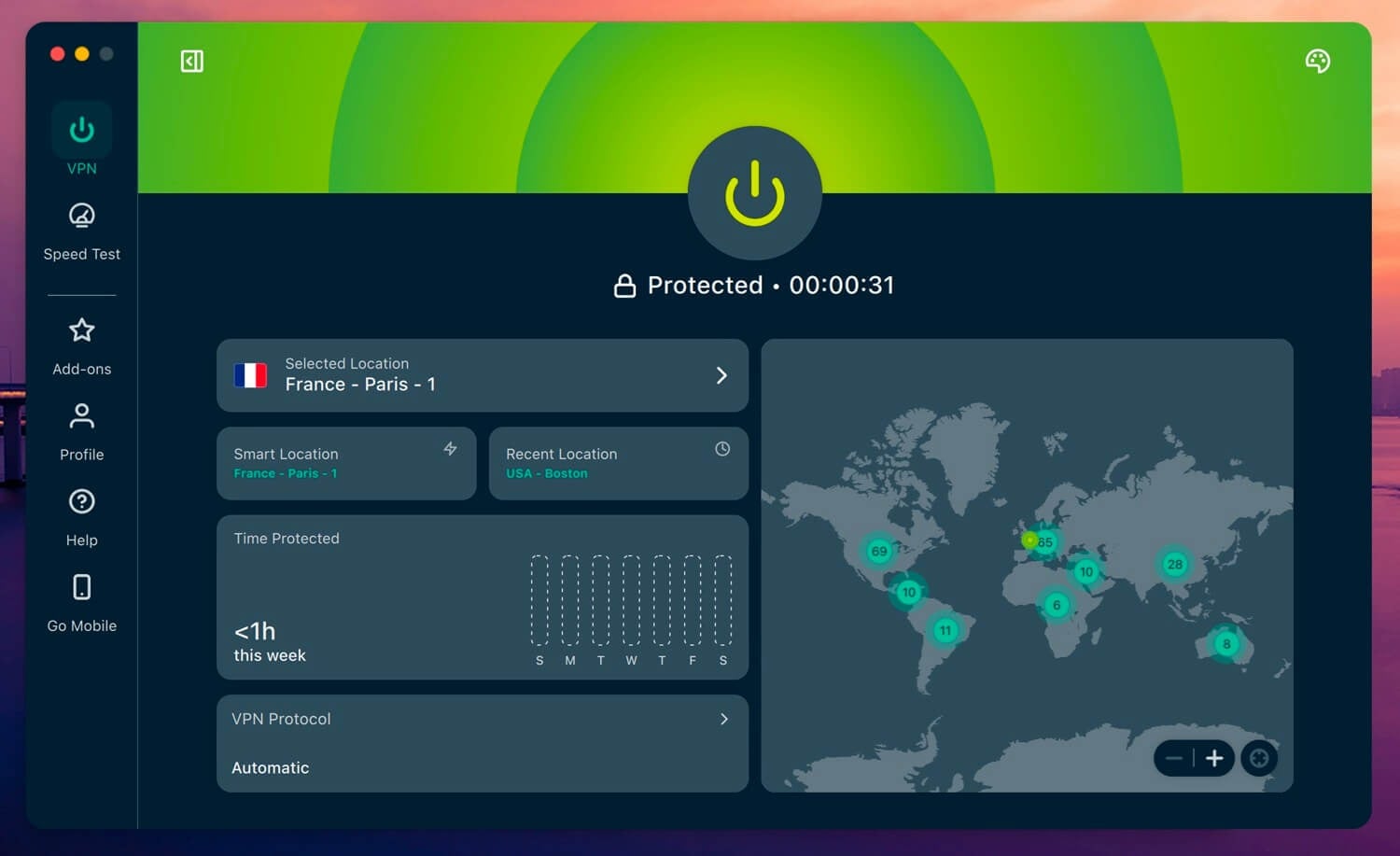
ExpressVPN matched NordVPN’s 7.8% average speed loss, and Japan was its strongest result: at 163.94 Mbps, no VPN was faster there. It also came second on the other two servers, so its speed stays high on near and distant servers alike. It unblocked all 9 platforms, though ITV and Prime Video detected it on a few attempts. Obfuscation, which masks the signs that a VPN is in use, applies automatically to every connection.
That helps on a school network that blocks VPNs, while NordVPN and Proton VPN require a manual switch. Its RAM-only servers write nothing to disk, and KPMG has audited the no-logs claim. Its British Virgin Islands base doesn’t require it to store user data, and Lightway Turbo and WireGuard offer post-quantum encryption. Every app has split tunneling, which lets a game or a local streaming app skip the VPN, and a kill switch, which stops all traffic while the VPN is down.
On our Windows test PC, ExpressVPN sometimes failed to connect until we reinstalled it, so try a reinstall first if it won’t connect. Multi-hop, which sends traffic through two servers, is still missing, and the settings offer less to adjust than NordVPN or PIA, so hands-on users will prefer those two. Three tiers share the 28-month term:
- Basic plan: $2.99 a month, $83.72 up front
- Advanced plan: $4.49 a month, adding a password manager and identity tools
- Pro plan: $7.49 a month, adding a dedicated IP address and AI credits
Renewal prices move to $99.95/year on the Basic plan, which is quite high. Check ExpressVPN’s discounts before subscribing, and there’s a three-day ExpressVPN free trial.
4. Private Internet Access: Best Cheap VPN Software
Pros
- No device limit
- Court-proven no-logs
- Every US state covered
- MACE ad blocking
- Open-source clients
- Shadowsocks obfuscation
Cons
- Cluttered, dated interface
- US jurisdiction
- Patchy streaming access
PIA had the quickest live chat we tried, connecting me to a human agent in 10 to 20 seconds. Speed came in lower than we expected, though a 12.7% average speed loss still leaves plenty for 4K streaming. Japanese servers were its weakest result, so nearby servers are the better choice. Netflix Japan, Prime Video, and HBO Max detected it, so it unblocked 6 of the 9 platforms. On privacy, PIA has a court record behind it.
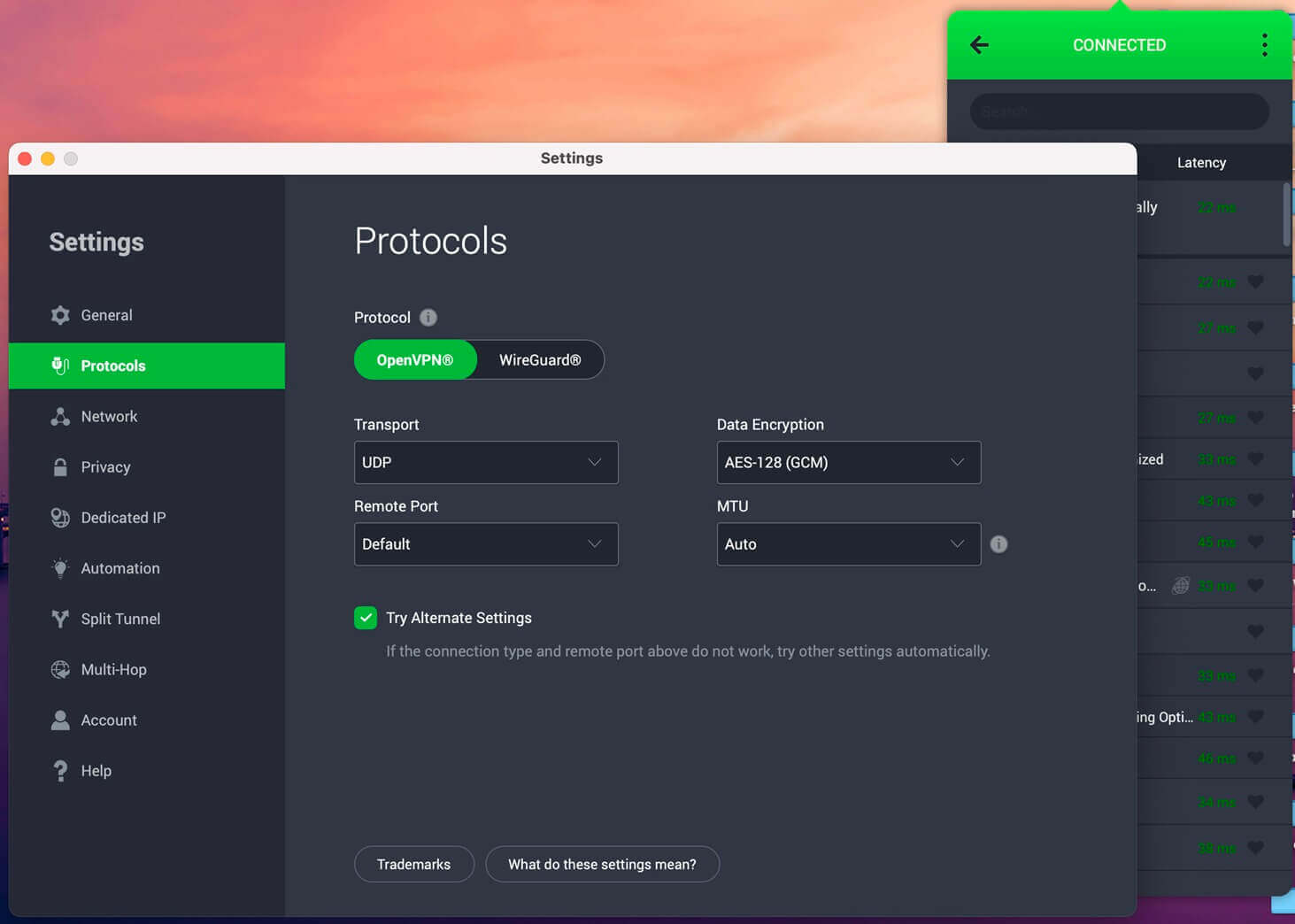
It has been asked for logs in US court proceedings and had none to hand over, and Deloitte has audited the policy three times since 2022. Being based in the US makes it part of the 5 Eyes, though the court record softens that. Its app code is public too, and the servers are RAM-only. Coverage spans 91 countries, including all 50 US states, handy for local news and sports. MACE blocks ads and malicious domains, and two proxies are built in.
Shadowsocks disguises VPN traffic, and SOCKS5 changes the IP address in a single app, such as a torrent client. There’s no device limit either, so one account can cover the phones, laptops, and TVs of a whole family. The interface looks dated, though. It’s cluttered on Windows and macOS, and it was our least favorite, but you rarely have to open it once it’s set up. PIA also appears in our best cheap VPN ranking. In 2026, its plans are:
- 2-year plan: $2.19 a month, $56.94 for 26 months, then $56.94 a year
- 6-month plan: $7.50 a month, then $45 every 6 months
- 1-month plan: $11.99
5. Surfshark: Most Features for the Price
Pros
- Unlimited connections
- Static IP address included
- Dausos post-quantum protocol
- Web Content Blocker
- Camouflage Mode
- RAM-only servers
Cons
- Slow connection times
- Netherlands jurisdiction
- Higher renewal price
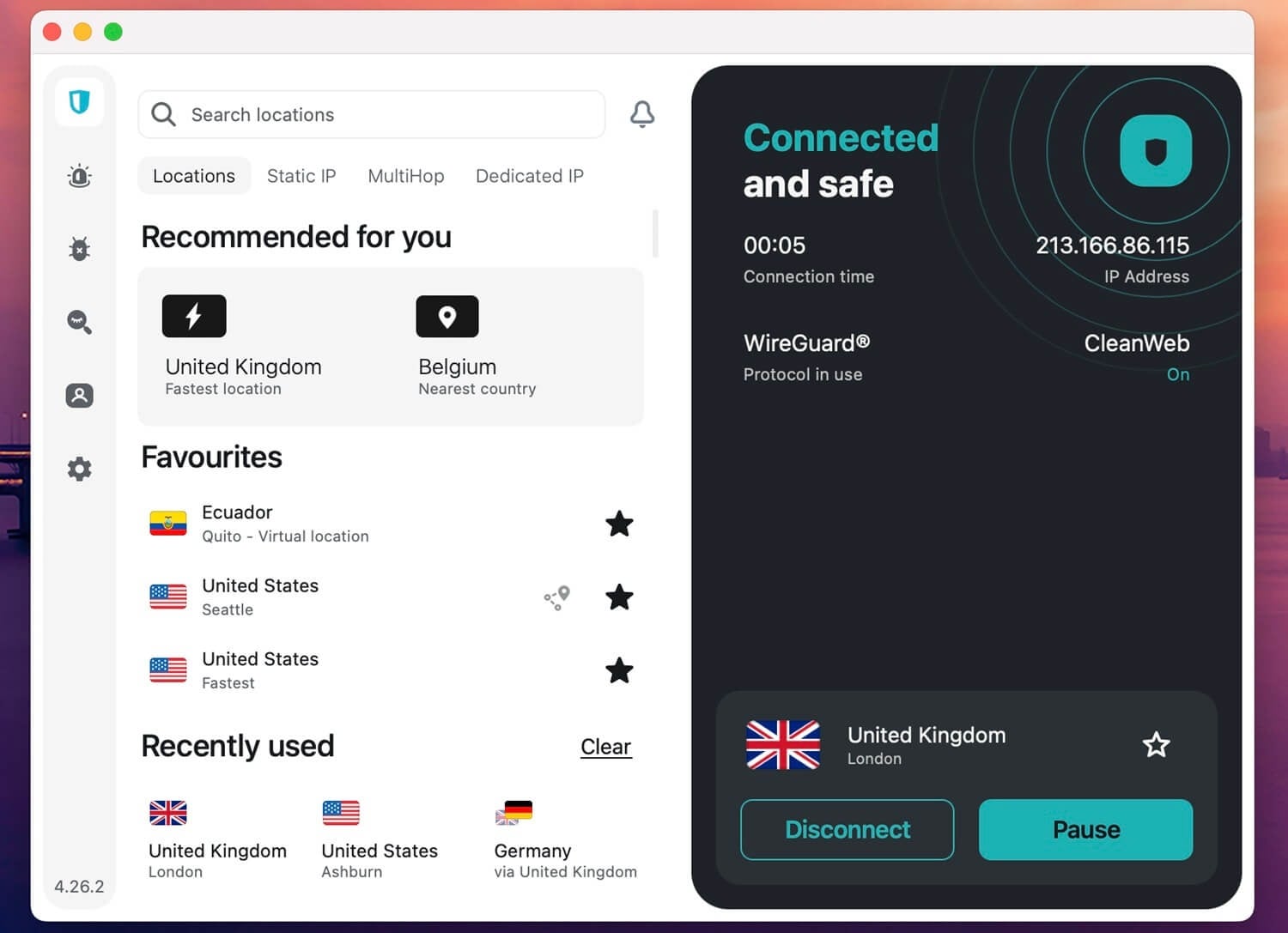
Surfshark recorded the fastest single result in our tests, 186.96 Mbps on its UK server, a speed loss of just 1.8% that you’d never notice. It was the positive surprise of our tests, and it unblocked every platform except ITV. It also includes a long list of features for its price. A static IP address comes free with each plan, so your bank sees the same IP address at every login. IP Rotation swaps your IP address at regular intervals without changing the country.
Web Content Blocker goes beyond ads and trackers and filters whole categories of sites, such as gambling sites on a child’s tablet. A single subscription also covers every device in a household. Dausos, its own macOS protocol, is protected against future quantum attacks and was audited separately by Cure53. Deloitte audited its no-logs policy in 2023 and again in 2025, and every server stores data in memory only, so a reboot wipes it.
Camouflage Mode hides VPN use on restrictive networks. Connections occasionally took longer than we wanted, though the wait only shows if you switch servers often. The Netherlands base places it in the 9 Eyes group, and the audited no-logs policy offsets that. There’s no Smart DNS, a feature that changes a TV’s streaming region through its network settings, so for a smart TV, look at CyberGhost.
All three plans share a 27-month term. Refunds are available for 30 days:
- Starter plan: $2.49 a month, $67.23 up front
- One plan: $2.79 a month, adding antivirus, alerts, and scam protection
- One+ plan: $4.49 a month, adding Incogni data removal
6. CyberGhost: Best VPN for TV and Console Setup
Pros
- Smart DNS included
- Platform-named servers
- NoSpy server network
- Quarterly transparency reports
- Romanian jurisdiction
- Long refund window
Cons
- Netflix Japan blocked
- Tight device limit
- No obfuscated servers
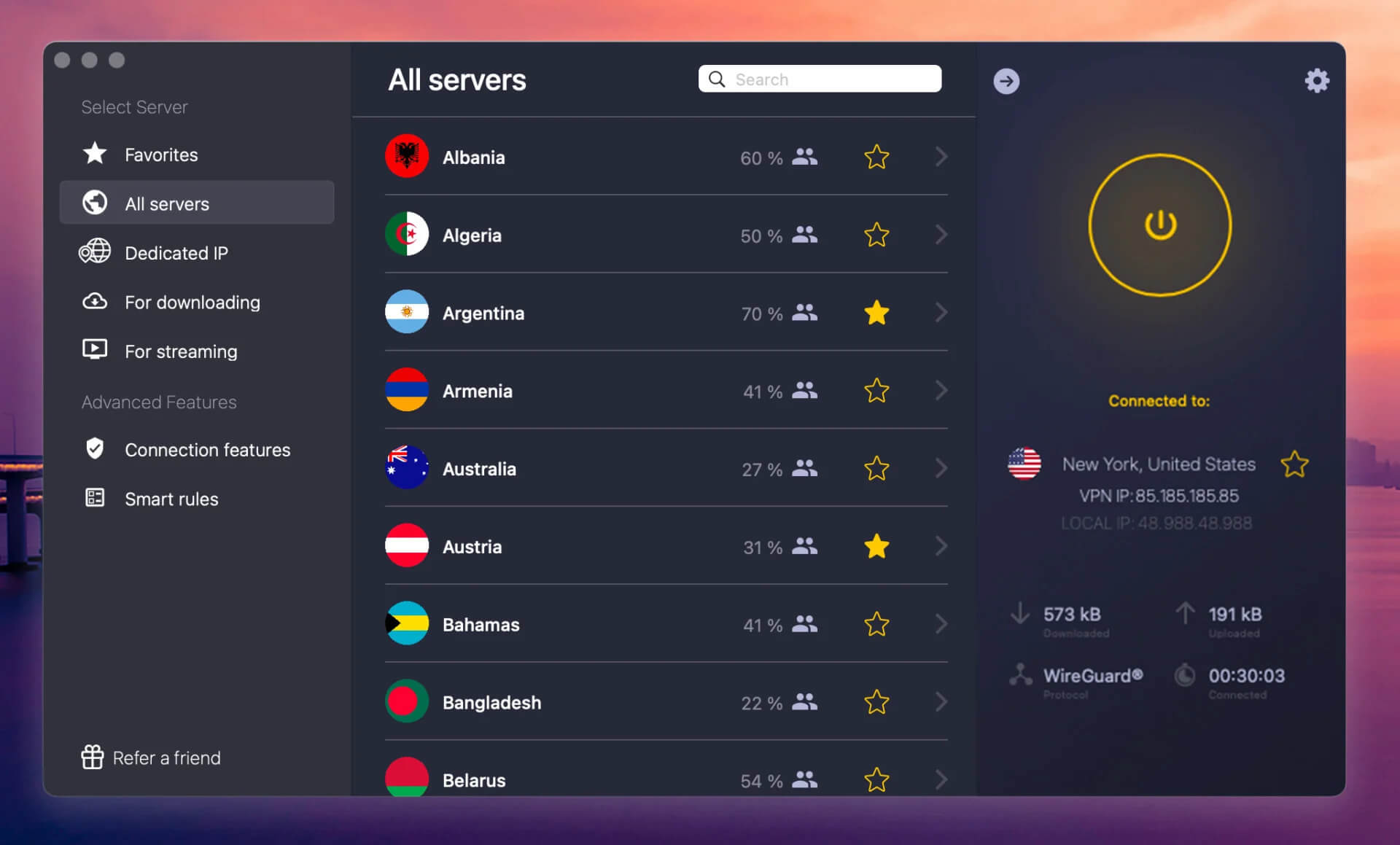
CyberGhost works best on TV setups. Its Smart DNS covers an Apple TV, a Samsung or LG TV, and a PlayStation with no VPN app installed. Its server list also names the streaming service each server is for, so there’s no guessing which one works. It unblocked 8 of the 9 platforms, but it failed on Netflix Japan, even on its server set aside for that library.
No VPN in our tests beat CyberGhost’s 39 ms ping in the UK, so games and video calls on nearby servers feel responsive. Speed was mid-table, with a 13.3% average speed loss that’s still fine for 4K, though the Japanese server was its slowest. On privacy, Romania keeps it outside EU data-retention rules, and it has published quarterly transparency reports since 2011, listing the data requests it receives. Its NoSpy servers in Romania belong to CyberGhost itself.
There’s no obfuscation, so on heavily filtered networks, pick ExpressVPN or Proton VPN instead. Its seven-device limit is also the tightest in our ranking, though that still covers a phone, a laptop, and a TV with room to spare. The longest plan brings the price to about $2.20 a month, with renewal near $57 a year.
The 45-day refund window on the two-year and six-month plans is the longest we found, matched only by Hotspot Shield, while the monthly plan allows 14 days. A dedicated IP address adds about $2.50 a month, and Windows antivirus about $1.
7. Hide.me: A Solid Second-Tier Pick for MultiHop
Pros
- Malaysian jurisdiction
- MultiHop connections
- Dynamic port forwarding
- SoftEther support
- Unlimited free data
Cons
- Small country list
- Free plan blocks P2P
- Weak long-distance speed
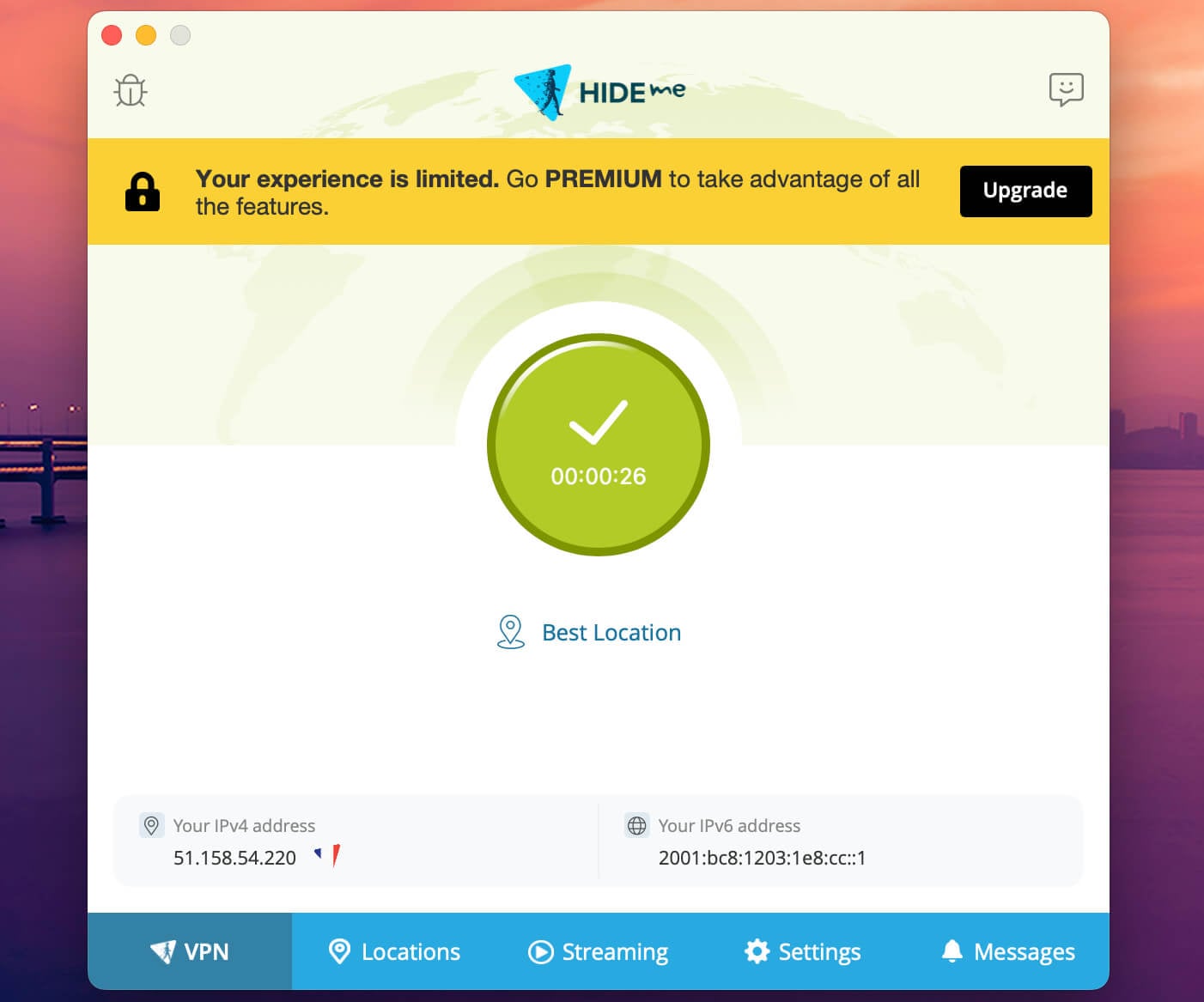
Hide.me is quick on nearby servers and slower on distant ones. Its 15.9% average speed loss still leaves enough for 4K at home, but pick a server close to you. It unblocked 7 of the 9 platforms, all but Prime Video and ITV. Its MultiHop feature sends your connection through two servers for extra privacy. Malaysia, its home country, stays outside the intelligence-sharing alliances, and SmartGuard blocks malicious domains.
Its network is small, at 57 countries, so check that it covers the country you want before you buy. The free tier allows unlimited data but blocks P2P and streaming completely. Paid access is about $2.70 a month over a 26-month term.
8. IPVanish: An Option for Covering Every Device
Pros
- Every device covered
- Audited no-logs policy
- SOCKS5 proxy
- Threat Protection filtering
- Wide country coverage
Cons
- Poor Netflix access
- No monthly refund
- Partial RAM-only network
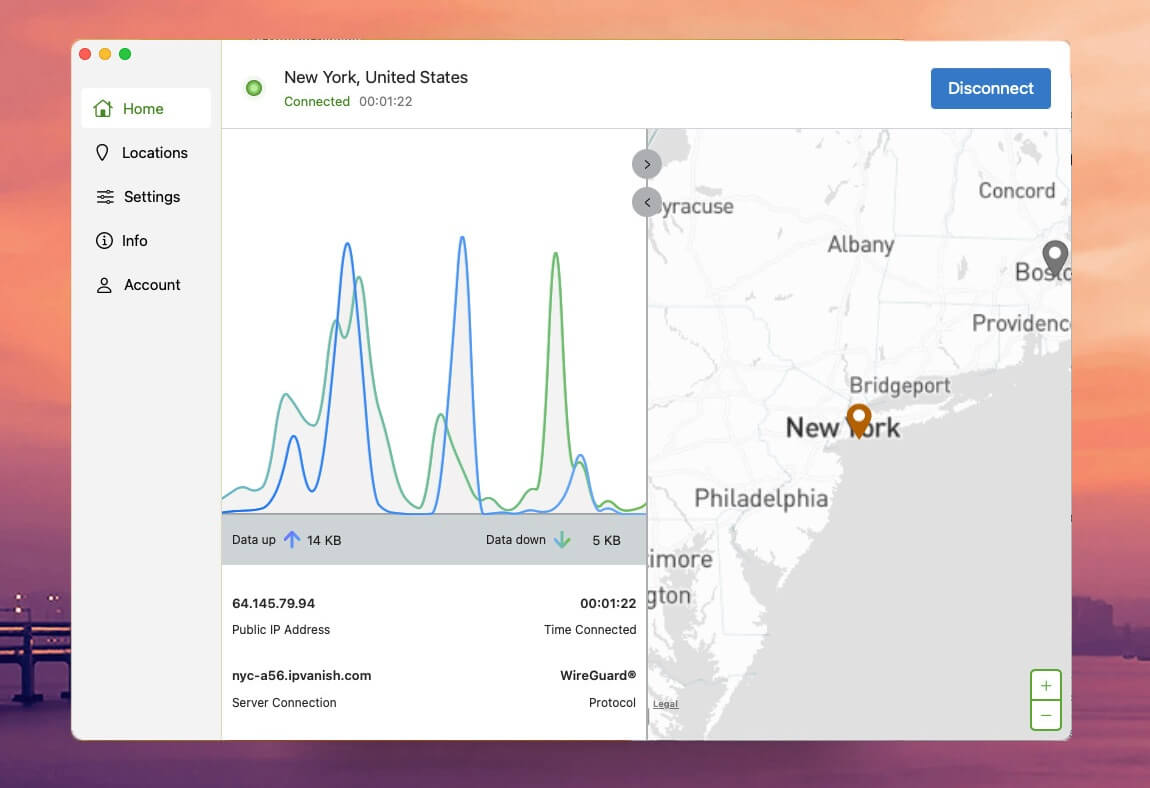
IPVanish was fast on its London server and then slowed sharply with distance, losing 38.6% of its speed on Japanese servers. Its 21.7% average speed loss is still workable for browsing and HD video. Streaming was weak, though. It couldn’t unblock Netflix US, Netflix Canada, ITV, or Prime Video, so if streaming is the main reason you want a VPN, NordVPN or ExpressVPN will serve you better. On the plus side, there’s no device limit, and coverage spans 105 countries.
Only some locations use RAM-only servers, so if that’s important to you, ExpressVPN and PIA use them throughout. It’s the only VPN in our ranking with no refund on the monthly plan, so trying it means committing to a year. The Essential plan is about $2.50 a month across 24 months. The Advanced plan, about $3.60 a month, adds Threat Protection, a secure browser, and cloud backup.
9. TunnelBear: The Easiest Starting Point
Pros
- Simple interface
- GhostBear obfuscation
- Repeated independent audits
- No connection cap
Cons
- Low speeds
- Minimal streaming access
- No Linux app
- Case-by-case refunds
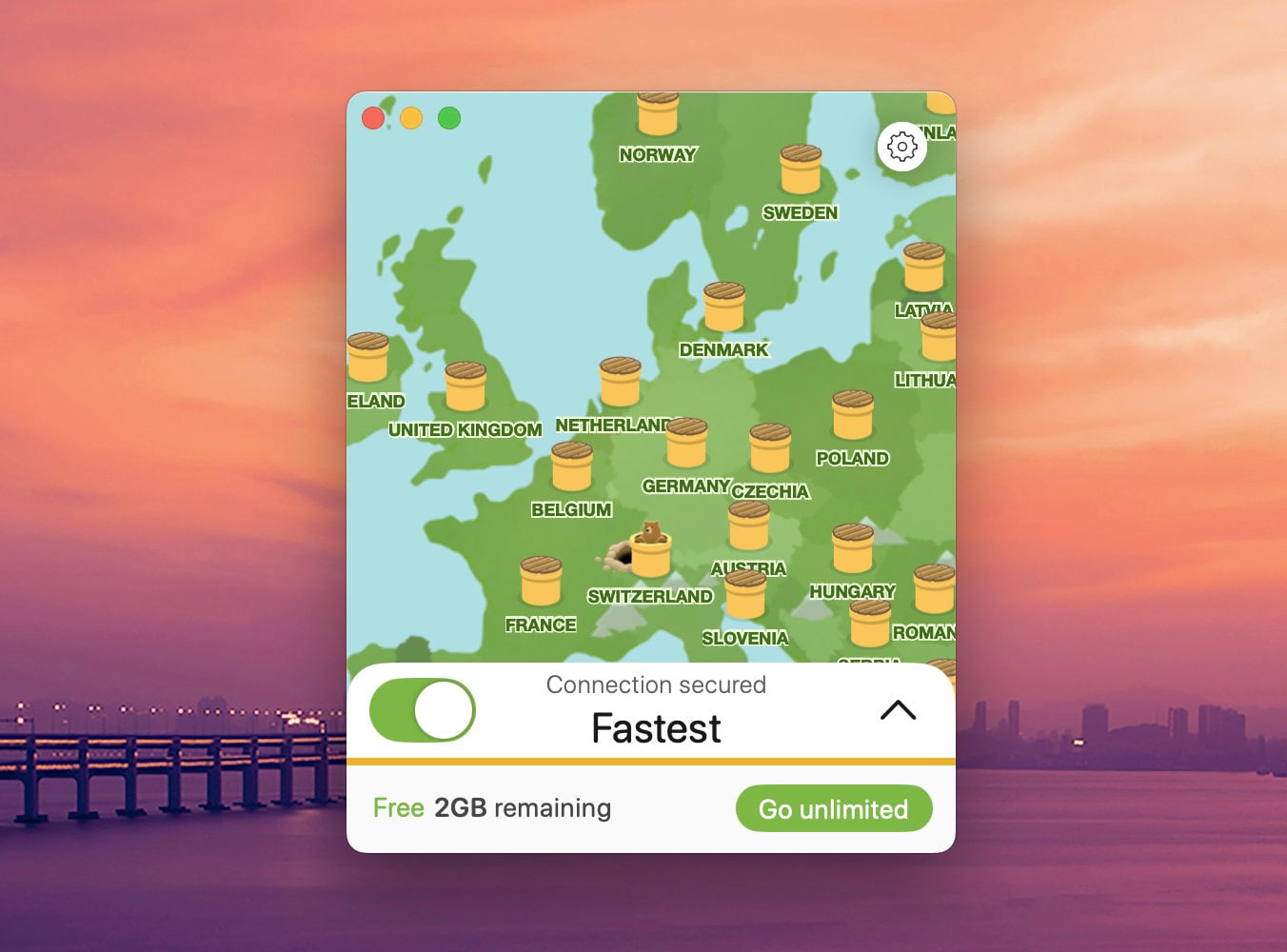
TunnelBear has the friendliest app in our ranking, and its audits are genuine, so it’s an easy first VPN. It finished last on speed, though, with a 23.9% average speed loss, which still left about 145 Mbps on our connection. Streaming is weak too. It unblocked only Netflix US and Channel 4 from our 9 platforms, so choose another VPN for streaming. Its network is the smallest at 47 countries, there’s no Linux app, and support is by email only, with about a day between replies.
If you use Linux or want quick answers, go with NordVPN or PIA instead. Free use is capped at 2 GB a month, with the server picked for you. Refunds are decided case by case, with no guarantee attached, so try the free plan before paying. The three-year plan is about $3.30 a month, and our free unlimited VPN data guide covers alternatives.
10. Hotspot Shield: A Fallback for Filtered Networks
Pros
- Hydra protocol obfuscation
- Cheap opening year
- Built-in DNS filtering
- Tor routing supported
Cons
- Logs visited domains
- Costly renewal
- Disk-based servers
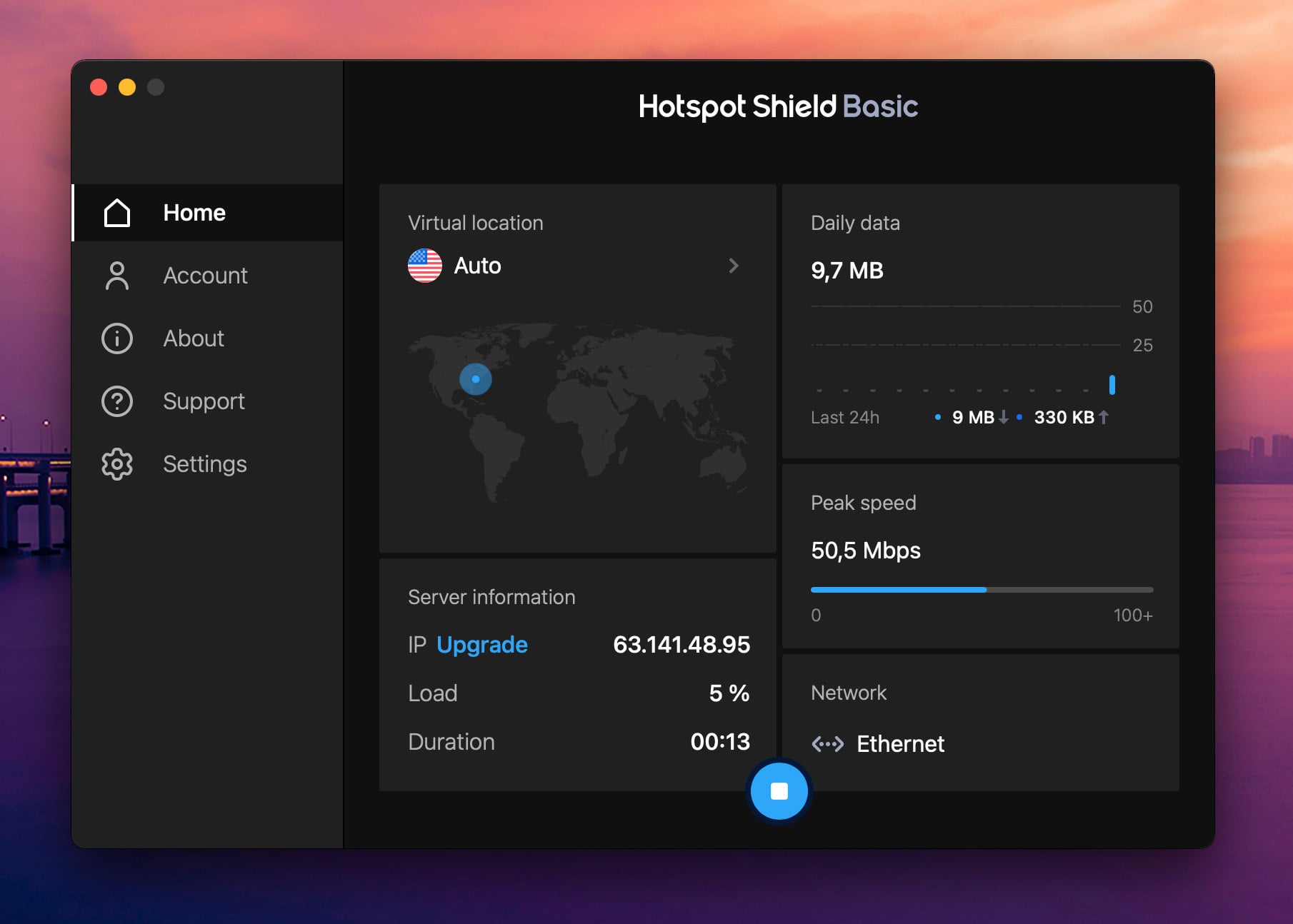
Hotspot Shield’s Hydra protocol works on lightly filtered networks, such as some workplace or university networks, and that’s its main strength. Speed was near the bottom, with a 22.2% average speed loss, though that’s still enough for HD streaming. Streaming results were patchy: it failed on Prime Video, Netflix Japan, ITV, and HBO Max. Its privacy notice is the bigger concern. It says the VPN records the domain names users visit, without full URLs and pooled anonymously.
It also logs session length, bandwidth, and a device ID used for marketing, so if privacy is why you want a VPN, look elsewhere. Its servers write to encrypted disks, with no RAM-only option. The Premium plan costs about $29 for the first year, then about $96 a year. One plan covers up to ten devices, servers span 80 countries, and the refund window is 45 days. It’s a good VPN to use on Linux thanks to its full graphical app.
How We Tested These VPNs
Every VPN went through the same October 2026 round on the same connection.
| What we tested | How |
|---|---|
| Baseline connection | 190.36 Mbps down, 19.37 Mbps up, 10 ms ping |
| Location and device | Europe, Windows 11 desktop |
| Speed tool | Speedtest, 3 runs per server |
| Server locations | UK, US, and Japan |
| Protocol | Fastest one each app offers |
| Streaming platforms | Netflix US, Canada, and Japan, BBC iPlayer, Channel 4, ITV, Pluto TV, Prime Video, HBO Max |
| Browser state | Cookies and cache emptied before each session |
| Also checked | IP and DNS leaks, live chat response time |
ITV and Prime Video were the hardest platforms, blocking 7 of the 10 VPNs at least some of the time. Netflix US and BBC iPlayer blocked only one VPN each, so the US Netflix library is no longer the hard test it used to be. None of the VPNs leaked an IP or DNS request, so leaks played no part in the final order.
Every live chat opens with an AI chatbot, and PIA, NordVPN, ExpressVPN, and Surfshark passed us to a human within 20 seconds. Prices and networks change faster than we can retest, so we check them against each company’s own pages before every update. Our fastest VPN ranking compares speeds in more detail.
Browser Extensions Beat the Apps on Streaming
One result surprised us enough to test it again. When a platform detected a VPN’s desktop app, the same VPN’s browser extension often still worked. With location spoofing enabled, which aligns the browser’s location with the server, the NordVPN, Surfshark, and ExpressVPN extensions unblocked every platform we tried.
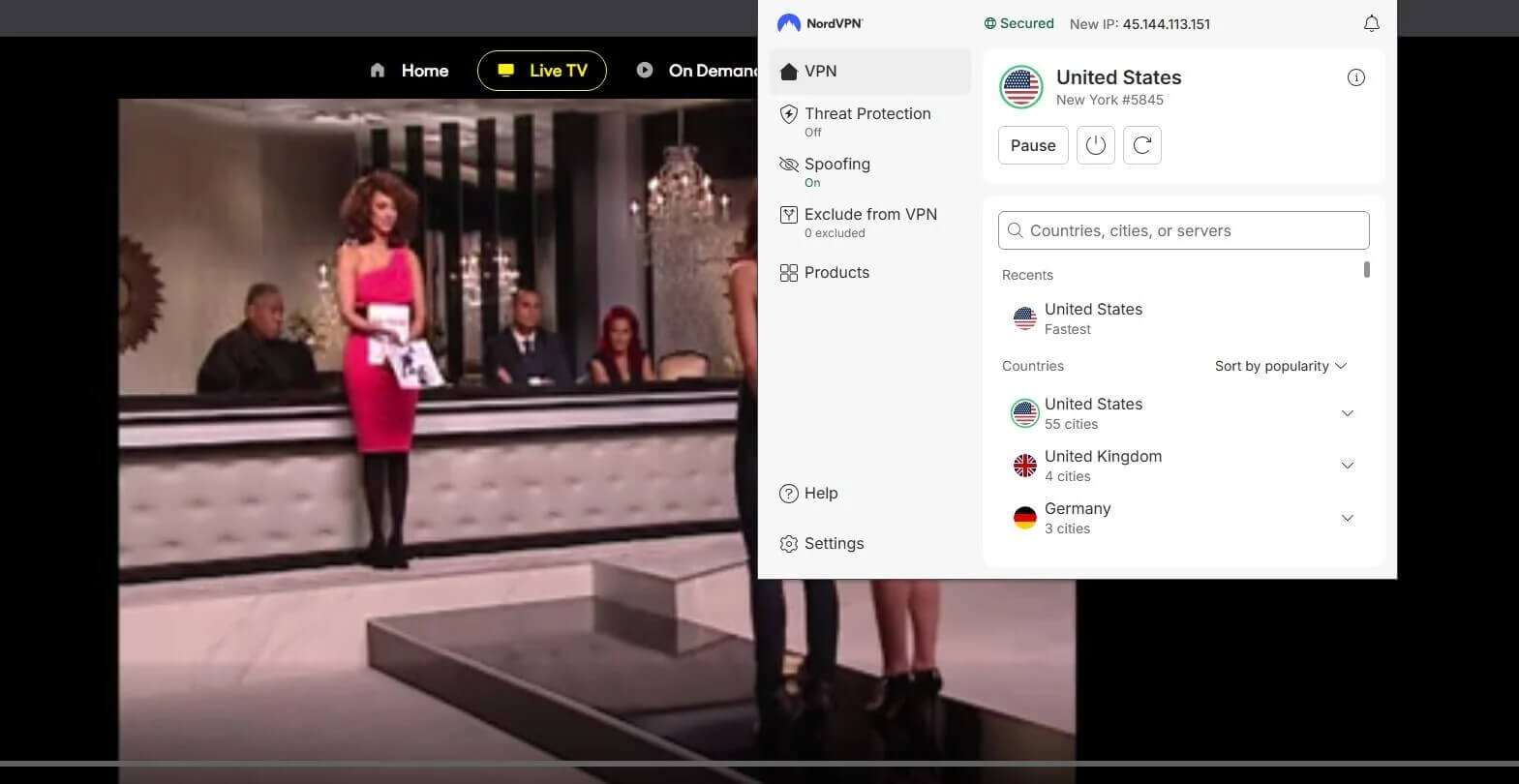
So if a show won’t load in the app, try the extension in your browser before switching VPNs. Extensions also help with unblocking a blocked site and using a VPN at school, where the block comes from the network itself.
Why We Avoid Free VPNs
Most free VPNs limit your data, cost you speed, and cut features. Some also log your traffic, the opposite of what a VPN is for, and Hola VPN and Urban VPN are two to avoid. Proton VPN’s free tier is the main exception, with unlimited data, though it picks the server for you, so you can’t choose a country for streaming. Our guide comparing free VPN services covers what each one allows.
Which VPN to Choose: Summary
For most people, the best VPN service is NordVPN. It kept nearly the full speed of our connection, worked with all 9 streaming platforms we tested, and has passed six independent audits. Its main drawback is a connection bug on Windows when another VPN app is active, so if you use a second VPN for work, close it before connecting.
Proton VPN is better for privacy-first users, with Swiss law and open-source apps behind it, though its support replies are slow. ExpressVPN requires the least setup, with automatic obfuscation and speeds that tied NordVPN’s. On a tight budget, PIA costs the least and has a court-tested no-logs policy.
Before you subscribe, think about the servers you’ll use most. NordVPN was the fastest on US servers, ExpressVPN on Japanese ones, and Surfshark on the UK server.
Frequently Asked Questions
Are VPNs legal?
Yes, across most of the world, including the US, Europe, and Australia. Oman, Iraq, North Korea, Turkmenistan, and Belarus restrict or ban them.
Do I really need a VPN?
No, not for every situation. A VPN pays off on public Wi-Fi, for keeping an ISP out of browsing history, and for services that check location.
How do you set up and use a VPN?
Subscribe, install the app on the device, sign in, then pick a country and connect. Setup takes a few minutes, and connecting afterward is a single click.
How much does the best VPN cost?
NordVPN and Proton VPN cost far less per month on their two-year plans, paid up front, than on monthly billing, and include a money-back guarantee on every plan.
What is the most secure VPN?
The most secure VPN is Proton VPN, with Swiss jurisdiction, open-source apps, and Secure Core servers. NordVPN comes close, with Panama jurisdiction, Double VPN, and ID theft protection.
What is the best VPN server to connect to?
The closest server is usually best, because it keeps ping low for gaming, torrenting, and browsing. Streaming is the exception: it requires a server in the country where the show is licensed.
Which VPN has a dedicated IP address?
NordVPN, CyberGhost, Surfshark, and Private Internet Access sell a dedicated IP address as a paid add-on, and ExpressVPN’s Pro plan includes one. Surfshark also offers a free static IP address.
Senior Writer, VPN & Security
Cybersecurity journalist covering VPNs full-time. He has hands-on tested every major provider on the market, and audits their privacy claims against the published audit reports rather than the marketing pages. Tests every provider in this ranking himself, on the same connection.