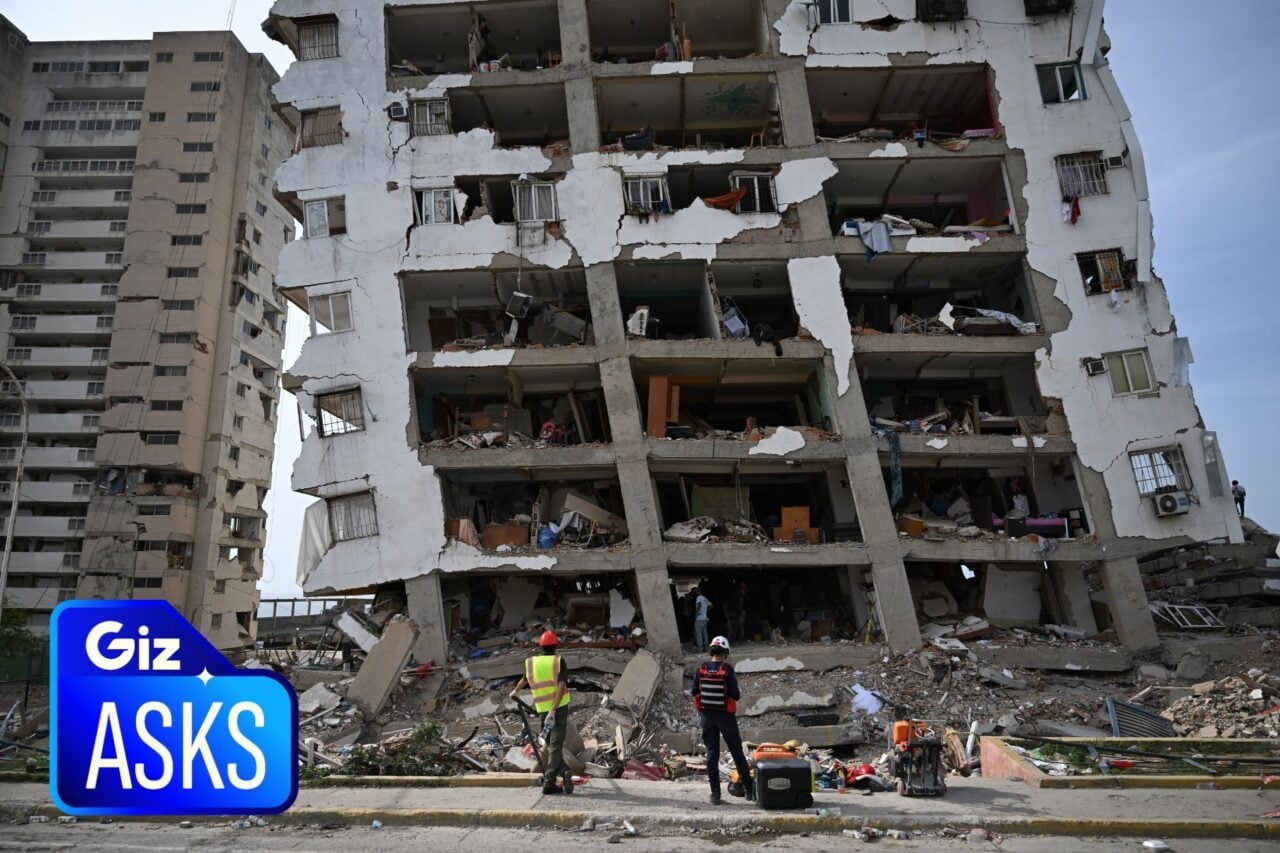
The people of Japan received a jarring emergency alert at 12:40 p.m. local time Friday (overnight Thursday-Friday in the U.S.) warning of a 9.9-magnitude earthquake, a measurement never recorded in history. Journalists made the same warning on TV, and city loudspeakers announced their own alerts across the country.
But it was all a false alarm. There was a 6.9 earthquake that hit near Russia’s Kamchatka Peninsula, northeast of Japan, and hundreds of miles away. But nothing hit the island nation of 122 million people. The Japan Meteorological Agency withdrew the notice eight minutes later. It was the first emergency earthquake warning ever to be withdrawn, the Japan Times reports.
What went wrong? The Japan Meteorological Agency is reportedly investigating, though there’s speculation that it may have been “applying a magnitude formula designed for domestic earthquakes to one occurring far from Japan.” There have been no reports of damage from the quake in Russia, though at least one train line was reportedly disrupted in Japan as it was automatically shut down temporarily in anticipation of a large earthquake.
It’s not the first false alarm in the Japanese agency’s history. But the size of the warning is what has understandably jolted people to attention. The strongest earthquake ever recorded was a 9.5 in Biobío, Chile, in 1960. That quake killed 1,655 people and left about 2 million people homeless, according to the U.S. Geological Survey.
The New York Times notes that some people thought the early warning for the 9.9 earthquake may have been the result of a cyberattack, a reasonable assumption in 2026 given all of the ways that hackers are increasingly messing with us. As just one example this week, hackers breached the systems for roughly 700 grocery stores in France and raised freezer temperatures to as high as 122 degrees Fahrenheit, spoiling an enormous amount of food. It’s unclear who was behind the attack, and it’s still under investigation, according to the Paris prosecutor’s office.
The false warning of a 9.9 earthquake in Japan wasn’t the result of a cyberattack, according to the New York Times, citing Ayataka Ebita, an official at the Japan Meteorological Agency. Ransomware attacks have become increasingly common in the country, a trend blamed in large part on AI making such attacks easier to carry out.
The U.S. had its own false warning that caused mass panic during President Donald Trump’s first term. Back in 2018, President Trump was publicly feuding with North Korean dictator Kim Jong Un, calling him “little rocket man,” and generally antagonizing the leadership of the isolated country. There were very real concerns that Trump could start a nuclear war, and on Jan. 13, 2018, residents of Hawaii received a warning to seek shelter due to an incoming ballistic missile. It wasn’t until about 40 minutes later that residents learned it was a false alarm.
Trump is now best buds with Kim and recently said he may meet with the North Korean leader in mid-November after the midterm elections.