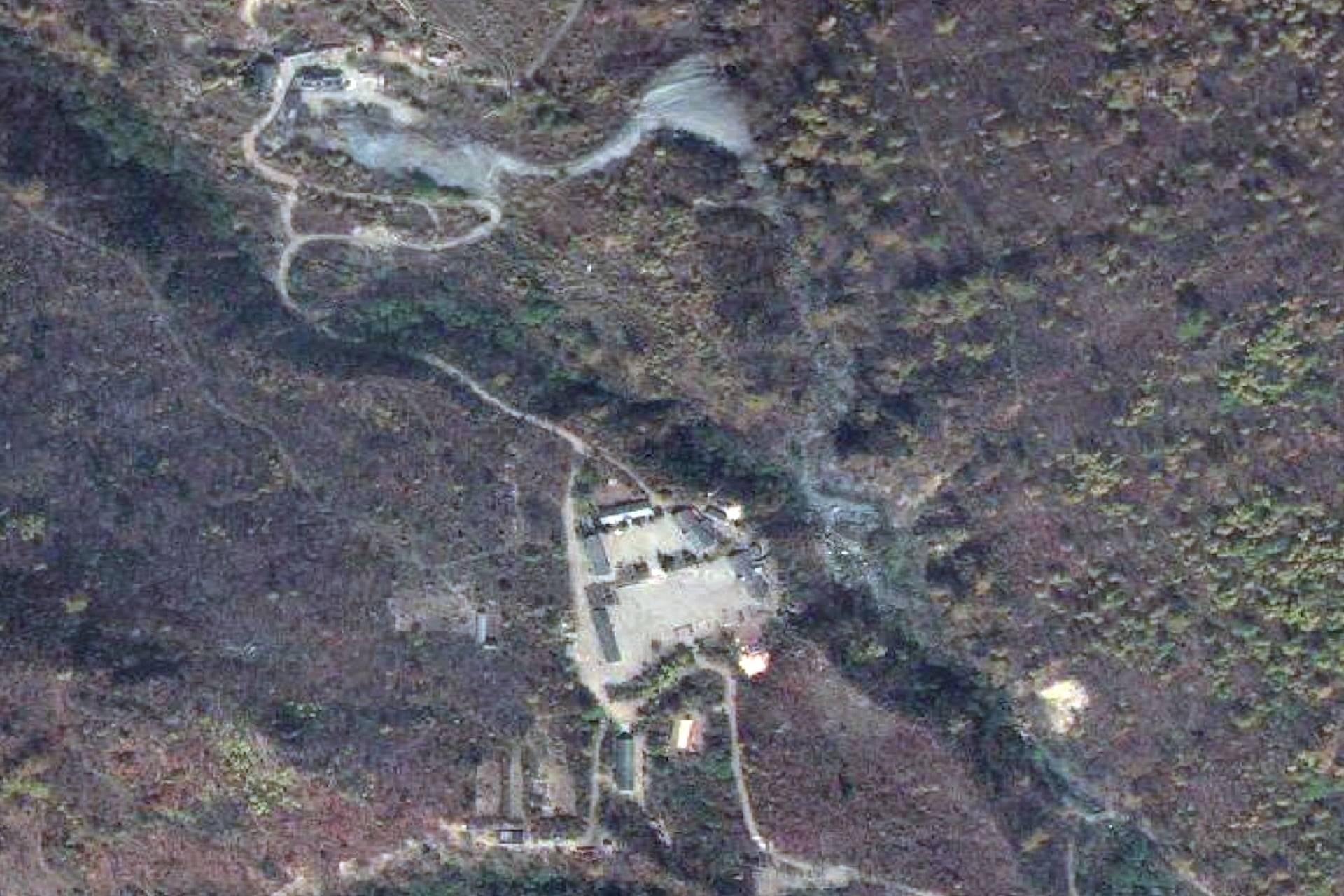
The Democratic People’s Republic of Korea has conducted at least six major underground nuclear weapons tests at its secretive Punggye-ri facility beneath Mount Mantap within the nation’s coastal North Hamgyong Province. Back in September 2017, American seismologists with the U.S. Geological Survey (USGS) registered the final of these as a 6.3-magnitude earthquake-like event after DPRK scientists detonated their test bomb—but the aftershocks and quakes have reverberated onward into the present day.
A coalition across three of China’s research universities and the nation’s China Earthquake Administration (CEA) have now traced revived earthquake activity along several once quiet faultlines surrounding Mantap. These quakes, which began with a seismic event on September 23, 2017 (or three weeks after that final September 3 test) have persisted, periodically recurring all the way up to May 2025, the last month that this group collected data for its study.
“The progressive increase in both the earthquake rate and the moment release rate indicates that the crust did not simply relax toward equilibrium after the final explosion,” the researchers wrote in their new study, published Thursday in the journal Science.
Instead, they reported, seismic activity “expanded gradually as preexisting faults became active.”
A literal seismic shift
The nuclear weapon that North Korea tested in September 2017 had an estimated explosive yield between roughly 100 and 250 kilotons of TNT—at least 10 times the power of the atomic bomb that the U.S. dropped on Hiroshima near the end of World War II. The study’s first author, geophysics researcher Xingli Fan of the Chengdu University of Technology’s Key Laboratory of Earth Exploration and Information Techniques, worked with his team to pull seismic data from sensors in both China and South Korea to better understand this test’s consequences.
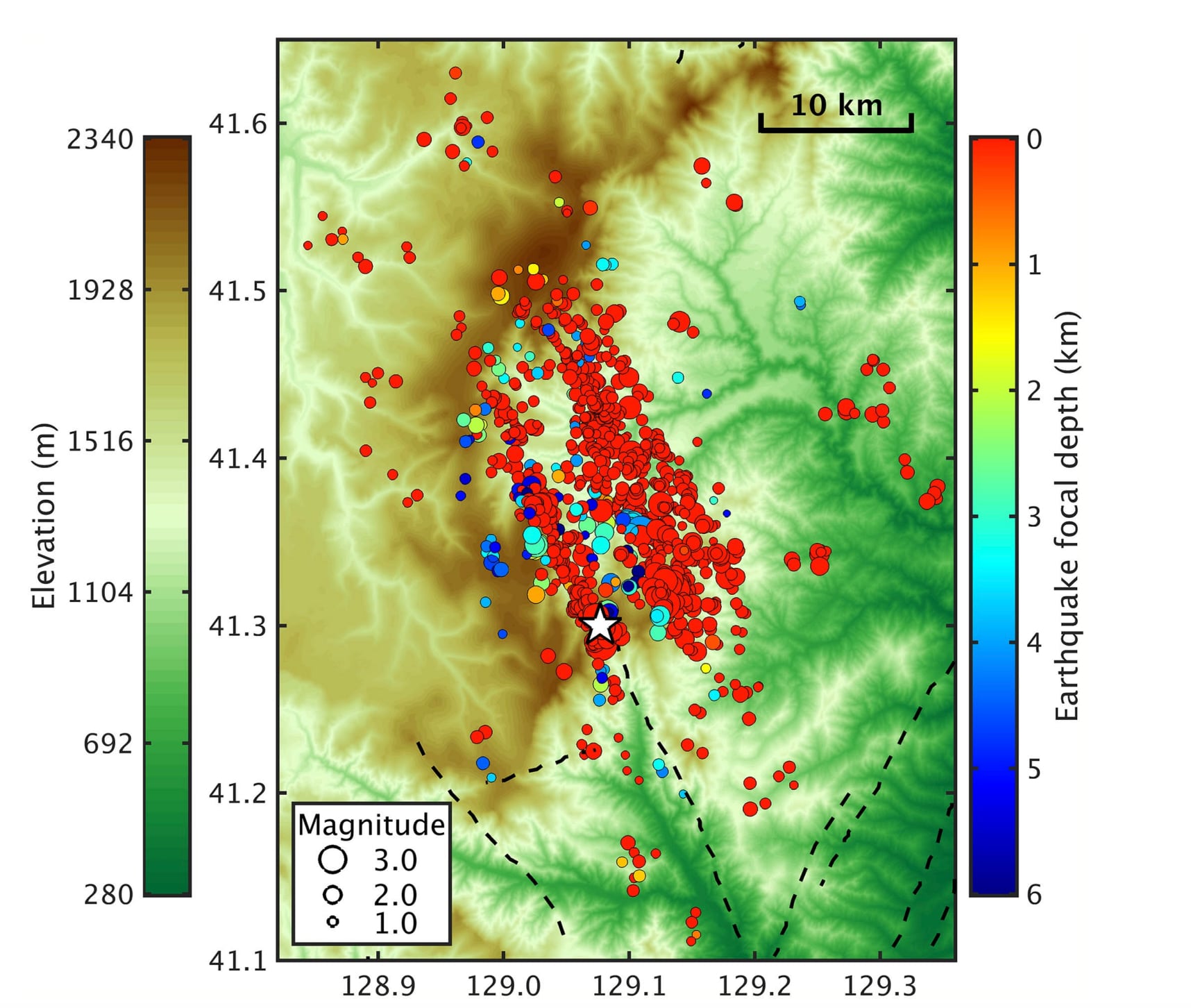
Some of these seismographic stations were quite close, within roughly 50 to 124 miles (80 to 200 kilometers) from the secret nuclear site. The data, which spanned the years from 2008 to 2025, identified 1,399 local earthquakes events during this period—a spike never before seen in earthquake data collected from the region since events like these were first formally catalogued on the Korean peninsula back in 1904. For Fan and his colleagues, the fact that North Korea’s first major nuclear test beneath Mantap detonated on October 9, 2006, served as something of an early indicator that these non-metaphorically earth-shattering blasts were altering local plate tectonics near the mountain.
Another big clue, they noted, was that satellite radar had measured “substantial ground deformation” atop Mount Mantap’s peak.
“Rather than generating only short-lived aftershock sequences, such perturbations can initiate the delayed reactivation of intraplate faults that unfold over years,” the researchers wrote.
Global shockwaves
While it’s true that underground nuclear testing has been associated with earthquake activity since the start of the Cold War, what’s happening in North Korea’s northeastern province is measurably different. Past studies of these kinds of underground tests at the Nevada National Security Site (Area 51’s neighbor) and the former Soviet Union’s Semipalatinsk Test Site in Kazakhstan also documented seismic aftershocks.
But, like ripples in a pond, these episodes were typically limited to the days and weeks directly after each underground nuclear test and were tightly constrained to the region closest to each bomb test’s epicenter. And they almost always faded back to normal in short order.
The increasing seismic activity near Mount Mantap, then, is anomalous for these kinds of tests—with major implications not just for local earthquake safety but also ongoing monitoring and verification efforts under the Comprehensive Nuclear-Test-Ban Treaty.
“Seismicity occurring years after detonation may complicate attribution and blur distinctions between explosion-related and tectonic events,” the researchers warn. “Sustained monitoring and physically informed interpretation are therefore essential when evaluating late-stage seismic activity in the vicinity of legacy test sites.”