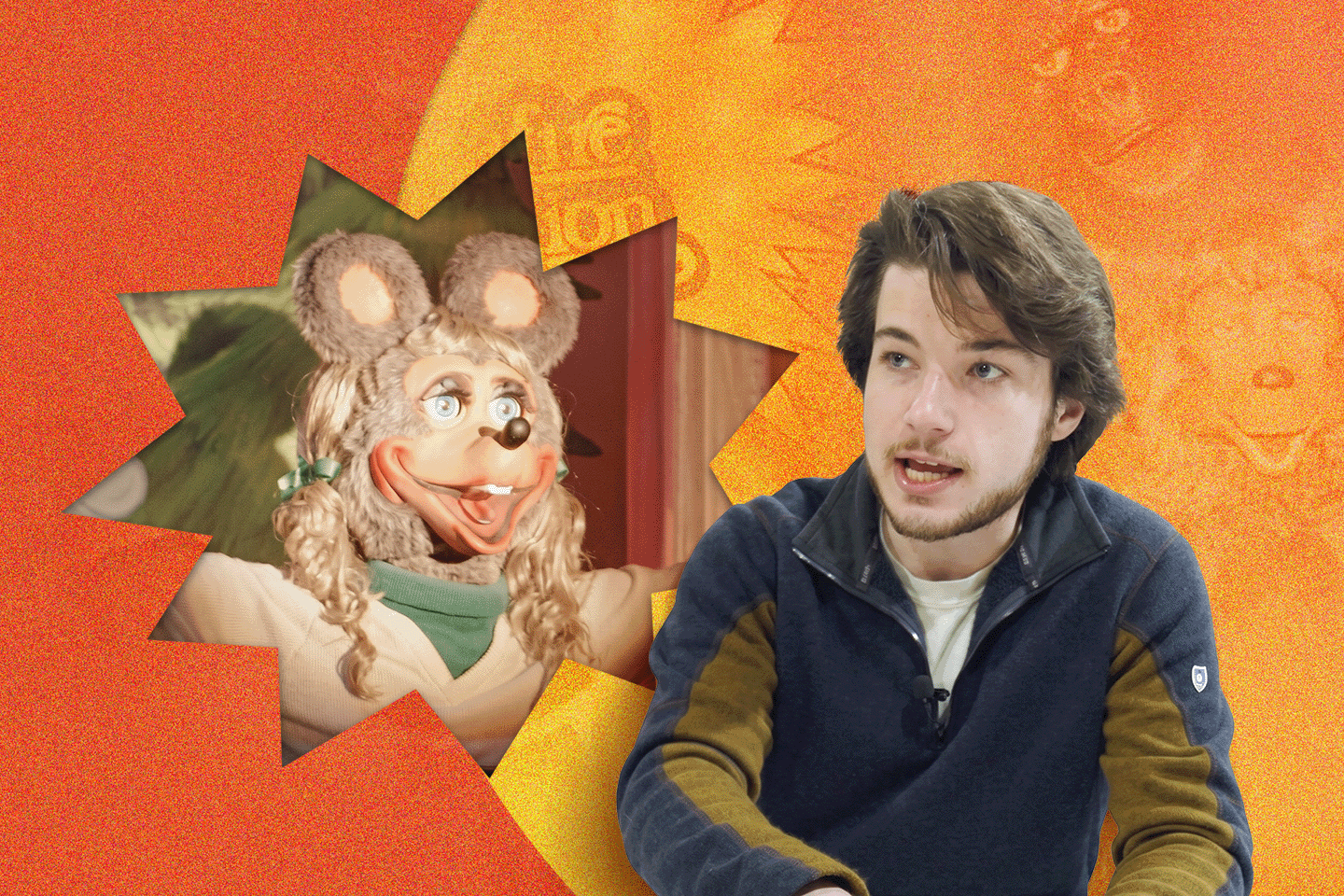
Can you believe this guy never went to a pizza party at Chuck E. Cheese? Actually, Jack Turner missed out on most of the animatronics-heavy TV shows, movies, and restaurants that made this rare breed of furry, mechanical, musically gifted robot a legend.
So how exactly did a 23-year-old with no longstanding relationship with Charles Entertainment Cheese (that’s right: Chuck E. Cheese’s middle name is Entertainment) become the foremost animatronics whiz in the country?
Naturally, it all started with YouTube. In 2014, 11-year-old Turner was poking around online when he kept coming back to a video that piqued his interest: YouTuber Markiplier playing Five Nights at Freddy’s. The game, in which a gang of murderous animatronic animals stalks a night-shift security guard, stirred something up inside the boy that couldn’t be coaxed away. Not even the 24-hour-long Nyan Cat video could compete. He’d stumbled upon his life’s purpose… he just didn’t know it yet.
While the game was fun enough, Turner found it wasn’t the jump scares that held his interest — it was the psycho animatronics featured in the game. He became fascinated by their real-world counterparts. He wanted to know how they worked, what they could do, and — most importantly — how he could get his hands on one.
Those questions sent him down a long Google rabbit hole that ended at the Rock-afire Explosion — the band of singing, dancing robot animals that played to families at ShowBiz Pizza Place (later rebranded as Chuck E. Cheese) through the 1980s. Inventor Aaron Fechter created the lineup, which included a keyboard-playing gorilla, a guitar-strumming polar bear, and a cheerleading mouse named Mitzi Mozzarella. Turner had never seen anything like them.
Like any 11-year-old with a fun new hobby that costs thousands of dollars, requires specialized mechanical knowledge, and needs several hundred pounds of industrial equipment to get it all going, Turner went all in.
For those less versed in the animatronics secondary market, this stuff ain’t cheap. Turner found that out when a lone robot arm he was watching on eBay opened at $20 and sold for $800. Then he came across an odd Kickstarter: an amusement park owner was selling off attractions to raise money to reopen, and one reward was a complete Rock-afire character for $1,000. After a lot of begging, Turner’s dad agreed to shell out the cash, hoping it would at least be educational.
In 2015, Mitzi Mozzarella arrived at his front door. Turner had no idea what to do with her.
“I truthfully didn’t know anything,” Turner says. “I wasn’t a mechanical or technical person.”
He found her tangle of air cylinders, valves, and linkages a beautiful mystery. For the first year and a half, he moved her — one motion at a time — with a bicycle pump. Eventually an engineer started tutoring him over Skype, and things slowly began to click.
In 2017, his half-restored Mitzi won Best in Class in Robotics at the Bay Area Maker Faire. Two years later, he bought an entire Rock-afire Explosion band to restore, a job he took so seriously that he flew to China to have the characters’ original 1980s fur reproduced.
Today, Turner runs the aptly named Jack’s Animatronics Warehouse in St. Joseph, Missouri, where he indulges his childhood obsession with restoring animatronics and gives tours.
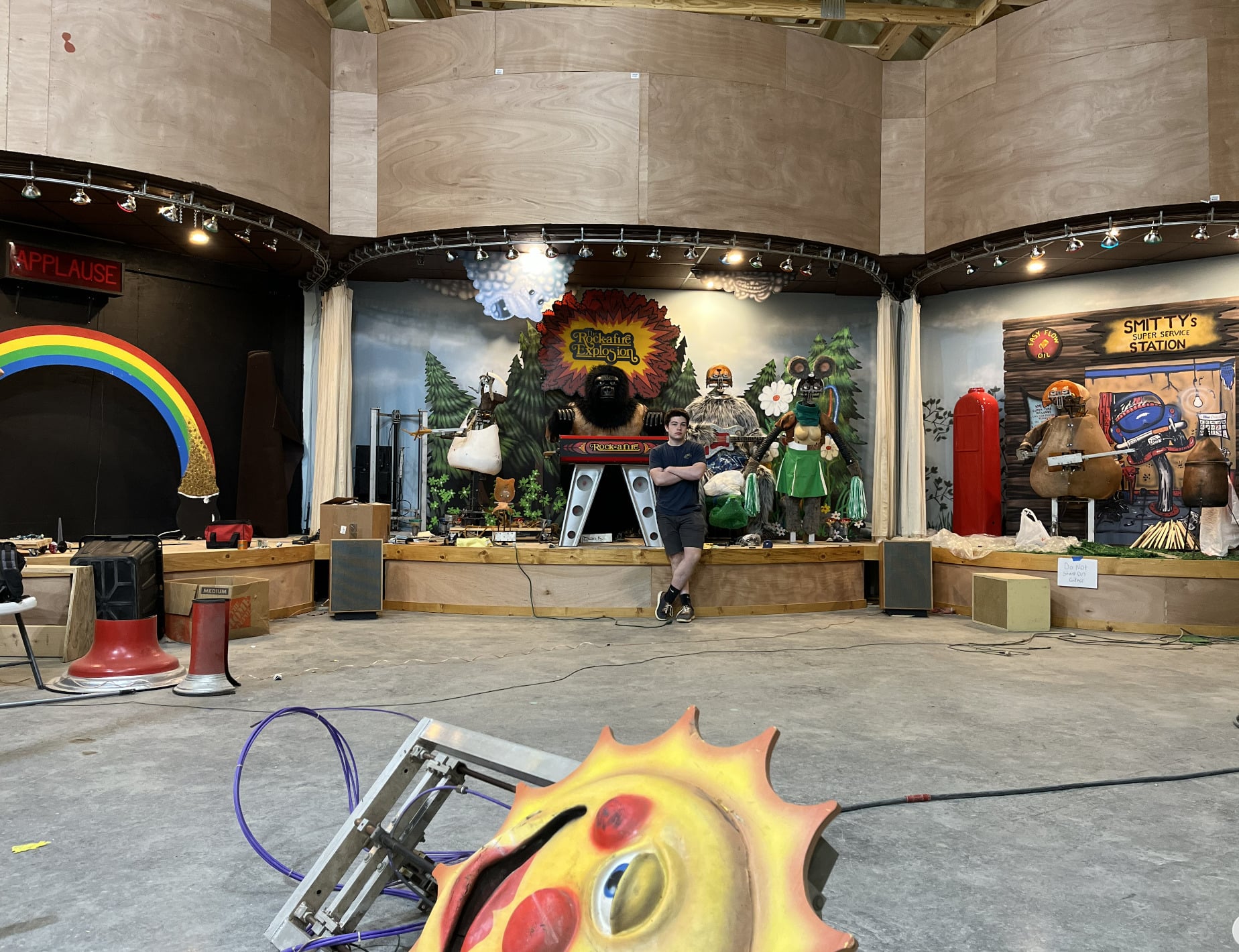
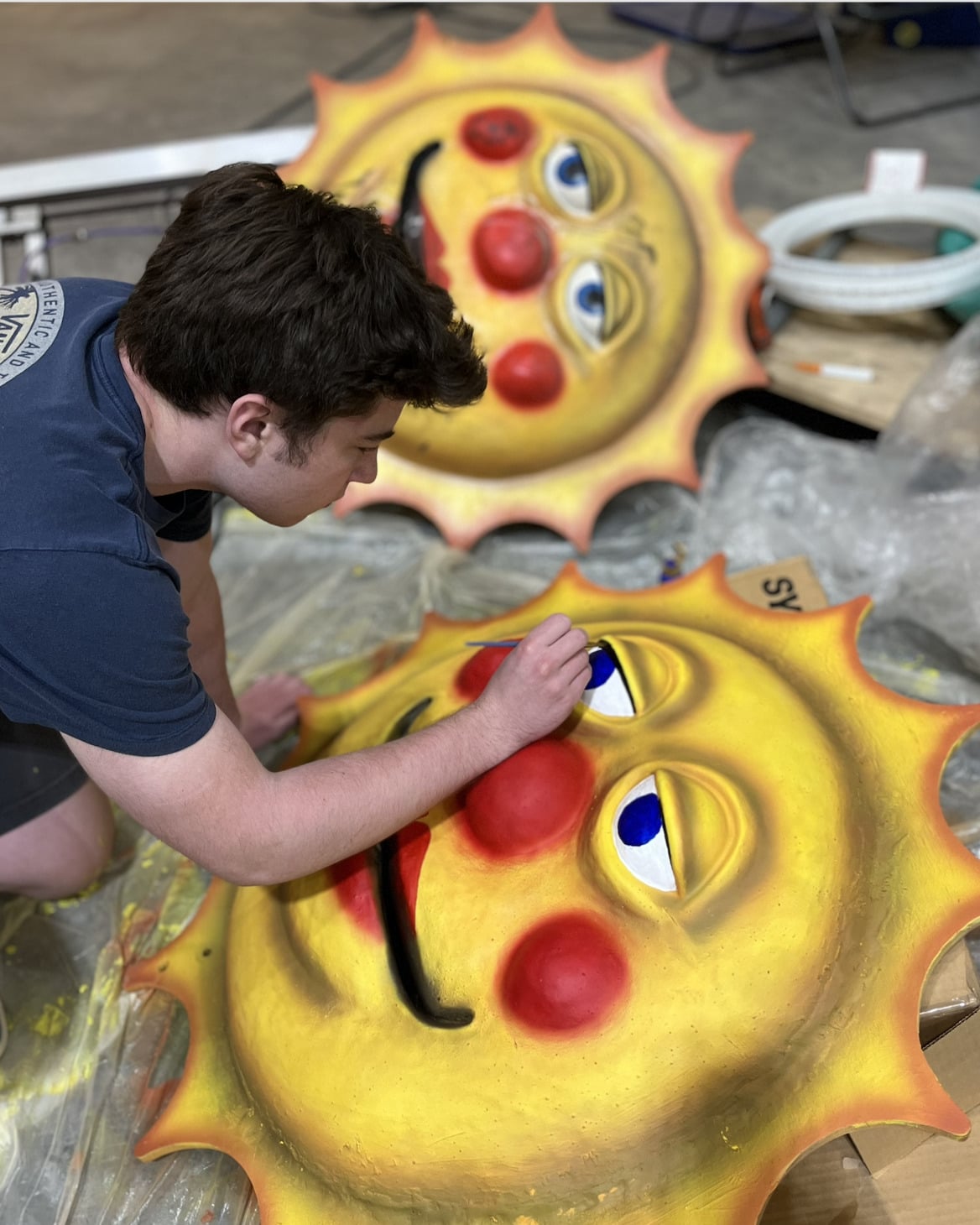
He’s fixed up and sold nearly 100 Rock-afire Explosion characters, hand-painted more than 100 masks, and tracked down long-lost molds, fabrics, and mechanical parts to help other enthusiasts revive their own robotic relics. His crowning achievement is the first complete restoration of a Rock-afire Explosion show, finished in 2023 after four years of rebuilding practically everything from scratch.
The space is also open for private tours, giving visitors a rare chance to peek behind the mechanical curtain and watch an awe-inspiring show for a cool $450.
The band plays in his Missouri warehouse on a 40-foot stage with full theatrical lighting and a catalog of hundreds of songs. Turner has programmed them to perform Lady Gaga, Lana Del Rey, and MGMT.
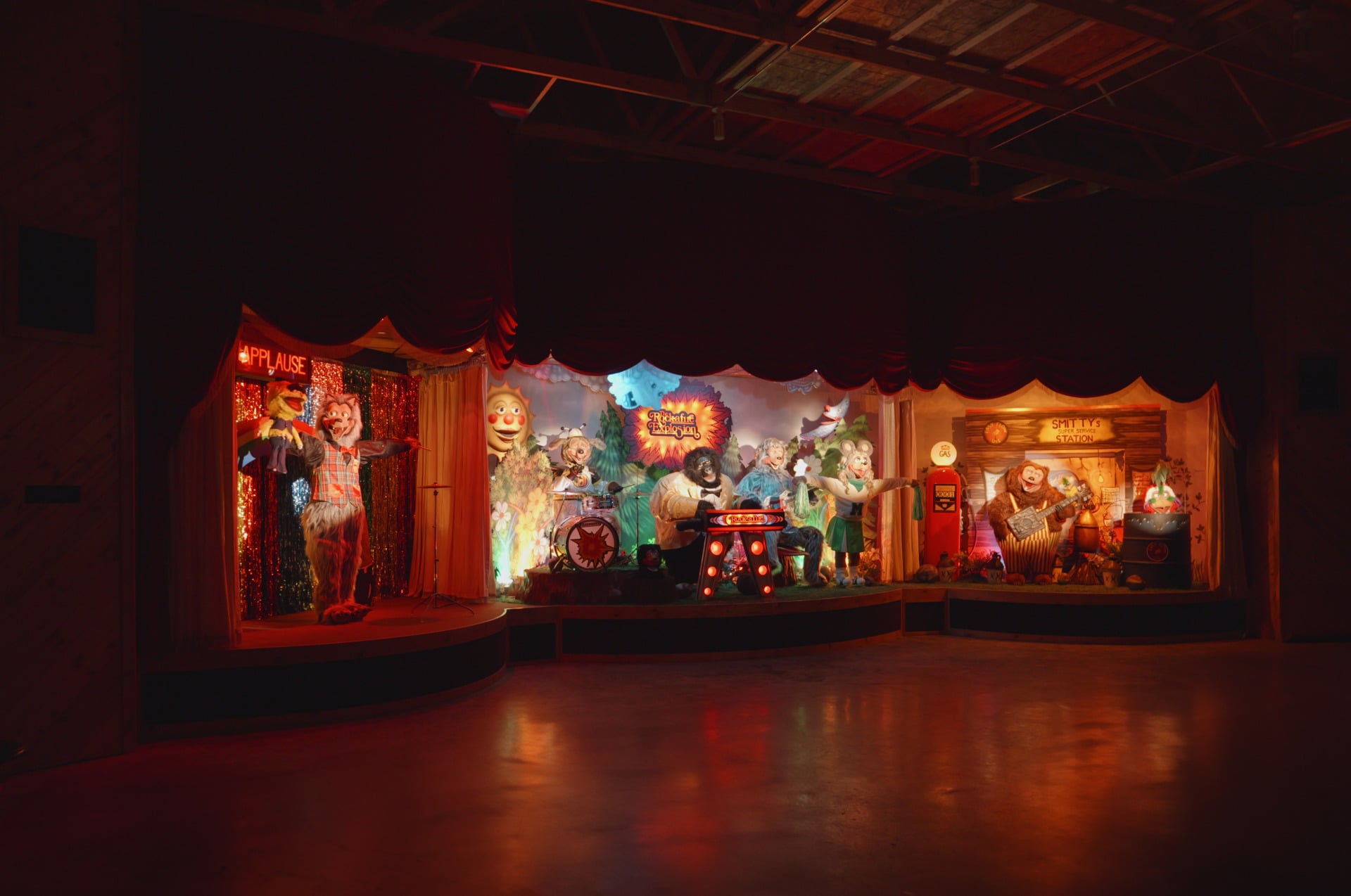
“I’m interested in the immersive experience of an animatronic show,” he says.
“Horror has brought a lot of people to animatronics, but I’m trying to show that there’s more to these characters than being creepy. People can enjoy the music and the craft behind the show.” At a time when you can generate a custom song or movie with a couple of choice phrases and a ChatGPT subscription, Turner takes time to hand-program 40-year-old robots to perform for a new generation of animatronics lovers.
Gizmodo talked with Turner about how he got into animatronics and what it takes to bring a broken mechanical animal back to life.
This interview has been edited for length and clarity.
What was it like when your first animatronic character arrived?
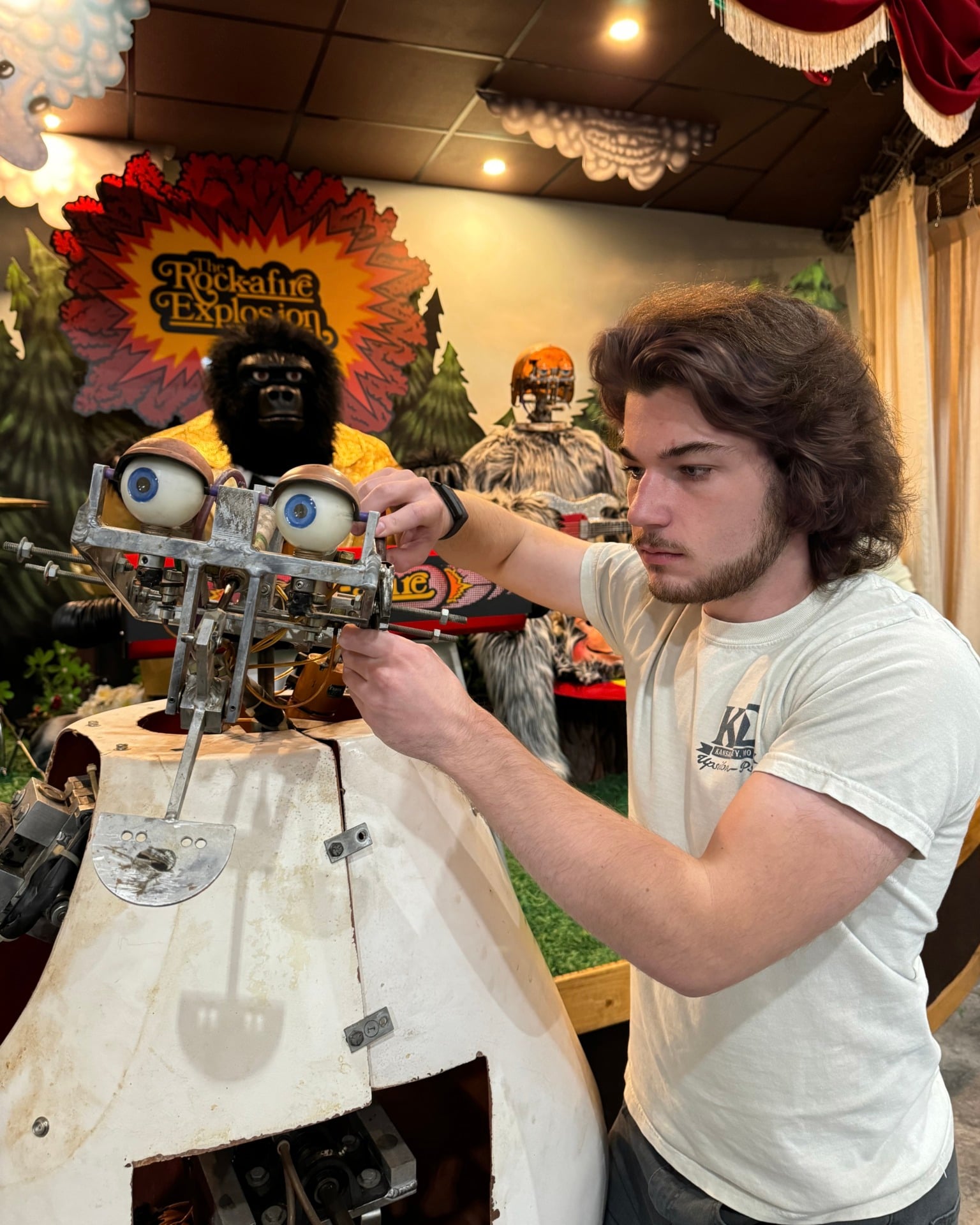
I got it in 2015, and I was completely overwhelmed. I didn’t understand anything. For over a year, I operated my first character’s movements with a bike pump because I had no idea what solenoid valves or air compressors were. It was a slow process, but I kept researching online and built up my skills bit by bit. Learning new things has always been a challenge; It was pneumatic, with air cylinders and valves, and I had no mechanical or electrical experience. Eventually, my dad connected me with an engineer, and we talked over Skype while he explained how the valves and cylinders worked. It took about two years to figure it out. I tell kids who visit my warehouse that I genuinely knew nothing when I started. These are things you can learn.
Who was that first character?
Mitzi Mozzarella from the Rock-afire Explosion. She didn’t have any of her skin on, so you could see the bare mechanism. People were still intrigued.
And eventually you found an entire Rock-afire Explosion show?
I found a complete Rock-afire Explosion show in 2019. I’d been searching for years. I spent the next four years restoring every part.
What went into restoring the whole show?
The restoration involved everything, mechanically and cosmetically. The original characters were made in the 1980s, and I wanted the fabrics to match exactly. I went to China to have replica fur made because the original fabric was no longer produced. We made new molds for the characters and spent about two years working with Aaron Fechter on parts of the project, including the stage. It was a huge undertaking.
How does the Rock-afire Explosion actually run?
The Rock-afire Explosion’s control system is essentially based on player-piano technology. Until a few years ago, Aaron Fechter used Apple IIe computers to program the characters. My friend Layton has since developed a Windows-based system. But the fundamental work hasn’t changed: you still choreograph every movement individually.
When did restoration become more than a hobby?
I started buying, restoring, and selling characters, learning more with every project and meeting people in the community. One of my favorite parts is sharing the characters with people who grew up with them. I restored two characters for a pinball store in Texas, and seeing the owner’s reaction to having those childhood characters running again was really special. It started as a hobby, and I still think of it that way, but it’s also become my full-time business.
What part of the work on animatronics appeals to you most? What is it about animatronics as an art form that interests you?
I really love the artistic side. People sometimes assume I’m primarily interested in robotics. My dad even suggested I work for Boston Dynamics. But my interest isn’t just in the mechanics; it’s in what you can create with animatronics.
I think of animatronics as an artistic medium. Walt Disney helped pioneer it in the 1960s, and he wanted to bring historical figures like Abraham Lincoln to life so audiences could experience them almost as if they were in the room. That’s what interests me: how technology can create an experience.
And how does animatronics compare with robotics? Where do you draw the line between them?
Animatronics is definitely a form of robotics, although I’m not sure exactly where the technical distinction lies. The distinction from an automaton is a little clearer to me: an automaton uses gears and mechanisms to produce a sequence of motion, while an animatronic can control different movements individually. The craftsmanship involved in either can be extraordinary.
With animatronics, movements are controlled individually. The movie Hugo has an old automaton, and it’s a good illustration of how elaborate those early machines could be.
What kind of gadgets do you use to bring these things to life?
A lot of programming is involved. Although the Rock-afire Explosion uses a Windows-based control system, the actual characters still operate using air cylinders and electronically controlled valves.
How much time does programming a new song take?
Aaron told me that back in the 1980s, a team could spend a week programming one minute of a song for the whole show. My first song took me six months. We call it programming, but it’s really more like choreography.
What was the first song you programmed?
“Nightcall” by Kavinsky. I’m a little embarrassed by that first program and haven’t wanted to release it. I’ve also done “Ride” by Lana Del Rey, songs by MGMT, “Rebel Yell” by Billy Idol, and “Poker Face” by Lady Gaga.
What is the trickiest movement to program?
The mouth is the hardest because that’s where people look. If the movements aren’t synchronized with the vocals, the character looks like a puppet opening and closing its mouth at random. Aaron always emphasized that the programming is everything, and I try to be very precise.
And how do you feel about AI entering this kind of creative and technical work?
I worry AI can make us lazy or take away some of the creativity involved in making things. But I also use it for coding, and I can see its value there. It’s such a new technology that I don’t think anyone really knows how it will play out.
Why do you think people are coming back to animatronics?
I think these things go in cycles. In an age of AI and digital media, people are becoming interested in physical things again: vinyl records, VHS, and other tangible formats. I think animatronics are part of that return to physical experiences.
Is part of the appeal seeing the human work behind the finished show?
Absolutely. There’s a process and a human element behind it. Horror has brought a lot of people to animatronics, but I’m trying to show that there’s more to these characters than being creepy. People can enjoy the music and the craft behind the show.
What message do you want to share with the public about your work?
I want people to see animatronics as a real art form, not just something creepy or a piece of ’80s nostalgia. Disney showed what the medium could do, like letting you sit in a room with Abraham Lincoln while he gives a speech. It can tell stories, be funny, or just be really fun to watch. At the end of the day, I want people to walk away entertained and enjoying it as much as I do.