There are a metric f*ck ton of wireless earbuds and headphones in the world, so if you’re going to sell a pair in 2026, you better have something that stands out at least a little bit.
In the case of Technics, that something is three words: magnetic fluid drivers. That may sound pretty far out and futuristic, and you know what… it kind of is. What’s really important isn’t the technical details of how the magnetic fluid drivers work, though; it’s how they sound.
I got a chance to try them on Technics’ EAH-AZ100, its flagship wireless earbuds from last year, and the results were really great. So when I saw Technics’ new wireless headphones, the $449 EAH-A1000, were employing the same tech drivers, my hopes were high, and fortunately, Technics didn’t let me down.
Technics EAH-A1000
The Technics EAH-A1000 sound great, but the ANC isn't quite on par with competitors.
Pros
- Sound is balanced and clean
- Bass is great
- Pretty comfortable
Cons
- ANC is not as great as you would like for the price
- Pretty bulky
- Not a ton of features
A big emphasis on bass
There’s nothing particularly flashy about the EAH-A1000 on the surface, but once you peek inside, they get more impressive. As I mentioned, arguably the highlight feature is the magnetic fluid drivers. To reduce distortion, the EAH-A1000’s drivers are immersed in an oil-like substance with magnetic particles that prevent unwanted movement when they vibrate to make sound. Basically, the extra stability tamps down on wild vibrations and the distortion those vibrations may create.

Just like on Technics’ magnetic fluid wireless earbuds, the EAH-A1000 have a very clean and balanced sound as a result. One of the highlights is the bass, which feels ample but not distorted or overwhelming even at higher volumes. Listening to my go-to test tracks for bass like “Da Funk” by Daft Punk, the EAH-A1000 acquitted themselves well. The low end was big and punchy without drowning out other frequencies, though if I’m being honest, the default tuning is a bit heavy on the bass. I’m happier when I give the treble a little bit of a boost.
On other test songs like Steely Dan’s “Any Major Dude Will Tell You,” I also liked the tuning out of the box. The EAH-A1000 are on the warmer side: guitars sounded bright, and vocals were clear. There’s good stereo separation, too. I was able to easily hear when instruments were panned to either side, adding a good sense of space and the impression of a wide soundstage.
To complement that good sound quality, the Technics EAH-A1000 also have surprisingly good audio quality. I had a several-minute phone call with background noise playing off my laptop (music from YouTube), and the person I called said they could hear my voice well with almost no ambient noise pickup. They rated the call an 8/10, which is rare for wireless headphones in my experience.
If I had to liken the overall audio quality to one pair of wireless headphones, it’d be Sony’s WH-1000XM4C or the WH-1000XM6, though I think the biggest difference here would be the bass performance. If you care about low-end in your wireless headphones, this might be the pair to spring for.
Not feature-rich but feature-secure
The EAH-A1000 don’t have the most features of any pair of wireless earbuds that I’ve used, but they have the ones you’ll want. One of the biggest is active noise-cancelling (ANC). Though these wireless headphones may sound somewhat similar to the WH-1000XM6, they don’t have anywhere near the same level of ANC.
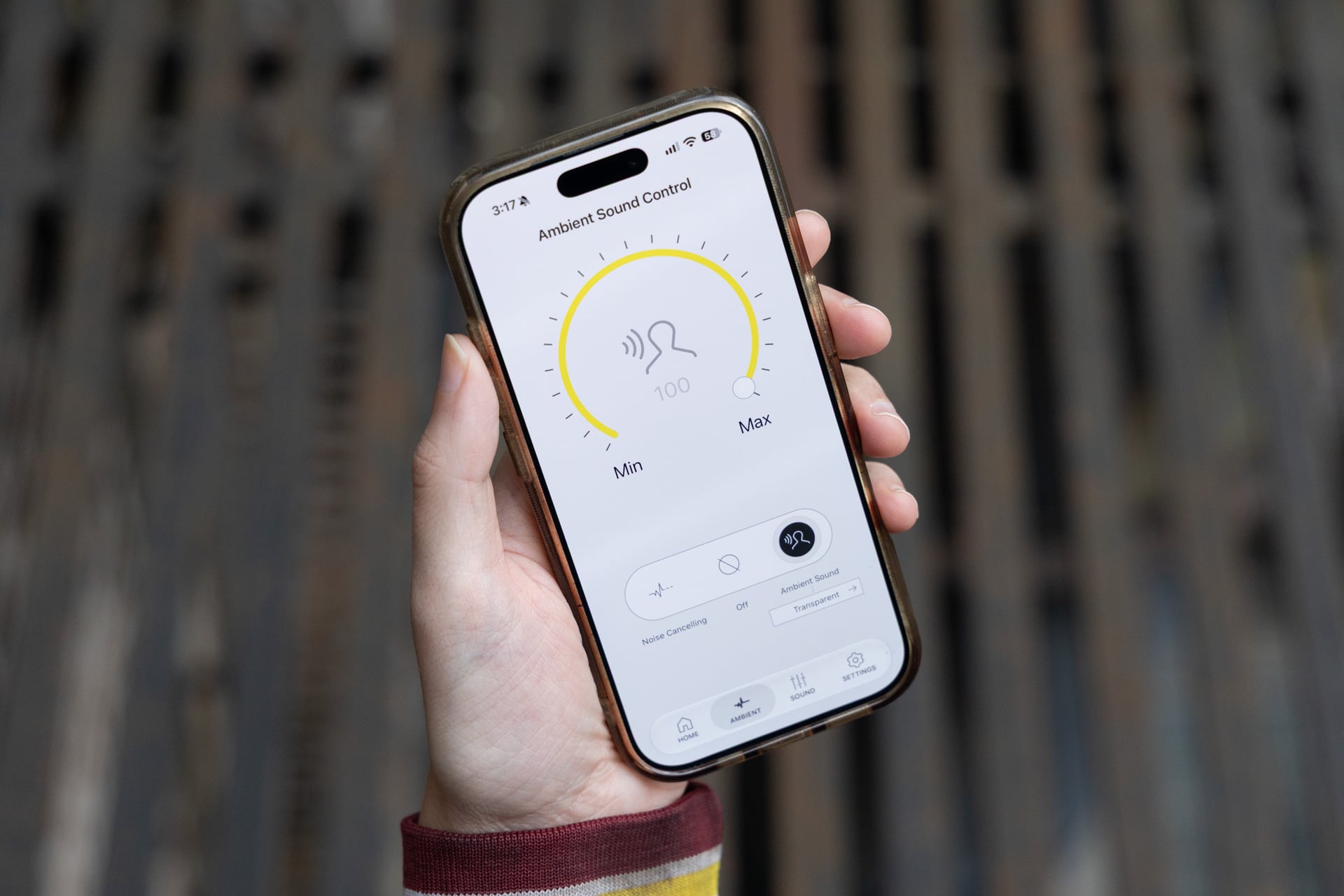
I wouldn’t call the ANC on the EAH-A1000 subpar, but it’s average. On the train, I still got a good deal of noise bleed. I was able to hear train screeches, announcements over the PA, and people talking, even with the ANC turned up all the way. It was much better in an office setting, but that’s not necessarily where you want your ANC headphones to block out the most noise. If you want the best ANC, Bose, Sony, and Apple are still at the top of the pile.
Likewise, transparency was decent but not anywhere near the best I’ve used. It allows you to hear your surroundings more, and I like that it’s adjustable in the Technics app, but it sounds quite tinny and artificial.
If there’s one feature that you might want to take out for a spin outside of ANC, it’s Dolby Atmos spatial audio. AI that adds spatial elements to songs isn’t typically my favorite thing in the world since it has a bad habit of absolutely destroying the mix by blowing out certain frequencies, but the EAH-A1000’s is… okay. It definitely expands the soundstage a bit, though it does fall victim to the aforementioned in some cases. While listening to some of my favorite songs on Spotify, like Feeble Little Horse’s “Rewind,” I noticed that turning on spatial audio drowned out the vocals a bit and amplified the bass a bit too much.

This is kind of par for the course with spatializing features like this, though, and ultimately it’s your choice if you even want to use them, so it’s hard to be too mad. Besides, I find them more important and useful in earbuds, open ones, for example, since they have a harder time representing the full frequency range without a little software help. Drivers in wireless headphones are just bigger, better, and more equipped without software.
Outside of those main features, you’ve got the usual suspects in the Technics app, like EQ (there are presets but also an eight-band custom EQ), adaptive EQ that changes depending on the loudness of your environment, and multi-device pairing.
Again, this is enough to satisfy most, though it’s not the longest list of software features.
Wide bois
If there’s one way to describe the overall profile of the EAH-A1000 from a visual perspective, it would be… large. These wireless headphones fall into the cans with a capital “C” category. Not my favorite looking in the world, but my head is also on the smaller side, so maybe they’ll look less ridiculous on you.

The good news is, despite the size, they’re very light. The EAH-A1000 are constructed from aluminum and plastic, with the former material being used for adjustable band. I like that the band is metal—it provides at least the feeling of sturdiness. Plus, points for being able to fold these wireless headphones down.
I also like the metal finish on the outside, and the memory foam on the earcups is nice and cushy. Overall, the EAH-A1000 are very comfortable over longer periods of use—good job here, no notes. Also nice: there’s a 3.5mm headphone jack.
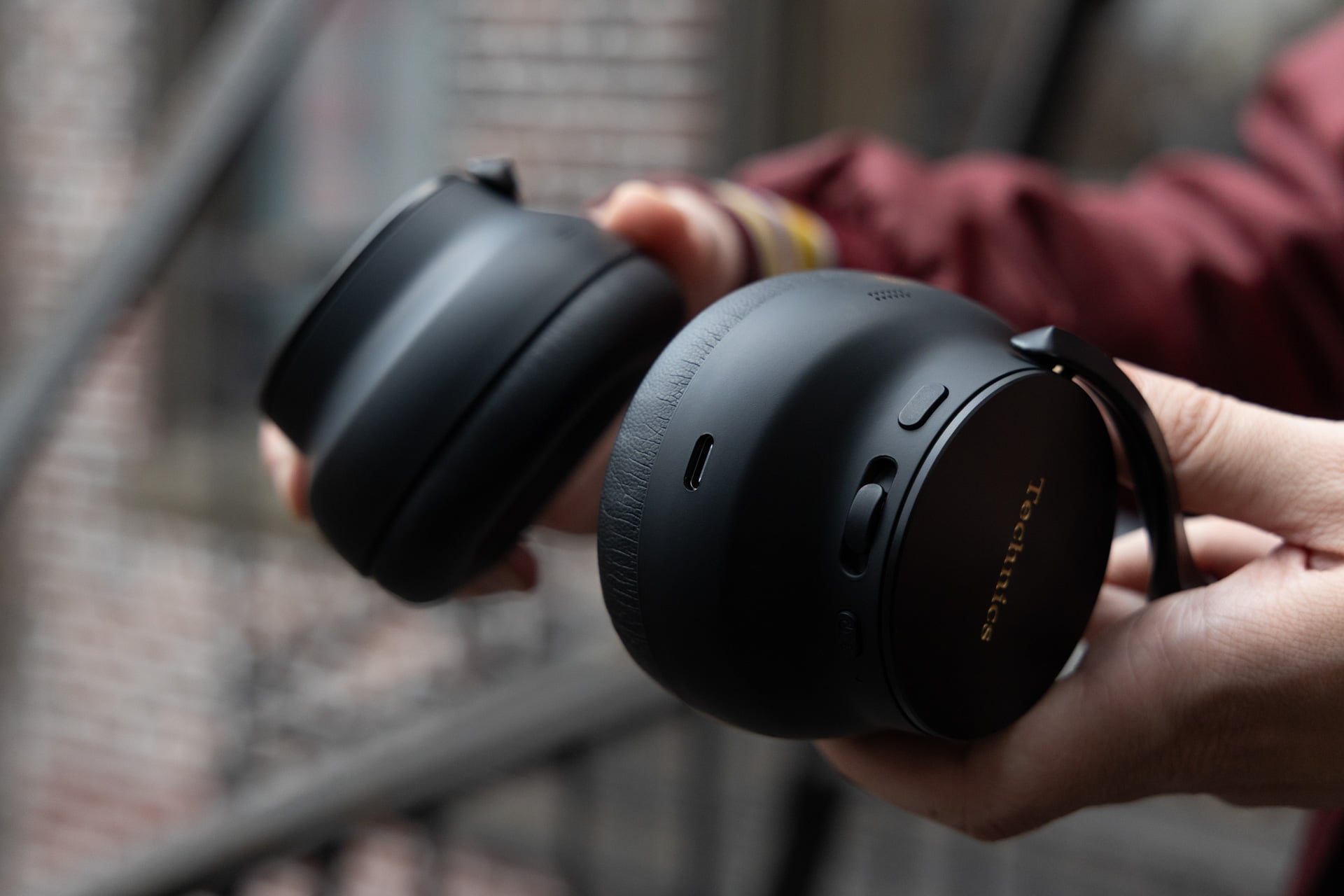
There are buttons, though they’re nothing to write home about. There’s a power on/off on the right earcup, a button for switching noise modes, and then a toggle for adjusting volume that you push up or down. The toggle is fine and functional, but it does feel a little cheap to the touch. That’s a minor complaint, to be sure, but worth noting since the EAH-A1000 aren’t exactly affordable.
Battery life is also quite solid. Technics says that the wireless headphones get 45 hours of battery life with ANC enabled. In my testing, the EAH-A1000 dropped from 100% to 97% in an hour of playing music at 50% volume. Based on that test, you’d get about 33 hours of battery, which is still pretty good.
Brutal competition
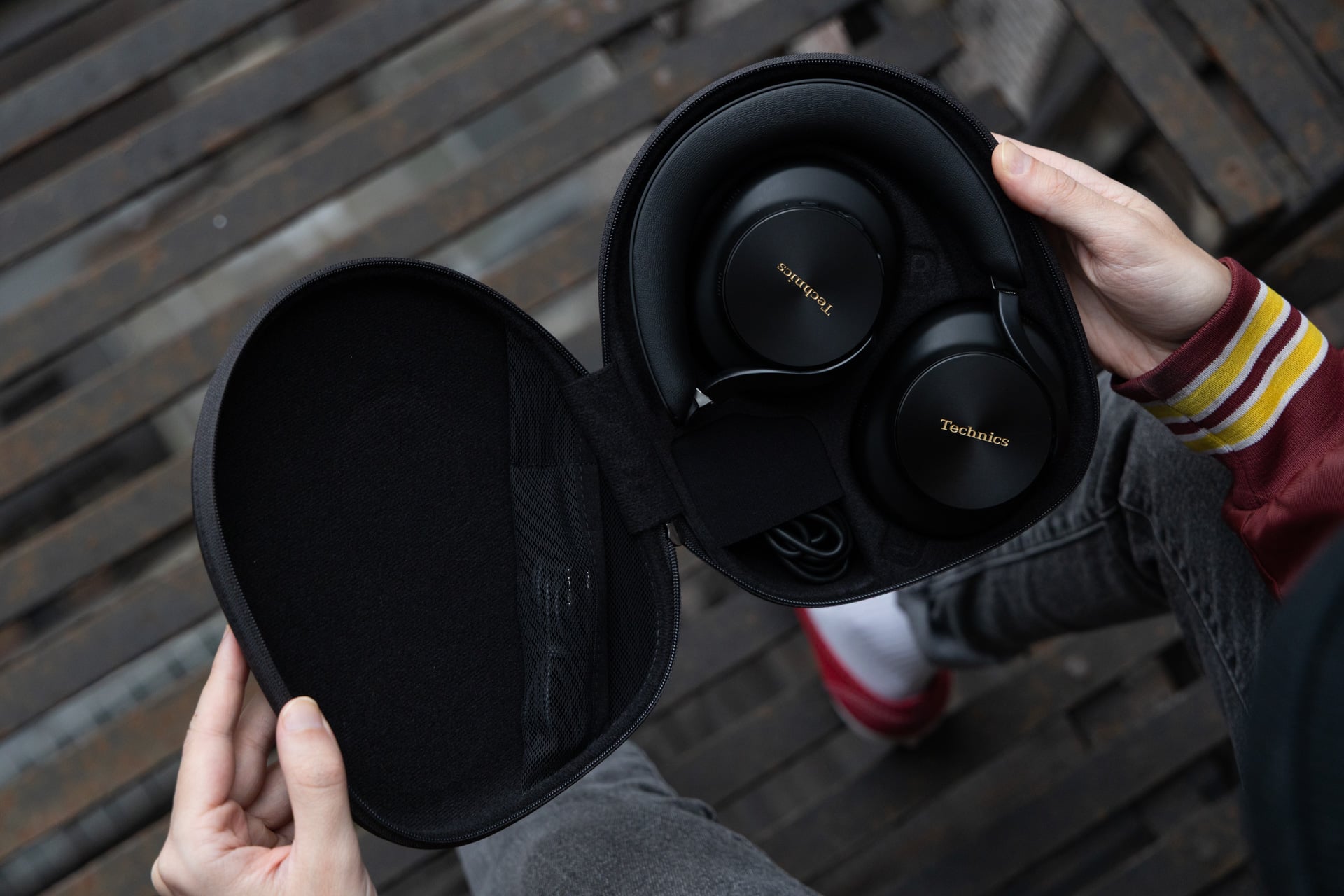
The EAH-A1000 are solid wireless headphones. The sound—the most important part—is very good, especially in the bass performance and clarity. The comfort, despite the bulky look, is also on point.
Where these wireless headphones lose me a bit is in the features; there’s no personalized EQ, and the spatial audio is sometimes song-ruining—a frequent problem with these kinds of features. Probably the biggest gap between the EAH-A1000 and other wireless headphones in the flagship category from Bose, Sony, and Apple is the ANC. I was able to hear a great deal more of my surroundings with ANC on compared to the QuietComfort Ultra Headphones (2nd Gen) or the AirPods Max 2.
Because those other options offer the best of all worlds, it’s tough to compete at the $450 price range, though if bass performance is high on your list of priorities, these are worth a listen. Still, until the EAH-A1000 are discounted, I’m not sure that I can recommend them over the three aforementioned companies that make some of the best wireless headphones out there.