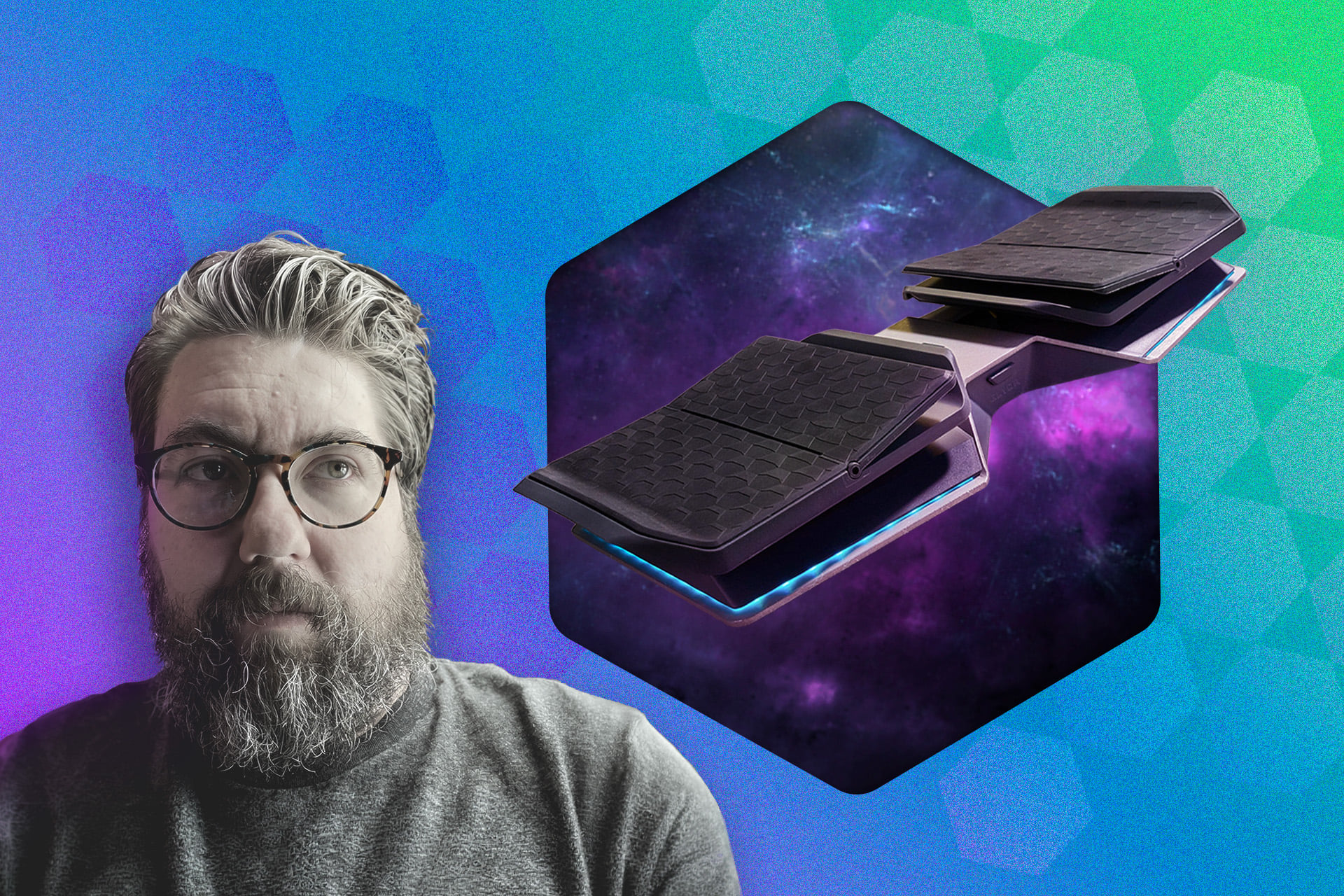
Like Rutger Hauer at the end of Blade Runner, veteran games journalist John Warren has watched gimmicky, would-be cutting-edge accessibility products fail in ways you wouldn’t believe. Across more than 15 years covering the industry, and as a lifelong wheelchair user whose north star is adaptive ease of use, he’s watched a parade of promising ideas fall short of their potential. Their concepts were there, but the X-factor wasn’t.
Then Glydr, a $299 foot-based controller, entered the picture. In Warren’s view, the concept was so outside the box compared with what Sony, Microsoft, and other major manufacturers had offered in terms of accessibility. The games journalist was so impressed that he joined as a co-founder to help build its ease of use for gaming and beyond.
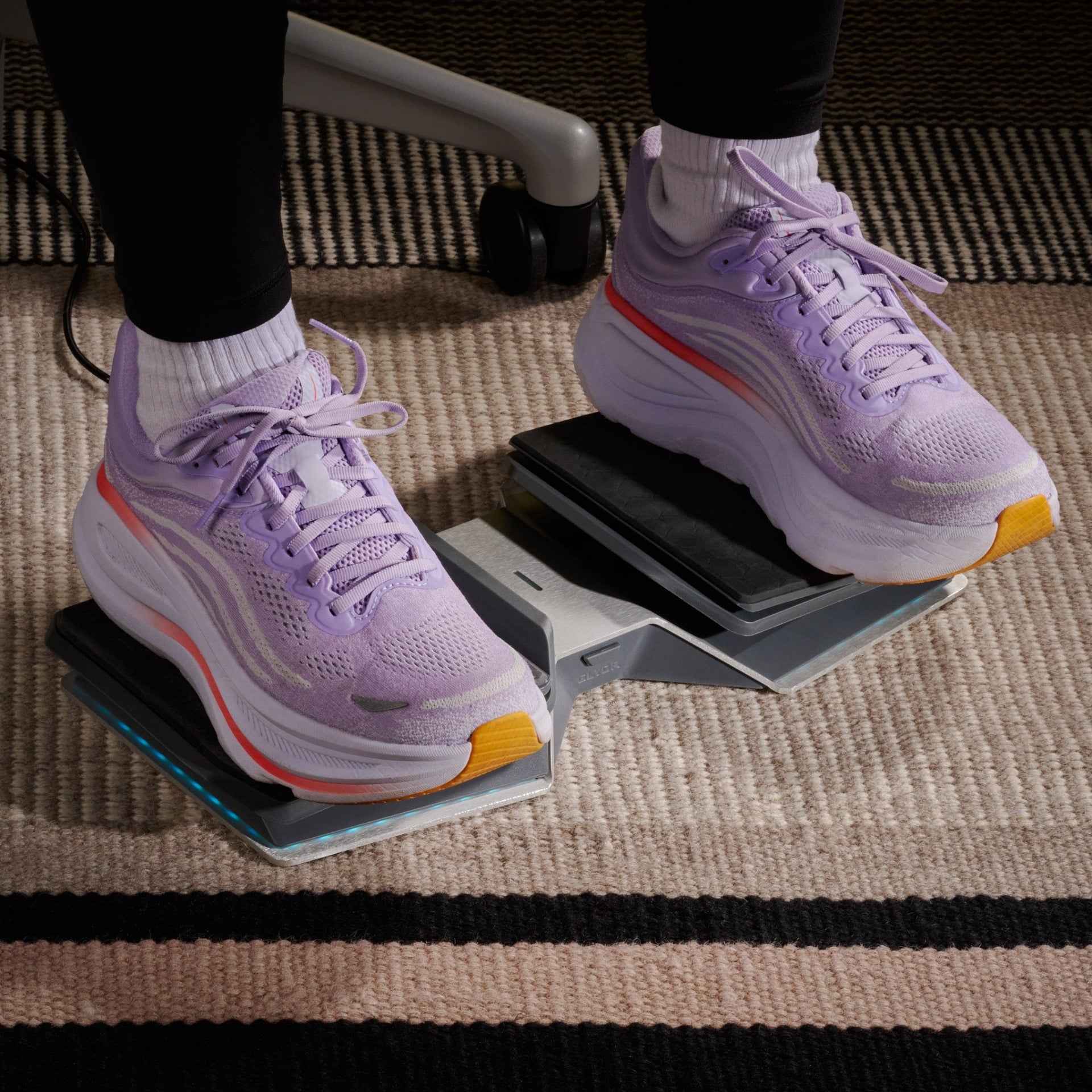
Admittedly, Warren approached Glydr with some skepticism when co-founder Rick Tett first introduced him to the device. Inspired by hoverboards that were all the rage in the 2010s, Glydr promised to improve gaming and everyday computer use by offloading keyboard, mouse, and gamepad actions from your hands—literally—and putting them at your feet. On the off-set, Glydr struck Warren as the sort of idea that surely already existed somewhere in the Machiavellian disability or VR gaming space. After all, using feet as an extension of how our hands interact with games felt almost obvious to him.
Traditionally, controllers force players to contort their fingers across buttons, thumbsticks, and triggers, asking overloaded hands to pull off clutch plays while dealing with the strain and muscle memory it takes to git gud. From past experience, Warren found that most attempts to ease that burden were novelties that barely moved the needle. Pedal setups like Logitech’s steering wheels and racing peripherals typically lock players into a narrow set of functions: handling on/off switches, braking, locomotion, and little else. Even pro and elite controllers that add back paddles ultimately ask players’ hands to do the same work, just from a slightly more convenient position.
Glydr took a different approach.
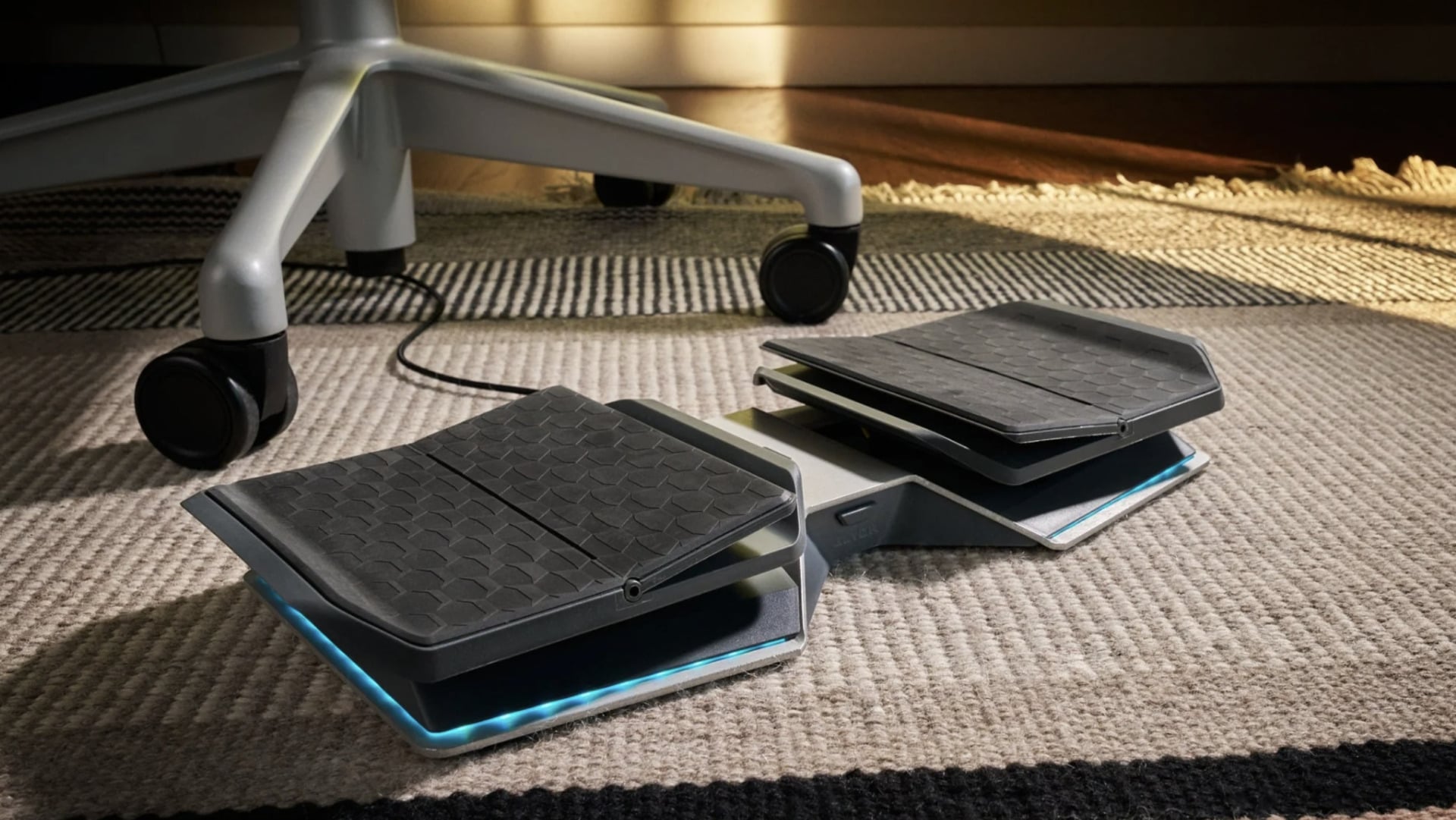
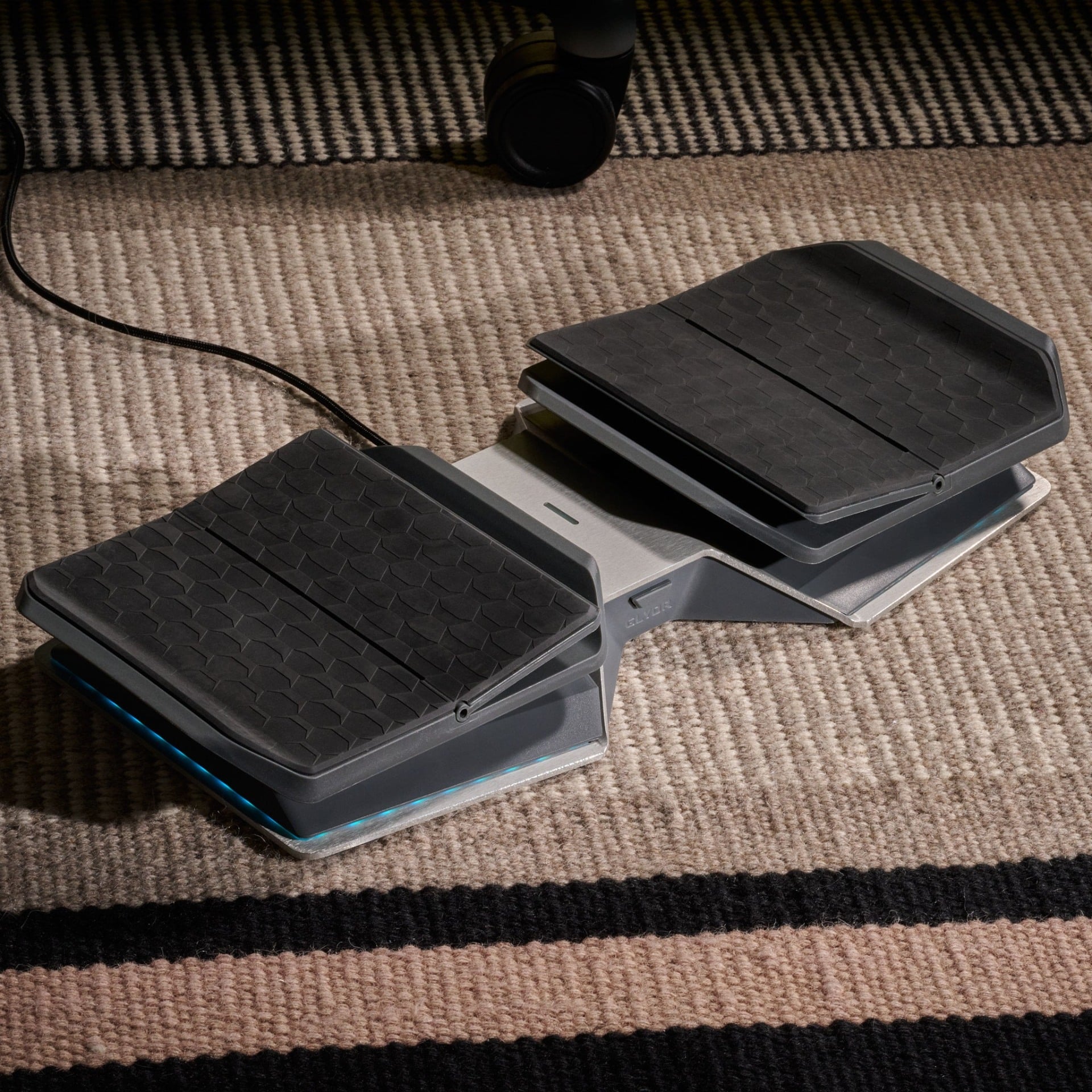
Rather than reassigning that workload, it redistributed it by giving players analog flexibility and multidirectional movement that meaningfully offloaded functions from their hands to their feet, supporting up to 16 mappable actions and customizable configurations.
When Warren put Glydr through the paces in Apex Legends, the difference immediately clicked.
“I have a really big problem with hand dexterity when it comes to toggling, sprint, and crouch with the thumbsticks on a controller, and also doing all the reaching on a keyboard,” Warren told Gizmodo.
“When I started to map that to my feet, it made me feel like I can play for a super long time and not get tired of it, not feel frustrated that my hands sometimes don’t feel like they’re moving fast enough. And it started to expand from there. I started playing around with it with other games.”
Glydr’s usefulness didn’t end with gaming. Its button mapping led Warren to adopt it as both a gaming peripheral and a workflow tool.
“We go to conferences, and we have people who are skeptical and probably look at it like a novelty… I would say 90 percent of people that sit down and play it, who [were] skeptical about five minutes ago, [say], ‘Oh, I get why you would want to do this.'” Warren said. “Because we’re so conditioned to overloading our hands with controllers, it makes sense.”
To better understand how Glydr works, Gizmodo spoke with Warren about how he helped shape it into a more accessible product, and why he believes our feet remain the most underutilized input method for productivity and ease of use over the snake oil of AI.
This interview has been edited for length and clarity.
Gizmodo: You’ve covered gaming long enough to see plenty of hardware gimmicks come and go. What convinced you Glydr was different?
I was introduced to the product back in 2020. I was working out in LA for ZAM at the time and was super busy. When that ended, I got back in touch with Rick, the founder, and wanted to do a deeper dive into it.
Honestly, when he first sent it to me, I was like, this probably exists in some capacity. Maybe it’s in the disability space, maybe it’s in VR, maybe I just haven’t seen it. Using both feet to augment what you’re doing in games felt fairly obvious to me.
But when I did the market research, I found that you’ve got game pedals that do one thing, or a couple of digital movements—just on/off switches. Nothing analog, nothing super mobile with different mechanisms and directions you can move with your feet.
How did that translate to actual gameplay?
When I started using it with games like Apex Legends, it didn’t feel gimmicky. I have a real problem with hand dexterity when it comes to toggling sprint and crouch with thumbsticks, or reaching around on a keyboard.
When I mapped those functions to my feet, I felt like I could play for a long time and get tired of the game itself, rather than getting frustrated that my hands weren’t moving fast enough.
We’re so conditioned to overloading our hands with controllers. Even with Pro Controllers, Elite Controllers, or third-party manufacturers putting back paddles on controllers, you’re still overloading your hands. They’re just in a slightly more convenient spot.
That’s what got me interested. I saw a lot of potential beyond a Logitech steering wheel and pedal setup that really only does one thing.
How did you approach durability?
Hall Effect sensors are a big deal because they reduce drift and improve the device’s longevity.
We built this thing with aluminum. We considered making it more cheaply with plastic, but it needed to be hefty, stay in place, and withstand hours of repetitive movement. We also used high-quality plastic and rubber pads with tread that hold up even if you wear shoes while gaming. We designed it with Create, a manufacturing studio in Taiwan, and did extensive stress testing. We have about 600 units in the market, and I think we’ve had only one return where something broke during gameplay.
We don’t want people standing on it or stomping down on it, but we know people are going to kick this thing around. So we built it to hang tough.
Were there specific features you pushed for to make Glydr more accessible?
At the very early stages, you had to use both feet to make things work. At some point, I suggested splitting things up so you could run the pads independently.
We worked with a professional Rocket League player who has cerebral palsy, and one side of his body is weaker than the other. We wanted to give him a tool that let him use Glydr with one foot and his hand to play the rest of the game. That was apparently kind of a game changer for him.
That experience reinforced a central idea behind Glydr’s development: customization isn’t simply about convenience. For some players, adjusting a controller to their needs can determine whether they can play at all.
How else does Glydr accommodate different physical abilities?
We made the control panel customizable. You can adjust the dead zones and sensitivity, so even with limited range of motion, small movements can still register.
We reviewed Microsoft’s Xbox accessibility suite and other devices and concluded that Glydr should work alongside whatever controls people already use.
Glydr supports up to 16 programmable functions and lets users share their configurations. Why was it important to make that customization collaborative?
I use this analogy a lot, but some people can see an empty house and immediately know what they’d do with the space. Other people need to see it staged with furniture to understand how it could work. We took that to heart.
You might buy Glydr for one specific purpose, but then you’ve got a library of a thousand Steam games, and you’re wondering what else it can do.
Maybe you see somebody mapping the D-pad functions in a Souls game to their feet so they never have to take their thumbs off the thumbsticks to use a healing item. Or maybe somebody has created a goofy Excel macro they can activate with their foot.
We want people to share both the goofy stuff and the genuinely helpful stuff they come up with.
What’s your personal Glydr setup like?
I really like it with first-person shooters. My hands can cramp up pretty quickly when I’m playing games with a lot of twitch movements. Using Glydr makes me feel better, and honestly, I feel like I’m better at those games now.
I also use it for audio and video editing. I can scrub through timelines with my feet and make precise adjustments with my hands. Zooming is super easy, too. For some reason, I can never get acclimated to Zoom functions in editing software, but mapping that to my feet lets me do it instinctively. I’ve also started using it to switch scenes in Twitch.
I interviewed a customer who bought Glydr for Age of Empires, but he’s also an accountant who uses it for eight different functions in Excel. I think that rules. It’s not for me, but it’s a great example of something going beyond its intended function as a gaming accessory.
Do you see Glydr eventually becoming an everyday accessibility tool rather than something primarily associated with gaming?
Absolutely. I think people with upper-limb disabilities, injuries, or repetitive strain issues are going to fold this into their setups.
We hear from people who injured their hands and weren’t sure how they’d get back to gaming at their previous level. What’s exciting is that they might realize Glydr can help them get back to doing other things in their digital lives, too.
What about people who don’t have disabilities?
For people without disabilities, it’s also about reducing repetitive strain from doing the same things eight hours a day. Copying, pasting, zooming, scrubbing audio and video, switching between tools in design software—you can offload a lot of that awkward stuff to your feet.
I’d love to see these in workplaces. I’d love to see them everywhere.
We even have a customer who uses Glydr to toggle an AI transcription tool on and off. Many productivity applications are genuinely valuable.
Speaking of AI, it seems like every new technology promises to make us more productive by automating something. You’re proposing that we become more efficient by using our feet. Is there something inherently more human about that approach?
This is super not backed up by any real science, but I think there’s something really grounding about using all parts of your body while you’re doing something. You feel like you’re really in your body.
Obviously, bodies are complicated, and not everyone has the same physical abilities. I don’t want to flatten that conversation. But to me, there’s something really human about it.
When you realize that maybe your shortcuts to feeling more efficient are input-related rather than brainpower-related, you might get back to a place where you feel empowered to do things without asking Claude to outsource them.
So it’s less about replacing technology and more about changing how we interact with it?
I’m never going to tell a customer how to use Glydr or how not to use it. Folding it into your AI setup is totally fine with us.
But I think people are starting to realize that some of our limitations are fatigue-based. We’re doing the same movements over and over again. Spreading your kinetic energy more evenly while you’re working can feel more grounding. I think it stimulates your mind a little more and makes you feel more connected and focused on what you’re doing.
There are so many ways to measure efficiency, and I happen to like input-related efficiency because it feels so much more human to me.
And here’s what I know: Your foot inputs are never going to hallucinate some sort of outcome for you, because your feet are your feet, and the input’s the input.