Humanity depends quite a bit on orbital infrastructure—like those GPS satellites careening around 12,550 miles (20,200 kilometers) above sea level—much more than it did back during the Apollo era. We’re only now really learning what the engine burns of a multistage rocket powerful enough for a Moon mission can do to those devices busy communicating through our planet’s upper atmosphere.
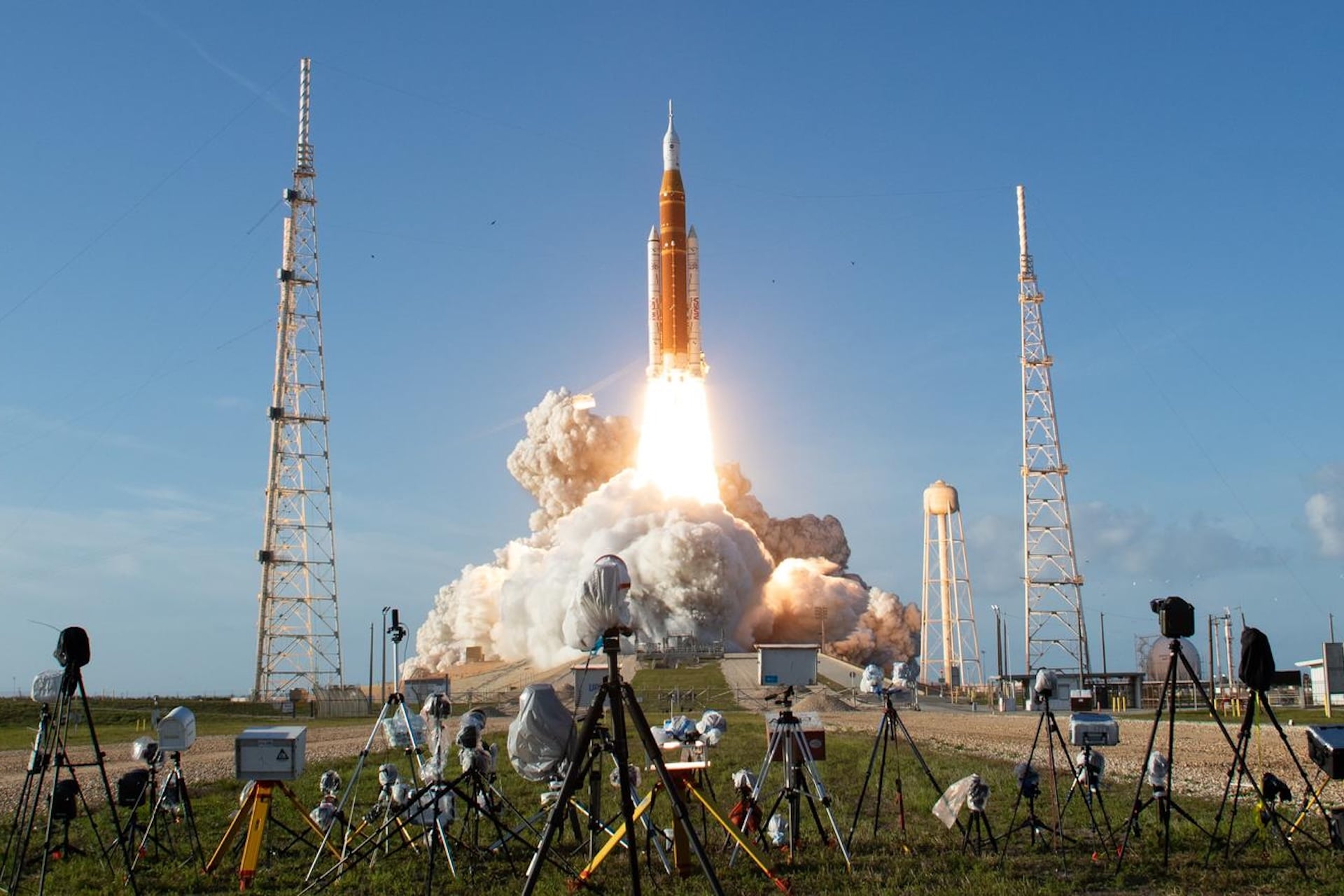
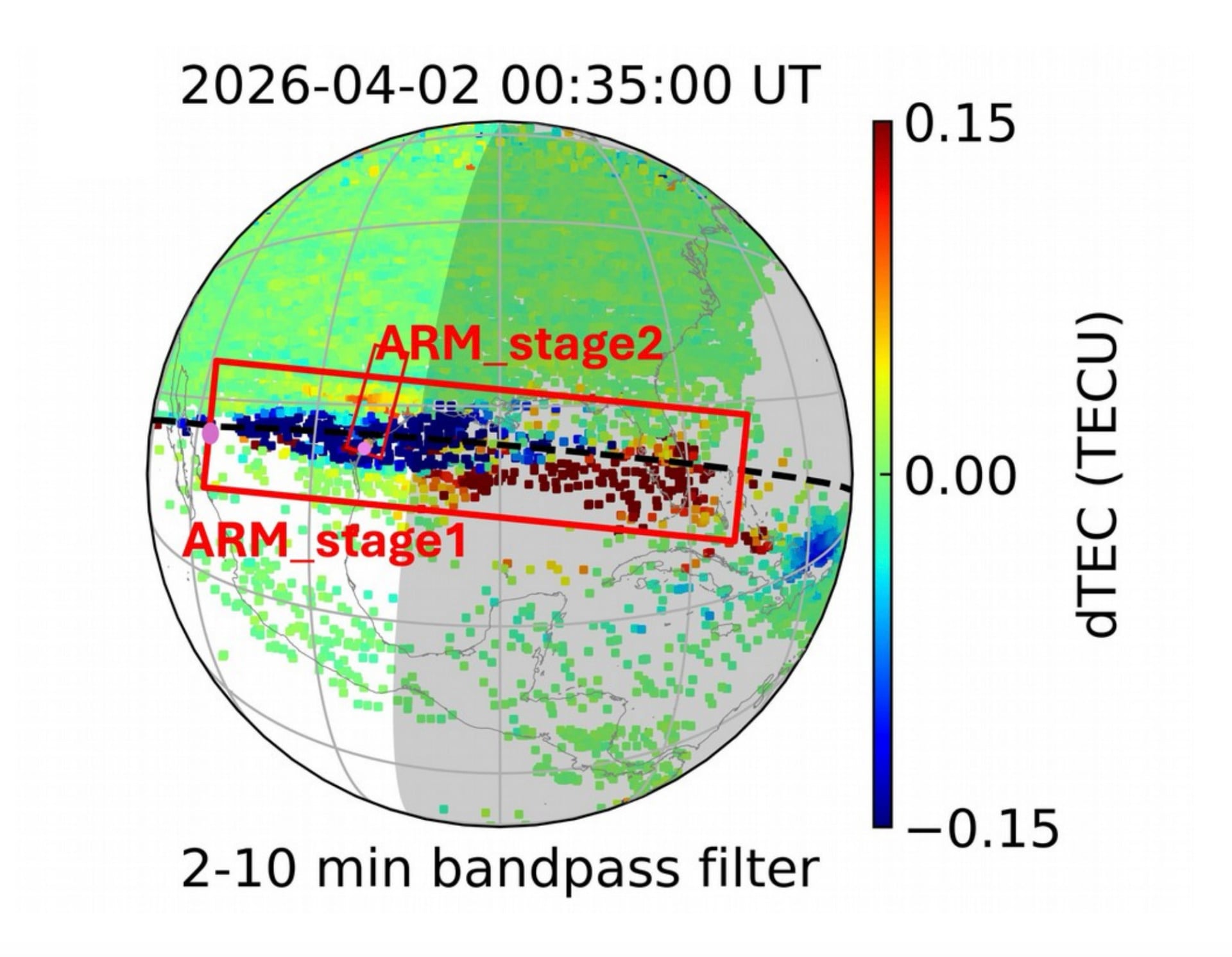
The answer, evidently, is that these spacecraft launches can tear serious holes in our ionosphere, lowering the electron density across patches of this energetically charged layer of atmosphere and confusing ground-based GPS receivers below (albeit briefly). That’s the finding from researchers at Taiwan’s National Cheng Kung University, who found that the historic launch of NASA’s Artemis 2 last April generated three sets of “traveling ionospheric disturbances” disruptive enough to produce GPS errors several meters off target.
“This is the first time a single space mission produced three instances of ionospheric disturbances over the same region during successive orbit maneuvers,” according to the team’s new study, released as a preprint via ESS Open Archive while it awaits peer review.
And the creation of these temporary gaps in electron cover is not merely an academic curiosity, according to study coauthor Charles Lin, a professor of Earth science at the university where he focuses on space weather and ionosphere modeling. For someone, someday, the consequences could become a matter of life or death.
“A positioning error of a couple of meters is enough to cause an autonomous car to change lanes,” Lin told Space.com. “It could have a strong impact not only on self-driving cars but also on drone positioning.”
Burn noticed
Lin’s team, with an assist from NASA’s Goddard Space Flight Center, compiled data from more than 3,500 ground stations across the United States that receive signals from GPS, GLONASS (Global Navigation Satellite System), and Galileo satellites. These earthbound GPS receivers have previously been used by seismologists to monitor minute geological activity in advance of earthquakes as well as the unusual ionospheric disruptions large earthquakes can themselves cause.
Lin’s team deployed similar methods to measure how Artemis 2’s rockets altered signals between these satellites and ground stations, reconstructing the craft’s burn stage perturbations via GPS communication time lags.
Easily the most surprising find within this data was the impact that the rocket’s less powerful second stage burn, initiated at an altitude of about 115 miles (185 km) above Earth’s surface, ultimately had as it blasted higher into the ionosphere. This “apogee raise maneuver” left a 3,107-mile (5,000-km) streak of disturbed electrons as it screamed over the continental United States, creating a tear from the Great Plains to the Atlantic Ocean at nearly the same speed as the spacecraft itself, roughly 5.1 miles per second (8.2 km/s).
“This represents the first report of such huge, elongated disturbances generated during a spacecraft launch,” Lin and his coauthors stated.
Burned before
Technically, this is far from the first discovery of a rocket launch’s impact on Earth’s ionosphere, although it is arguably the most dramatic officially documented. In 2017, Lin and his colleagues recorded a 559-mile (900-km) hole carved into the ionosphere when SpaceX launched a Falcon 9 rocket into orbit from Vandenberg Air Force Base in California.
And in September 2023, the coordinator for the University of Texas at Austin’s Dark Skies initiative, Stephen Hummel, reported a red glow across the night sky after U.S. Space Force launched its Victus Nox satellite into orbit. Space weather observers described the glow left behind by this secretive launch as a telltale sign of ionospheric disruption.
Lin’s team described their Artemis 2 findings as confirmation that major future launches to the Moon and Mars are sure to become a “distinct and repeatable source of anthropogenic space weather, beyond the well-established launch-stage disturbances.” These impacts, as Lin told Space.com, will likely become “much more significant.”