1965: Switchboard Operators
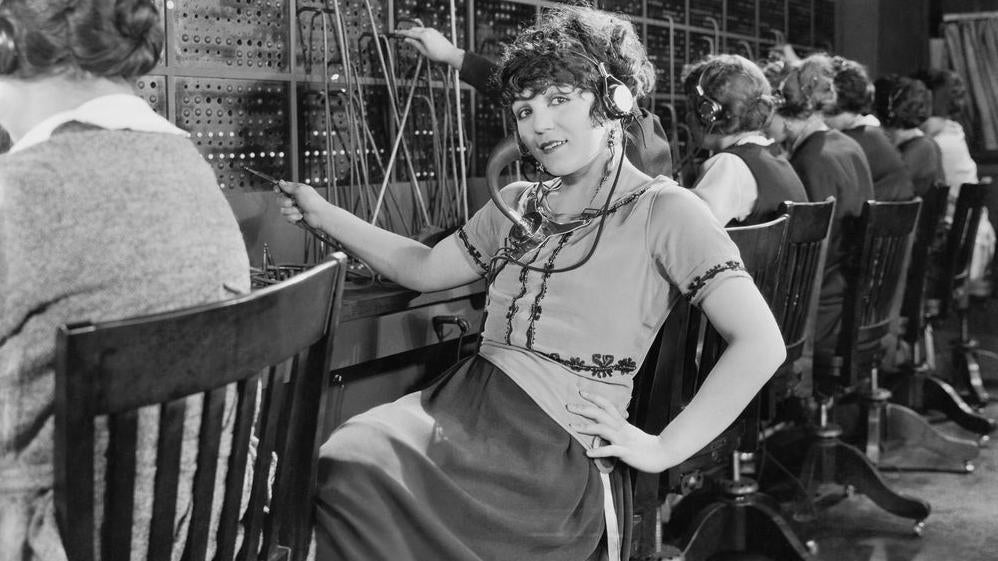
Switchboard operators were once an essential part of telephone communication in the late 19th- into the early 20th century. During that time, technology wasn’t advanced enough for people to directly dial a phone number and were instead greeted by a switchboard operator when they picked up their phone.
Although a replacement for human operators and switchboards was invented in 1892, only 16 years after Graham Bell patented the telephone, two decades later only about 300,000 out of 11 million telephone subscribers had automated service, meaning they no longer relied on operators.
Ironically, the Bell companies didn’t want an automated switching service, which was initially used only by independent telephone companies. “Bell wanted to make using the phone as easy as possible for customers,” Milton Mueller, a professor of public policy at Georgia Tech specializing in communications and information, told Econ Focus in 2019. “So-called automated switching meant the customer was actually doing work, as opposed to just picking up the phone and telling the operator what he or she wanted.”
It wasn’t until after World War I that Bell management realized the benefits of implementing an automatic switchboard as wages for switchboard operators began to rise. The company started its plans to adopt the new system in 1919, but it wasn’t until 1965 that it implemented its first fully electronic switching system.
At the height of its demand, there were 342,000 switchboard operators, which declined to less than 250,000 in 1960 and dropped to only 40,000 by 1984. But today, there are around 68,000 operators who still use switchboards to relay incoming, outgoing, and interoffice calls in the U.S., according to the Bureau of Labor Statistics.