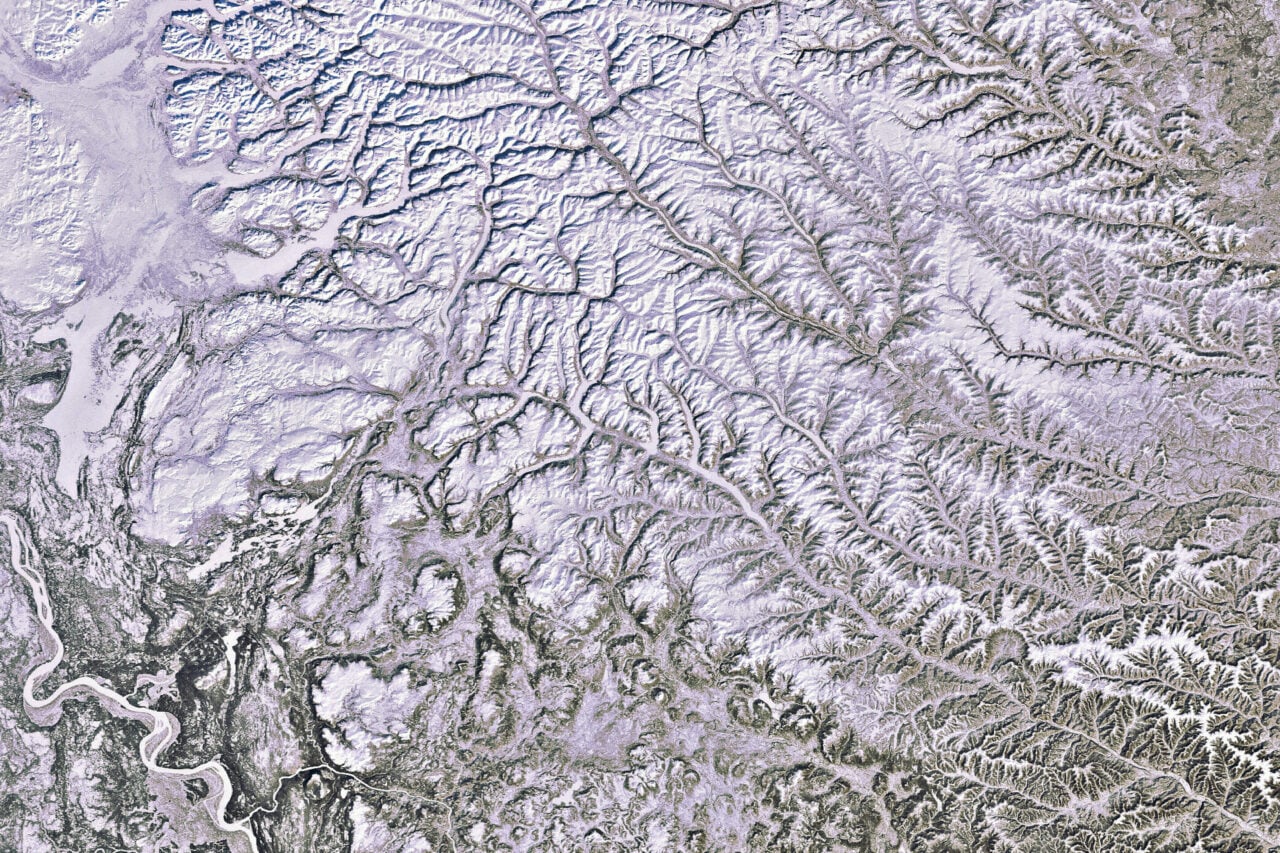
4. Paleoarchean, 3.6 billion to 3.2 billion years ago

Let’s take a step back, to the earliest known life on Earth, which comes up during the Paleoarchean Era (technically not an epoch, but this was so long ago that things kind of blend together). The common analogy for understanding the rapidness of the evolutionary process is the length of your outstretched arm, from chin to fingertip. If your chin is the formation of Earth 4.6 billion years ago, then humanity’s abrupt development is a millimeter-thick shaving of the tip of your fingernail, and the earliest known life is somewhere around the middle of your bicep—3.5 billion years ago, when the earliest stromatolite fossils appear. These organisms, photosynthetic cyanobacteria, ossified in layers, marking a gargantuan step in the planet’s development. Arcane as they are, stromatolites are also considered the blueprint for what Martian fossil life could look like, if it exists, and that’s what Perseverance is now actively searching for 183 million miles away.