What’s a Perception Check? How Is It Different From Other Ability Checks?
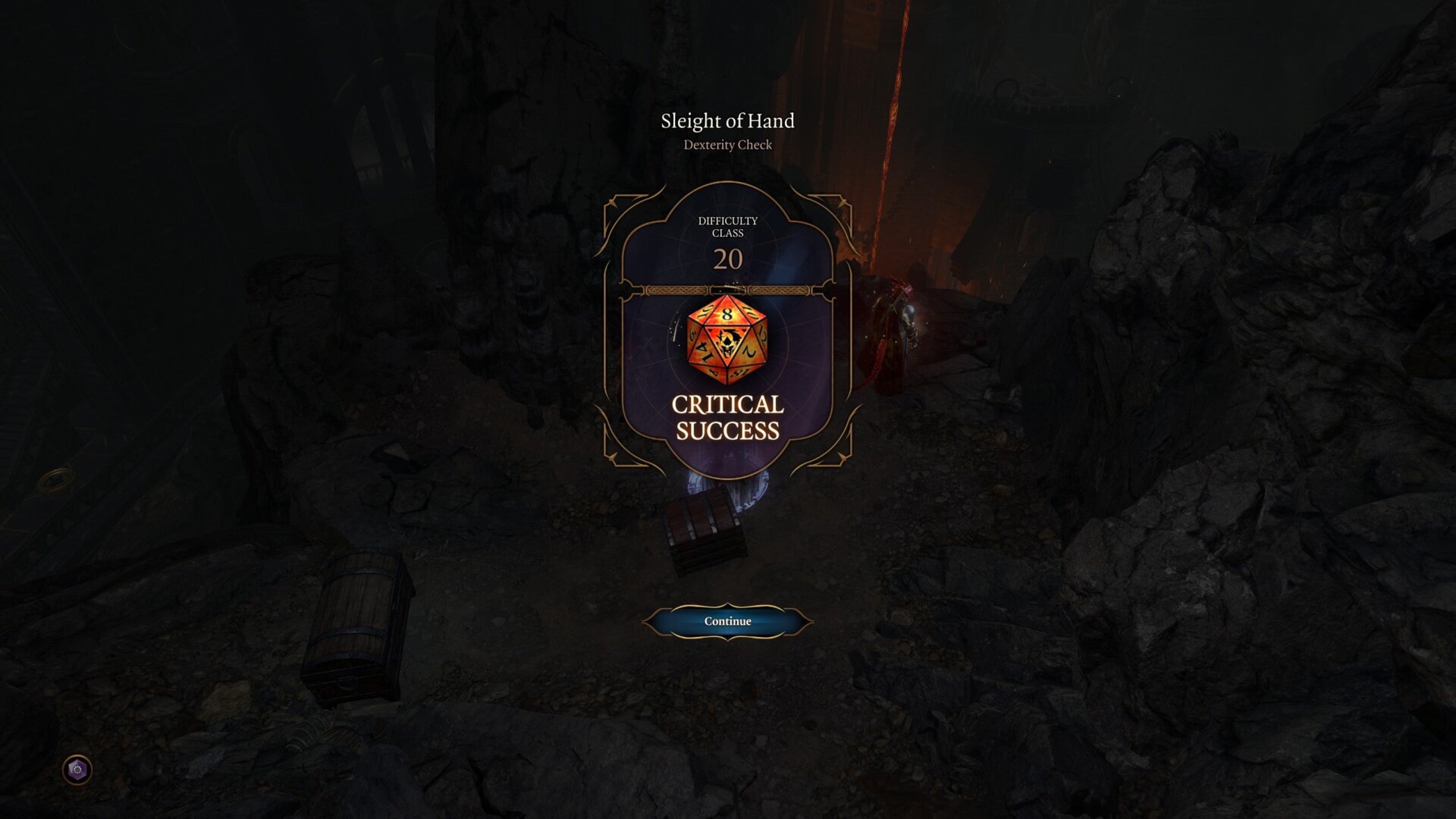
As you’ve been playing Baldur’s Gate 3, you’ve probably noticed while traversing an area occasionally your characters will have a small D20 animation play above their heads, the announcement of whether or not they’ve passed a perception check. Players can take a perception check at any time in Dungeons & Dragons, but they’re automated in Baldur’s Gate 3. As the name implies, they’re used to judge whether or not your character perceives something in the world around them—an enemy ambush, an armed trap, a secret passageway, a conversation overheard through a door. These tests are taken against your character’s Wisdom stat.
Perception checks are largely passive in Baldur’s Gate 3, as are their social counterparts, insight checks (Perception deals with inanimate things and the world around you, insight deals with reading someone’s intent); they occur in the background instead of being something you actively select to do as you would for something like trying to persuade someone in a conversation, or recalling arcane, religious, or historical knowledge. It’s largely similar in Dungeons & Dragons: a DM might invite you to make a passive perception check during a session, or a player might choose to make an active perception check that will often be easier to pass. Just like Baldur’s Gate 3 though, whether you pass or fail you know there’s something out there just by the existence of the check!