International Policy
Let’s start with the mixest of bags, the area that perhaps most perfectly defines the challenges for President Joe Biden. One of the first things he did was bring the U.S. back into the Paris Agreement, followed a few months later by committing to reducing carbon emissions at least 50% by 2030. This is good, though not in line with what a “fair share” of emissions would be since the U.S. is the largest historical carbon polluter. Still, it gave the world a 50-50 shot to meet the Paris Agreement temperature targets, which ain’t nothing.
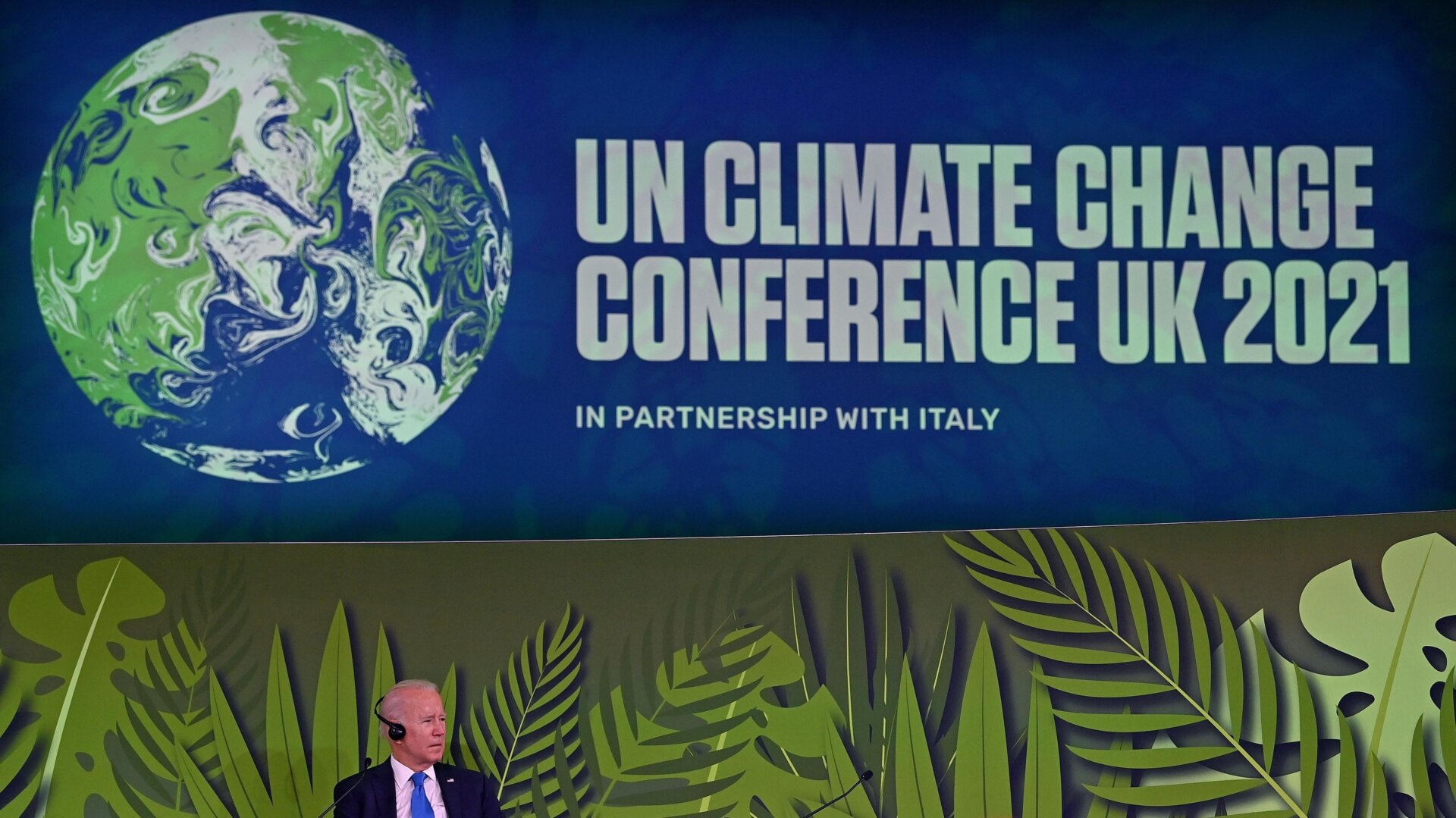
Yet at United Nations climate talks in Glasgow, the administration was a sometimes nefarious force. The final pact it played a major role in shaping could be described, like so many international agreements before it, as progress and not nearly enough. The U.S. also signed a few side agreements that were Fine, but it failed to sign the most important of all: A pact creating an alliance to end fossil fuel exploration.
Shortly after the talks ended, the administration opened up the largest fossil fuel lease sale in U.S. history. If we were to break down the grade, we’d give an A- in rhetoric and a D in execution. (To be fair, most countries scored the same. But remember, no curve!)
Grade: C



