Poison ivy rashes
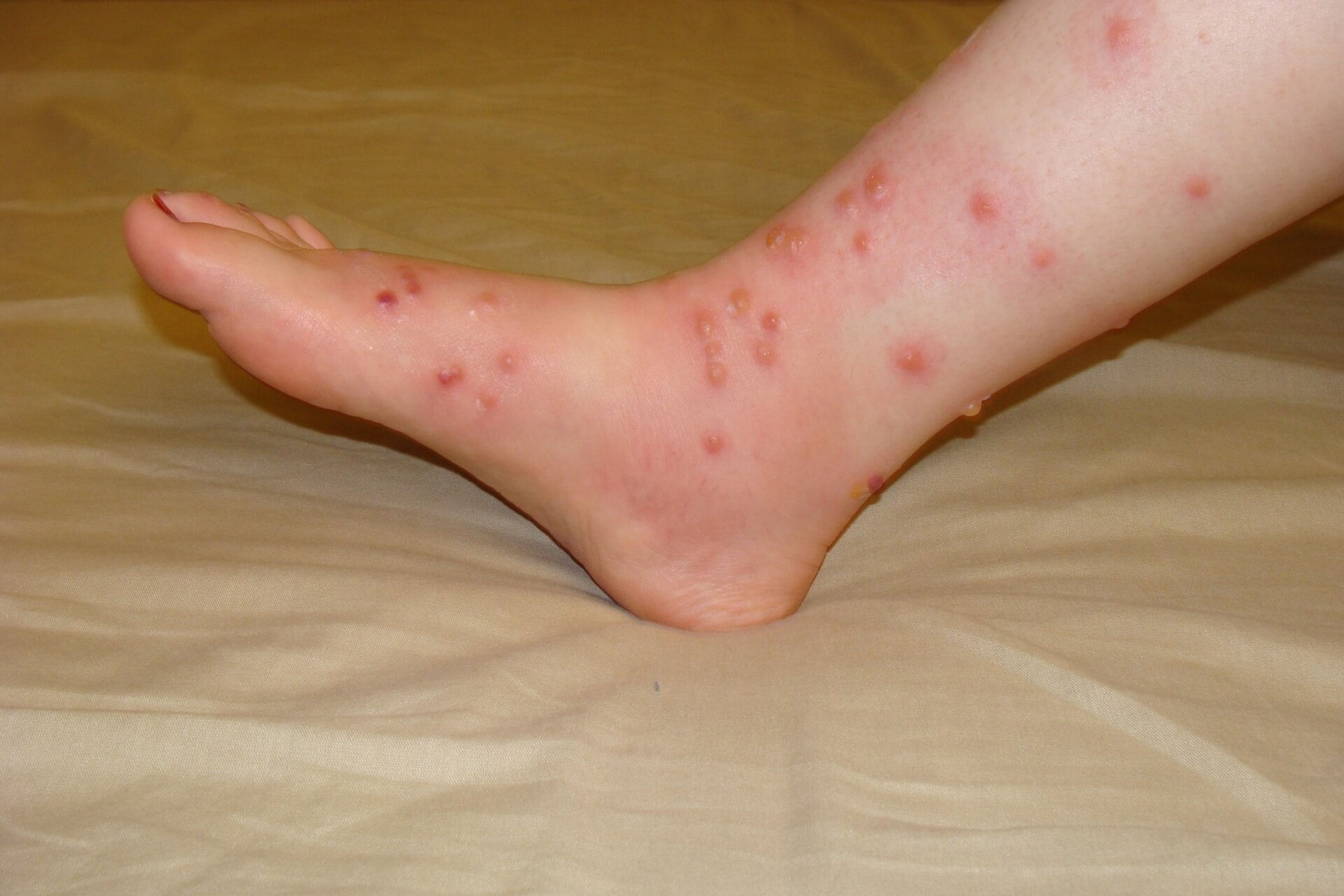
Why it happens: Poison ivy rashes are caused by a specific type of allergic reaction known as contact dermatitis (this reaction is different from the one that causes hives). The actual trigger is the oily coating on the plant’s leaves, stems, or roots, known as urushiol, which can even be spread through contaminated clothing.
Symptoms and treatments: Dry, flaky skin along with red, itchy rashes that appear at the site of exposure and a burning sensation. These rashes can sometimes swell up and turn into oozing blisters. Unlike hives, this reaction can take hours or even days to show up after an exposure. If you know you’re allergic to poison ivy, washing the oil off as soon as possible can reduce symptoms, while steroid creams may mitigate swelling. A typical poison ivy rash will clear up on its own within two weeks, but people who have inhaled smoke from burning the plant can develop severe breathing problems that require urgent medical attention.