Kids these days, swiping and tapping away at iPads, have absolutely no idea how to fix a mechanical spindle. But until around the Great Depression, children were free to work in factories alongside adults.
It’s nothing to get nostalgic about. In the early 20th century, with a lack of child labor laws and limited safety requirements, businesses were free to use children for cheap work in dangerous conditions.
About 100 years later, kids still have a relationship with machines. But as these 20 images show, it’s a stark contrast compared with the equipment their grandparents grew up using.
Like many other children working in this mill in 1908, this child just turned up to help her sister.
Photo: Lewis Hine/National Child Labor Committee/U.S. National Archives
After a day spent riding roller coasters at Coney Island, this girl chats on her cell phone while cracking a big hunk of bubble gum.
Photo: Mario Tama/Getty Images
These young boys and girls worked day in and day out at Cornell Mill in Fall River, Massachusetts, in the winter of 1912.
Photo: Lewis Hine/National Child Labor Committee/U.S. National Archives
About 100 years later, in Philadelphia’s School of the Future, Microsoft provided laptops to each freshman in a class of 170.
Photo: Tim Shaffer/Microsoft via Getty Images
By 1911, Stanislaus Beauvais had already worked in this Massachusetts factory for two years.
Photo: Lewis Hine/National Child Labor Committee/U.S. National Archives
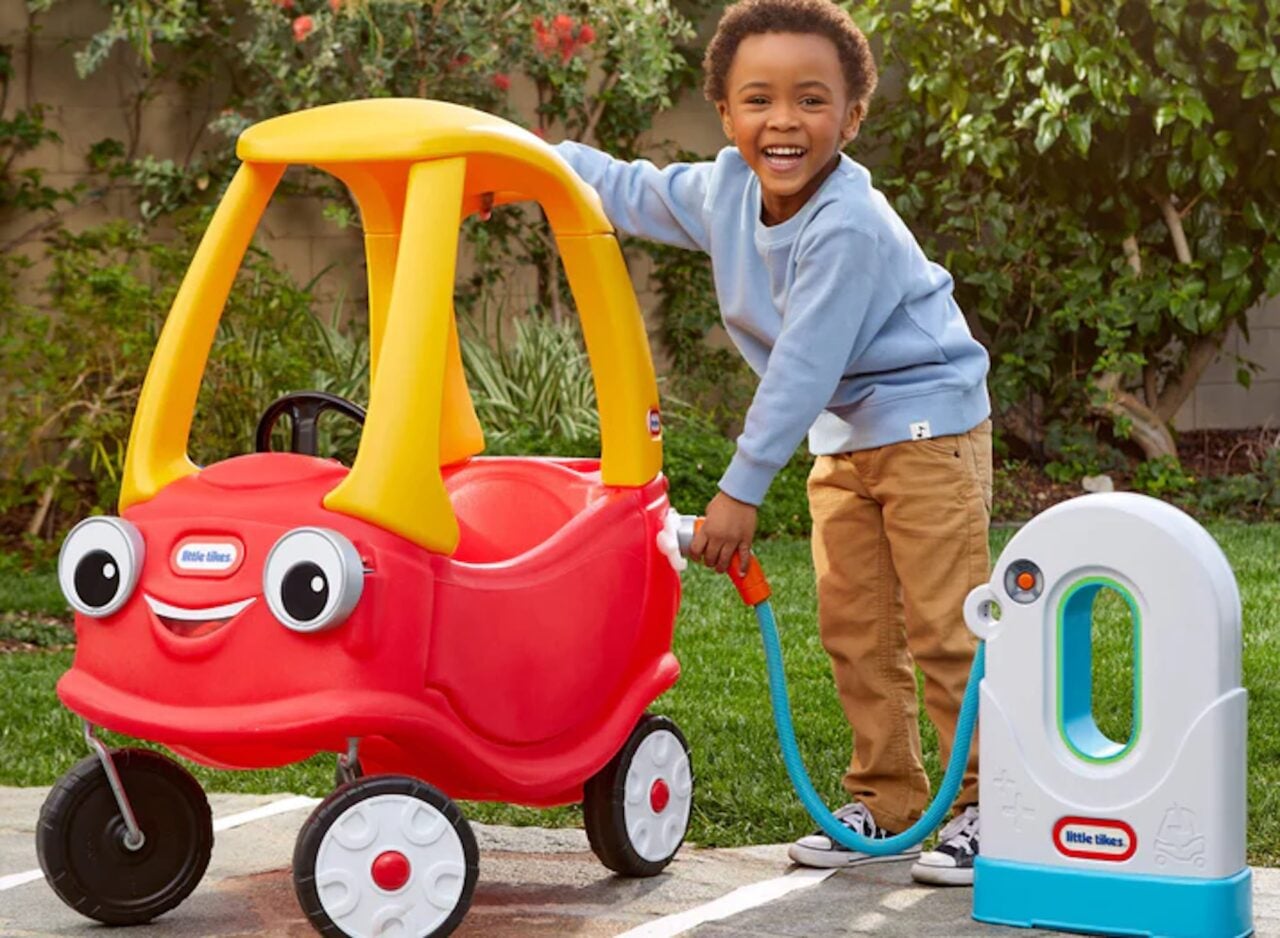
At CES in Las Vegas, in 2012, Christopher Jacobs demonstrates an inflatable toy car for the Wii.
Photo: Ethan Miller/Getty Images
Two little girls smile sweetly as they take a break from their jobs in a cotton mill in Tifton, Georgia, in 1909.
Photo: Lewis Hine/National Child Labor Committee/U.S. National Archives
One hundred years later, in an Atlanta movie theater, a gaggle of 10-year-old girls scream and laugh after a surprise appearance by the Jonas Brothers.
Photo: Jenni Girtman/AP
Street Bretzau, with a bandaged finger, was injured while working in the mule room of this Tennessee factory in 1910.
Photo: Lewis Hine/National Child Labor Committee/U.S. National Archives
In November 2011, 10-year-old cousins Angel and Isaiah Alvarez clutch their Xboxes as they wait in line at a Game Stop for the launch of Call of Duty: Modern Warfare 3.
Photo: Ethan Miller/Getty Images
A hundred years earlier, in 1911, a young child in Yazoo City, Mississippi, works a spinner.
Photo: Lewis Hine/National Child Labor Committee/U.S. National Archives
President Obama looked over a girl’s work on her laptop in a coffee shop in Minnesota this past August.
Photo: Carolyn Kaster/AP
This little boy, looking fatigued in 1911, works barefooted on a factory floor.
Photo: Lewis Hine/National Child Labor Committee/U.S. National Archives
Young Carlos Cerrillos holds a Lego model of the Space Shuttle Discovery as he waits for the real deal to blast off from Kennedy Space Center in 2005.
Photo: David McNew/Getty Images
A pretty child works as a spinner, a job she’s had for two years. You have to wonder how long she kept at it.
Photo: Lewis Hine/National Child Labor Committee/U.S. National Archives
This child, who spent her summer at Young at Art Museum summer camp in Davie, Florida, used an iPad to draw cartoons.
Photo: J Pat Carter/AP
Some of the kids in this Macon, Georgia mill were so small they had to climb up into the machines to repair them.
Photo: Lewis Hine/National Child Labor Committee/U.S. National Archives
Girls wait to take a turn playing Dance Dance Revolution in a New York City arcade in 2004.
Photo: Mario Tama/Getty Images
A little boy, his arms and clothes shiny with grease, carries two pails of it to a train. He said at the time that he was 14, but almost definitely looks younger.
Photo: Lewis Hine/National Child Labor Committee/U.S. National Archives
A century later, the buckets of grease have been traded for a pail of water, splashed from a fountain in a Manhattan park.
Photo: Mary Altaffer/AP
Image/research curation by Attila Nagy