
1989: Typesetter
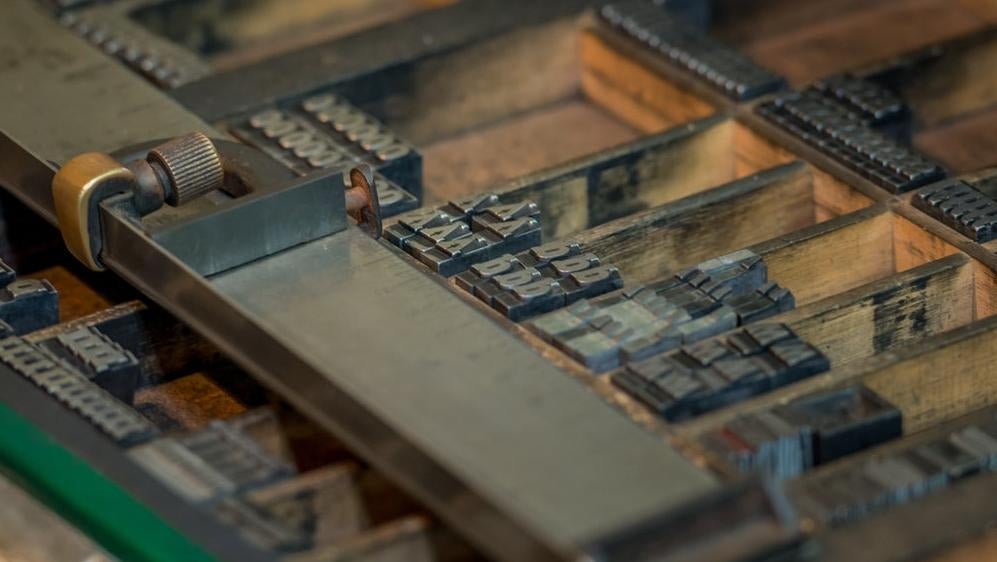
Before digital printing, there were Linotype operators, or typesetters, who used the Linotype machine to print the written word. The machine was introduced in 1884 using hot metal blocks to imprint words on a page and was widely used by the 1970s to print newspapers and magazines.
Unlike hand-setting, where each letter, space, and number would be set by an operator individually, the Linotype used a keyboard of 107 keys, each marked with a capital or lowercase character, spaces, and numbers. The New York Tribune used the Linotype for two years before it became more widely known.
A photo of the machine was published in an 1889 article in Scientific American and was described as “the latest, and in many respects the most remarkable, of the numerous machines which inventors and mechanics have from time to time devised in their long-continued efforts to find some practical means by which to supersede or cut short the tedious work of typesetting.”
The Linotype drastically sped up production, with a skilled operator producing up to 6,000 ems per hour, compared to hand-setting which only produced 250 ems per hour.
But as digital printing took over, the need for typesetters dropped, allowing book publishers, newspapers, magazines, and more, to create short runs of their products while also cutting costs.