Platypus Bill
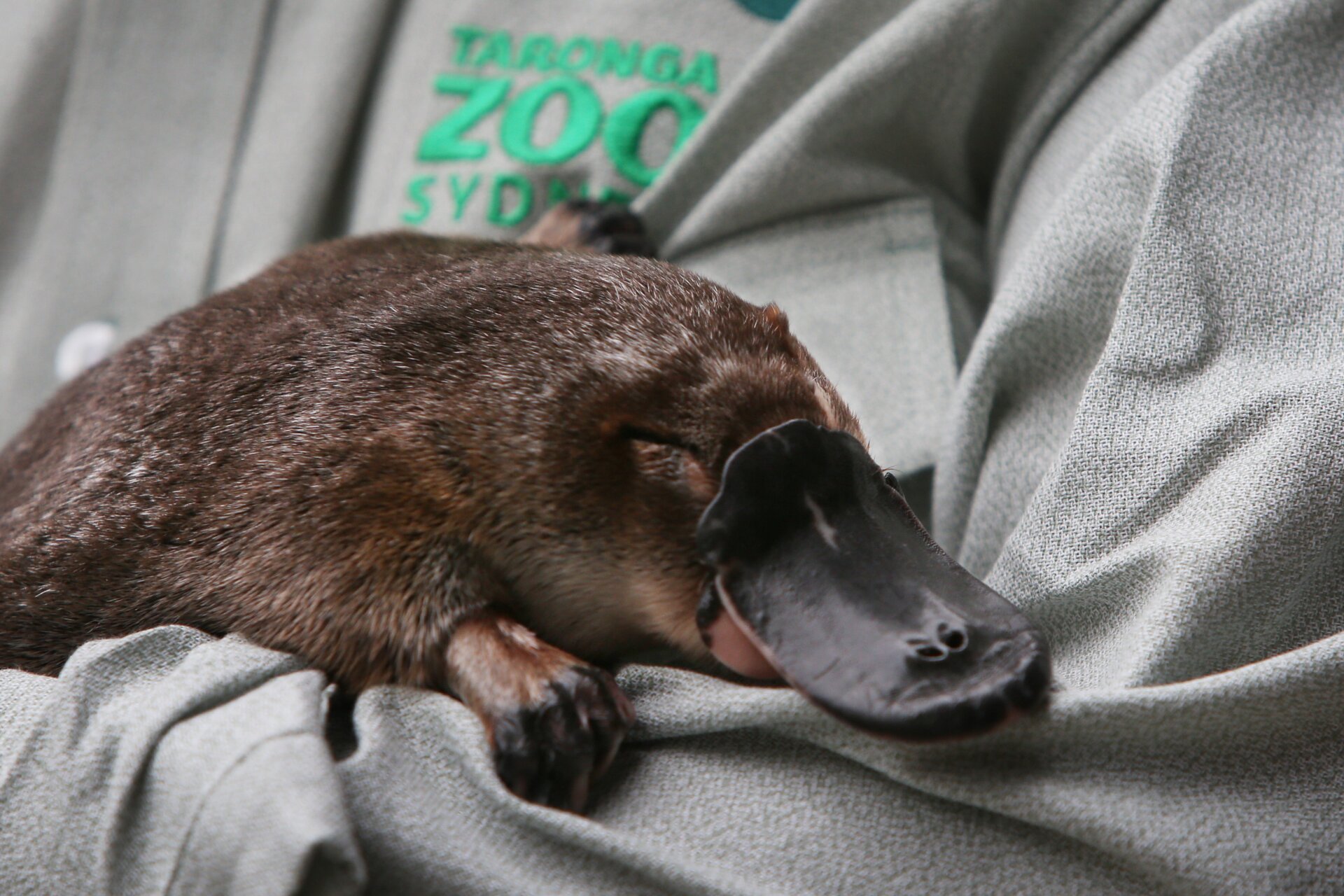
Sheathed in a thin layer of skin, the platypus bill is classic case of convergent evolution, in which unrelated species (in this case, platypuses and ducks) develop the same adaptation independently. Complete with watertight nostrils, which allow the wriggly little monotreme to stay underwater for minutes at a time, and receptor cells that allow the animal to detect electric fields made by the movement of prey, the duck-bill of the platypus is an impressive bit of technology. Instead of teeth, the platypus bill has ridges on the inside that allow it to break down food, a trait also seen in platypus fossil ancestors.