What Happens When You Lose Sea Ice
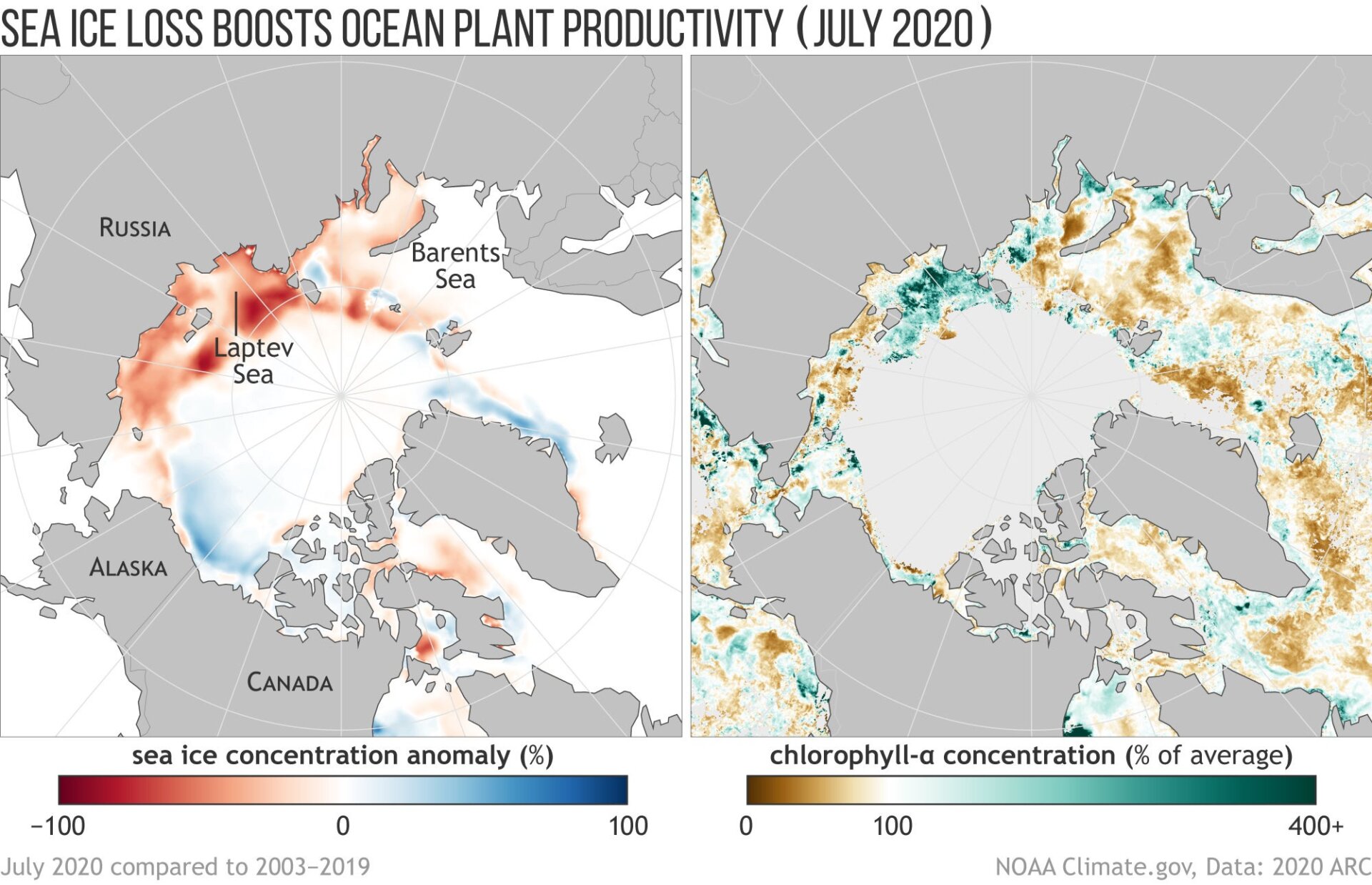
The loss of summer sea ice has increased the productivity of microscopic ocean plants in seven of the nine regions analyzed by experts (the Sea of Okhotsk and Bering Sea showed lower than average values, although both still showed a positive increase over the 2003-2020 period). These include single-celled algae that live in sea ice, known as ice algae, and in the water column, which are phytoplankton. These algae are the base of the Arctic food chain and they rely on sunlight to survive. Scientists measure the activity of these plants by using satellite-based observations of chlorophyll, the photosynthetic green pigment phytoplankton use to capture sunlight and then turn it into chemical energy, as a proxy for phytoplankton productivity.
The graphic above from shows the connection between sea ice concentration and chlorophyll concentration. The key to understanding it is the following: Below-average sea ice generally correlates with above-average chlorophyll. Scientists have found that the early retreat of sea ice generally drives up primary productivity, the rate at which marine algae dissolve inorganic carbon into organic material, because it opens up the oceans to sunlight sooner.
But more plants might not necessarily be a good thing. Changes that are helpful for one species can be harmful to others. Research suggests, for example, that the increase in plant production has contributed to an increase in the bowhead whale population in the Pacific Arctic. At the same time, however, algae species that produce deadly neurotoxins are spreading poleward, per the Arctic Report Card.
The defining message of the Arctic Report Card is that what once was is no more. If we don’t drawdown emissions, those changes could occur even faster and put even more pressure on the ecosystems and people who call the fragile region home.