The Oceans Are Hot, Too
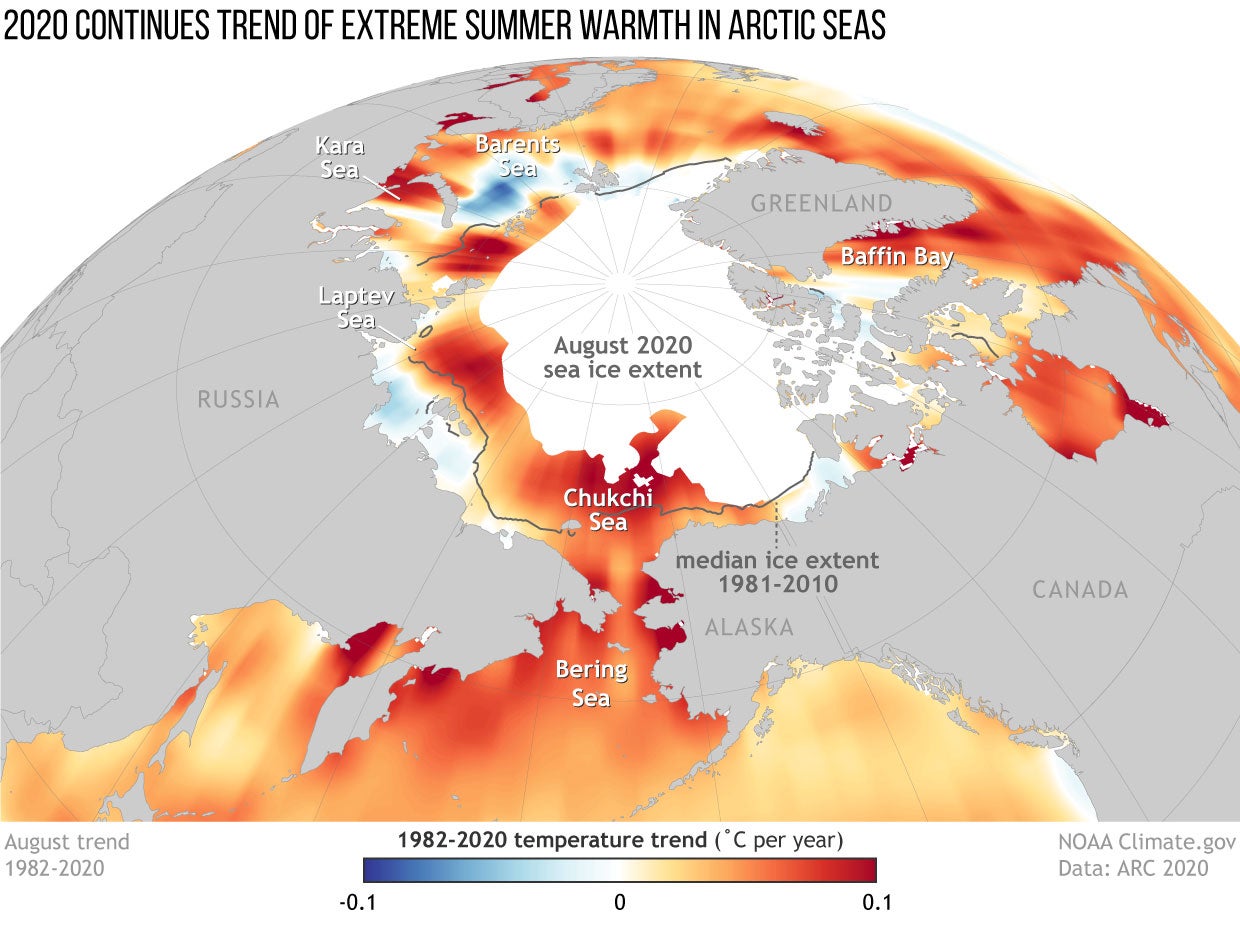
Considering all of the red and orange, you can probably guess what the graphic above reflects: rising sea surface temperatures in the Arctic in August, which is the peak of summer warmth. The red and orange areas indicate where waters are warming, while the blue areas show where they are cooling. The white areas, meanwhile, reflect 2020’s sea ice extent, a dramatic reduction compared to the median ice extent from 1981 to 2010, shown by the gray line.
According to Arctic Report Card, basin-wide sea surface temperatures across the Arctic Ocean have been warming by 0.5 degrees Fahrenheit (0.3 degrees Celsius) per decade. The situation is more drastic in many of the Arctic’s coastal areas, where August temperatures have been rising by as much as 1.8 degrees Fahrenheit (1 degree Celsius) per decade. The Chukchi Sea to the northwest of Alaska stands out for its especially strong warming as do parts of Hudson Bay. One notable exception, however, is the northern Barents Sea, which has experienced a cooling trend.
Ocean warming in the Arctic creates all sorts of problems for the region. More heats leads to less sea ice, which in turn leads to more sunlight being absorbed by the ocean, which consequently causes more ocean warming. Warmer oceans also delay fall freeze-up, affecting Indigenous peoples’ hunting and fishing activities while also making coastal areas more vulnerable to damaging waves during storms. It also reduces the amount of carbon dioxide the ocean absorbs from the atmosphere.