Curing in the Sun
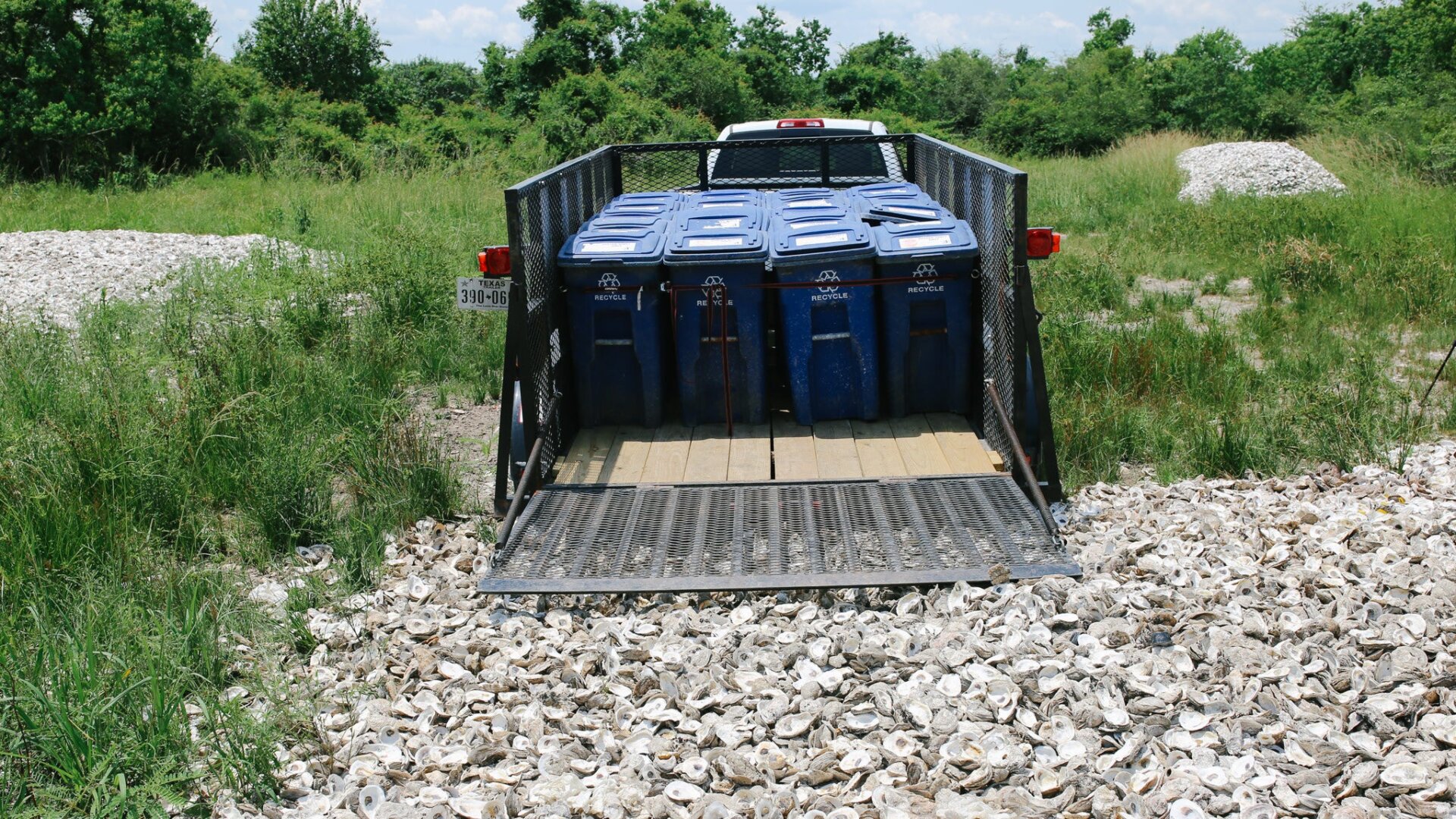
Once the foundation brings a restaurant on board as a partner, staff proceeds to collect the recycled shells weekly using a trailer. The trailer can hold 20 recycling bins, and each bin can hold up to 200 pounds (roughly 90 kilograms) of shell. Staff takes collected shell to one of the program’s curing sites, which are upland properties that it manages.
Curing sites have to be far away from residential areas, Leija explained, because the discarded shells can have leftover food particles stuck on them and stink. Then, the waiting begins. Texas regulations require the foundation to store the shells on land for at least six months to disinfect them naturally. This process allows the shells, which are rotated by staff with a tractor over time, to get exposed to the sun. In the end, it will eliminate any bacteria or other pathogens on the shells, ensuring that they don’t bring anything dangerous along with them when they’re dropped in the bay.
“We don’t want to be putting a non-native species or additional bacteria into the bay, and so this sun curing process helps secure that that won’t happen,” Leija said.
She added that since shell recycling is a fairly new process that’s only been around for about 10 to 15 years, there are only a handful of studies that have been done on it. The foundation is trying to launch some studies to see whether Texas’ hot climate impacts the time needed for curing the shells. Until it knows the answer, it follows the timeframe set by the state to ensure no contaminants are put back into water.



