Putting the Recycled Shells to Work
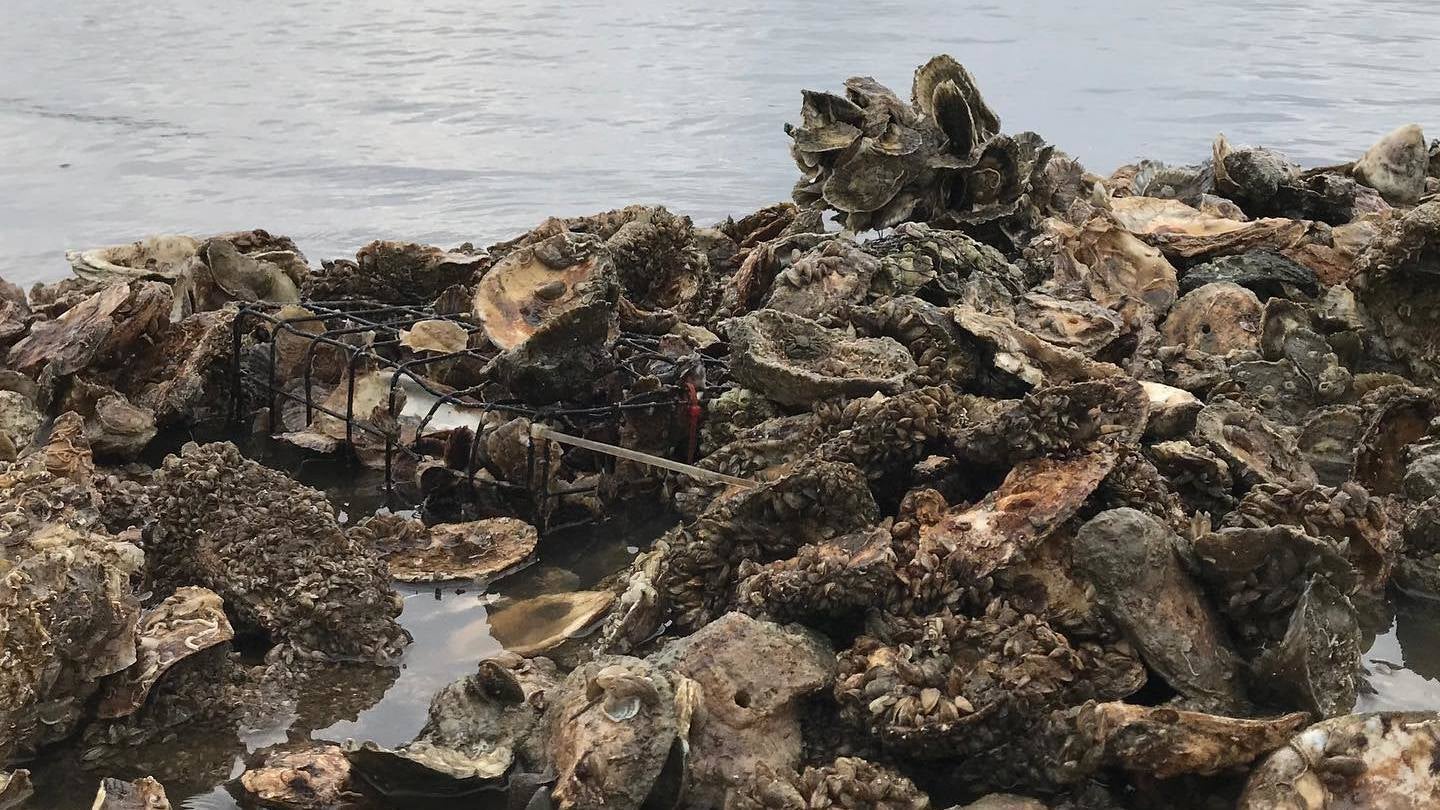
After six months of curing, it’s time to put those recycled shells to work. According to Leija, the recycled shells can have a three-fold benefit for oyster habitats, shorelines, and marshes.
The foundation is currently focused on incorporating the recycled oyster shells in living shoreline projects, which involve working with volunteers to build oyster-shell breakwaters along eroding shorelines. This consists of placing mesh aquaculture nets filled with recycled oyster shells parallel to the shoreline. These breakwaters provide new homes for baby oysters—as well as native fish, shrimp, and crab species—and also protect the shoreline from wave action, reducing erosion. Additionally, the breakwater allows natural marsh to grow behind it.
The foundation also offers bay front property owners the chance to grow their own oyster gardens using recycled oyster shells. Oyster gardening, which starts in May and June each year, involves volunteers suspending mini gardens in the water below their dock or pier and then staying on the lookout for new baby oysters on the recycled shells. In the fall, by which time the oysters grow to be the size of about one inch or more, the oysters are taken to restoration reefs.
While the above actions involve smaller volunteer-based projects, the foundation is also involved in large-scale reef restoration work through partnerships with the Texas Parks and Wildlife Department and the Nature Conservancy. This involves working with partners to place cultch material, such as river rock or limestone, on the bottom of Galveston Bay. Recycled shells are often placed on top of the cultch to help attract the oysters. Projects like this are rarer because they require additional funding and coordination, Leija said. In addition, these large-scale efforts often require hundreds of tons of shells.



