Dog days
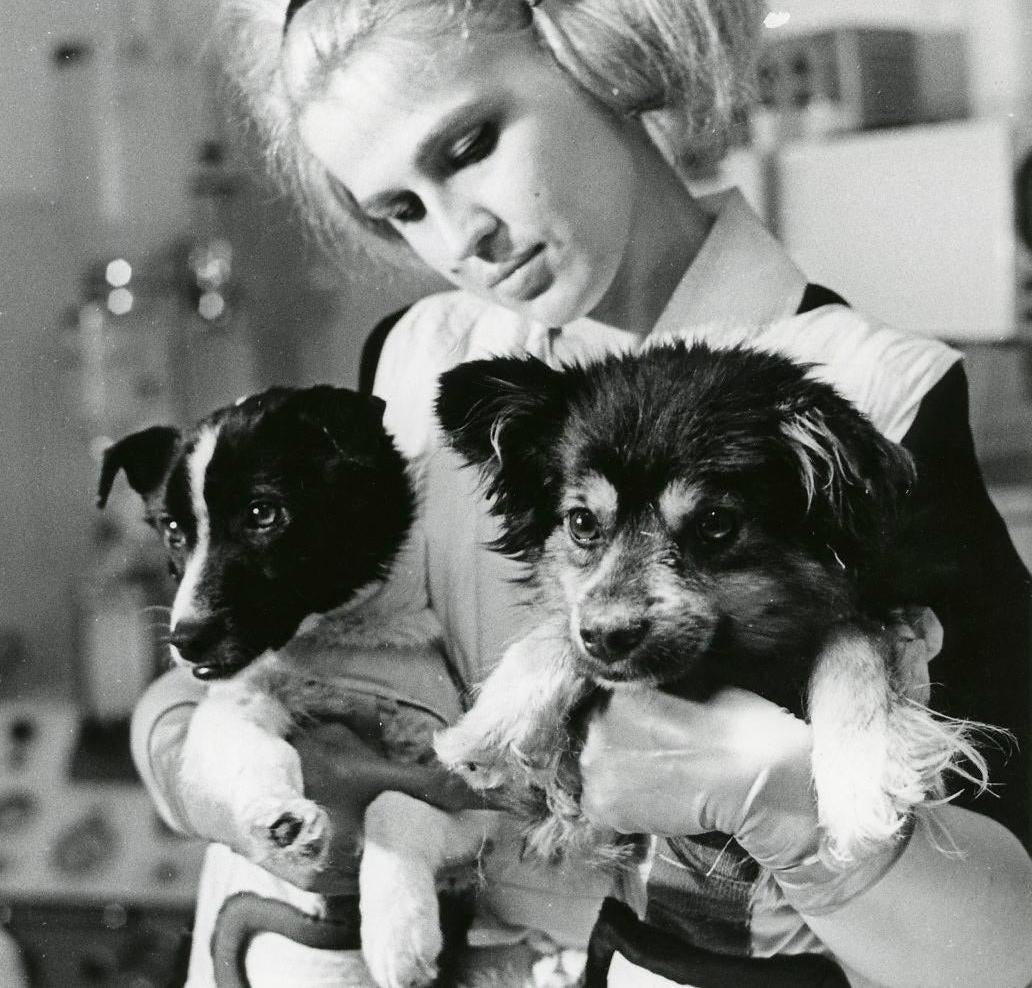
In February 1966, the Soviet space program launched the dogs Veterok and Ugolyok to beyond the protective Van Allen Belts, which they did to study the prolonged effects of space travel and the deleterious effects of radiation. The dogs stayed in space for 21 days, which remains the canine record. On their return, the dogs were dehydrated and they had lost weight. Veterok and Ugolyok also exhibited weakened circulation, muscle atrophy, and a loss of coordination; it took them an entire month to recover. Their restricted mobility likely had a lot to do with it, but it was an early sign that prolonged stays in space can produce bad health outcomes.
The 21 days in space remained a record for any animal—including humans—until the Soviet Soyuz 11 mission, in which three cosmonauts stayed aboard the Salyut 1 space station for 23 days. Tragically, the three men died during reentry and remain the only humans to have perished in space (the crew of the Space Shuttle Columbia was technically not in space when the shuttle disintegrated on February 1, 2003, resulting in their deaths).