Semi-Automated Offside Tracking
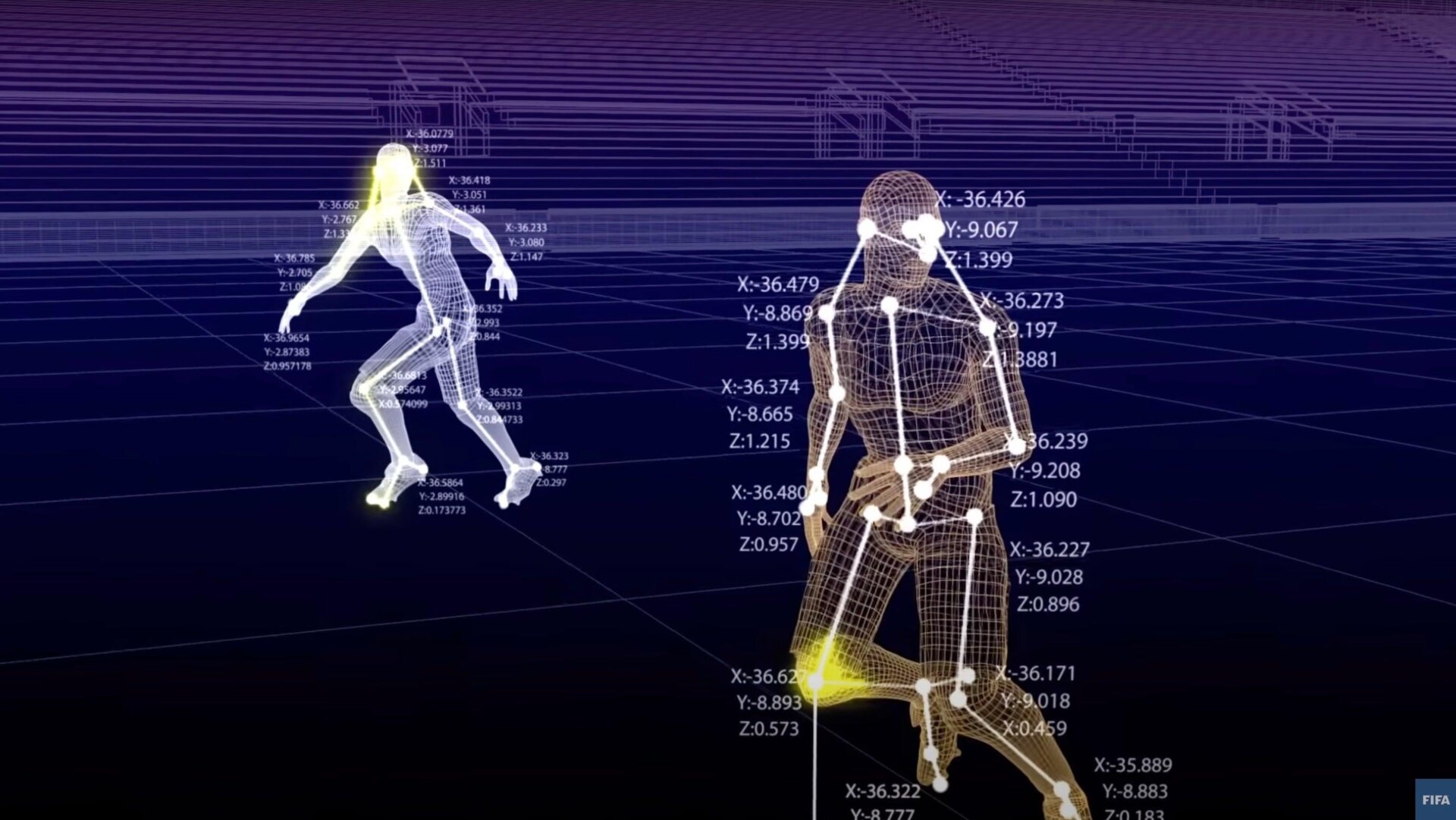
The motion sensor equipped ball represents just one data point in the semi-automated offside tracking technology intended to cut down on the amount of stoppage time for review. To determine whether or not players are offside, FIFA deploys 12 cameras underneath stadiums’ roofs to track both the ball and up to 29 data points on individual players. (For anyone who needs a refresher, players in soccer are determined offside if they are closer to the goal than the ball and the furthest back defender while they are attacking.) FIFA says its cameras measure these data points up to 50 times per second.
“By combining the limb-and ball-tracking data and applying artificial intelligence, the new technology provides an automated offside alert to the video match officials inside the video operation room whenever the ball is received by an attacker who was in an offside position at the moment the ball was played by a team-mate,” FIFA wrote in a blog post.
But here’s where things get a little spooky. Once a referee confirms an offside decision, the automated system then generates a 3D animation that, “perfectly details the position of the players’ limbs at the moment the ball was played,” and places that image on the giant screens in a stadium for all of the audience to see.