The problematic Gemini 9A mission
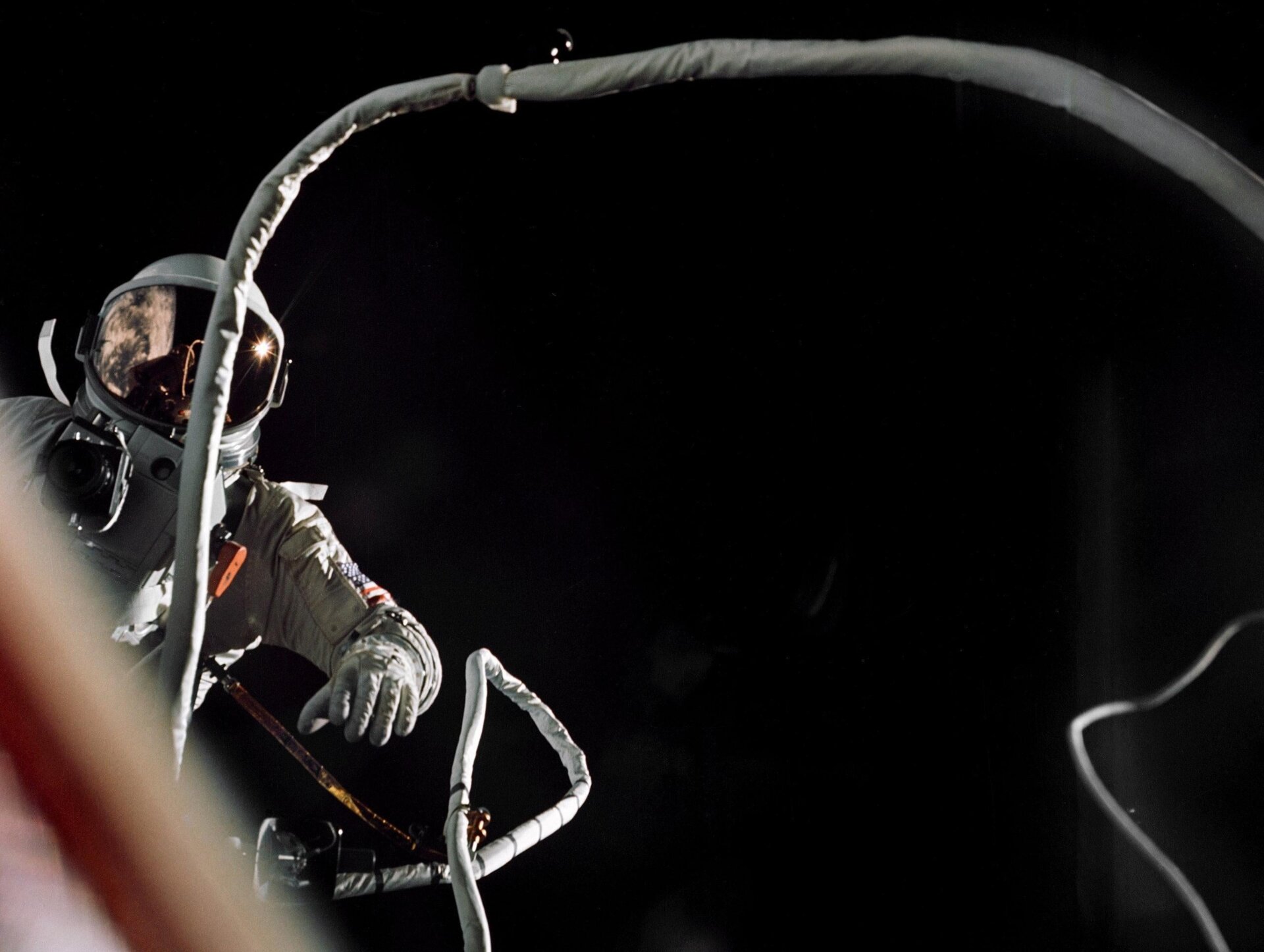
History’s first two spacewalks were cakewalks compared to the third, performed by NASA astronaut Eugene Cernan on June 5, 1966. For this, the Gemini 9A mission, Cernan was to reach the rear of the spacecraft and strap on an Astronaut Maneuvering Unit (AMU), or “rocket pack,” developed by the Air Force. This objective was not achieved, however, as Cernan experienced multiple issues during the spacewalk.
Cernan could barely move in his pressurized suit (he later described the suit as having “all the flexibility of a rusty suit of armor”) and the task left him physically exhausted and immensely sweaty. He also exhibited a frighteningly elevated heart rate during the spacewalk. The astronaut could barely see out of his fogged-up visor, and upon reaching the AMU he couldn’t strap it on owing to the absence of handholds and footholds. NASA learned many valuable lessons from the Gemini 9A mission, including the need to test spacesuits in pools and to install support structures to assist astronauts during EVAs.