When Google Glass was unleashed onto the world some 13 years ago, a consensus was quickly reached: smart glasses suck, and anyone who decides to put them on their face sucks just as much for wearing them. Actually, by donning Google Glass, you weren’t just considered a jerk, you were a “Glasshole,” which, if you’re counting mockery on the unofficial scale of ostracization, feels worse.
Fast forward to today, and things are very different but, somehow, also utterly unchanged. What’s different this time is that smart glasses are fairly commonplace, thanks in large part to Meta and its Ray-Ban Meta AI glasses, which have been an outlier commercial success in the space. In 2025, Meta reportedly sold seven million units of its Ray-Ban and Oakley-branded smart glasses, up from two million the year prior. That’s not iPhone 17 levels of sales, but it’s not nothing, especially for a category that barely existed a few years ago.
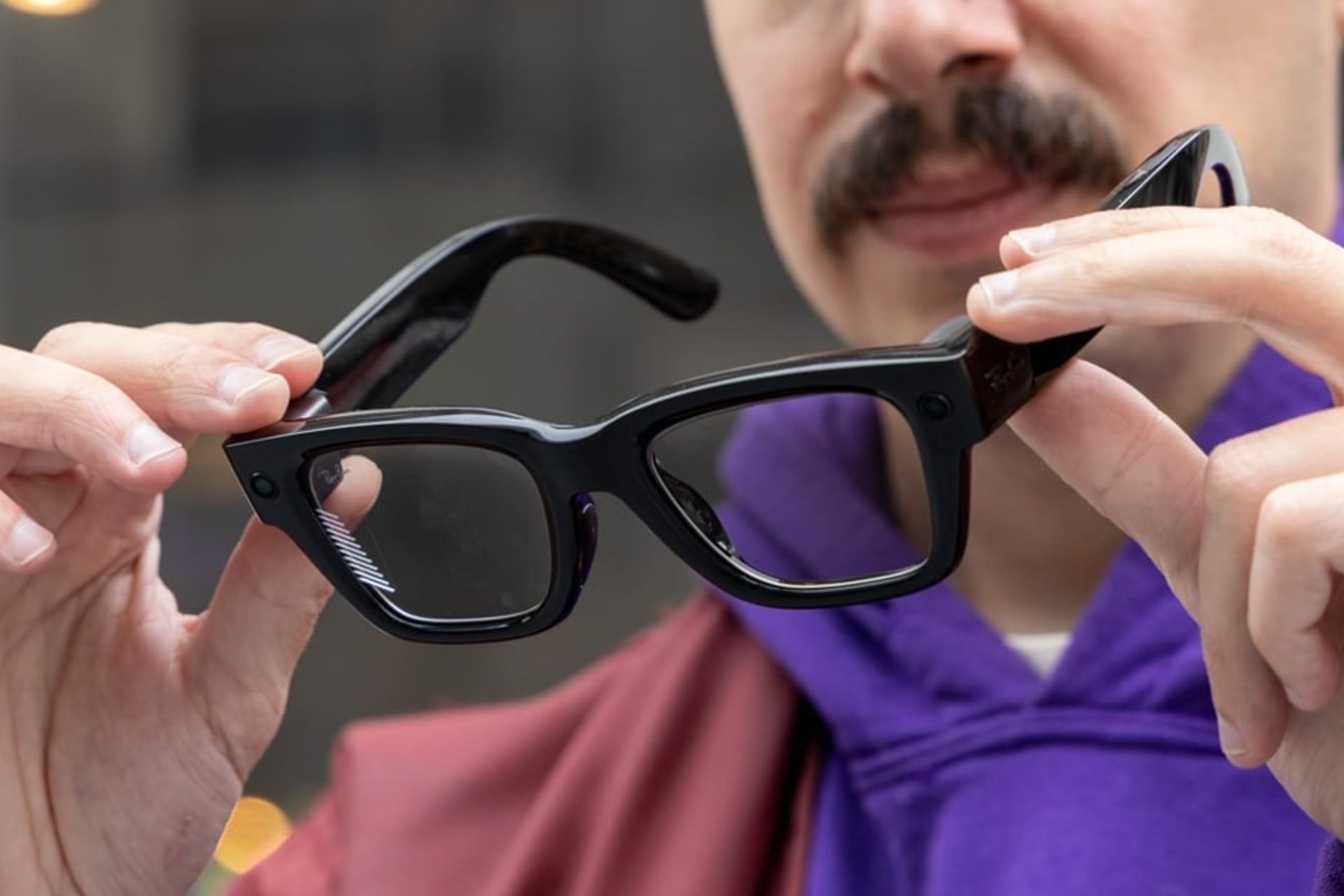
Despite that increased popularity, though, the bitter taste of Google Glass hasn’t quite dissipated from people’s palates. Pushback over privacy issues has reared its ugly head again, and often for good reason. There was at least one case of extortion; someone used smart glasses to record sex workers without their knowledge; even the Ray-Ban Meta owners themselves were swept up in a privacy scandal when an investigation revealed that the company was sending some photos and videos taken with the smart glasses to human contractors who train Meta’s AI. I won’t get into details on what those photos and videos show, but it was stuff that the vast majority of us would like to keep private.
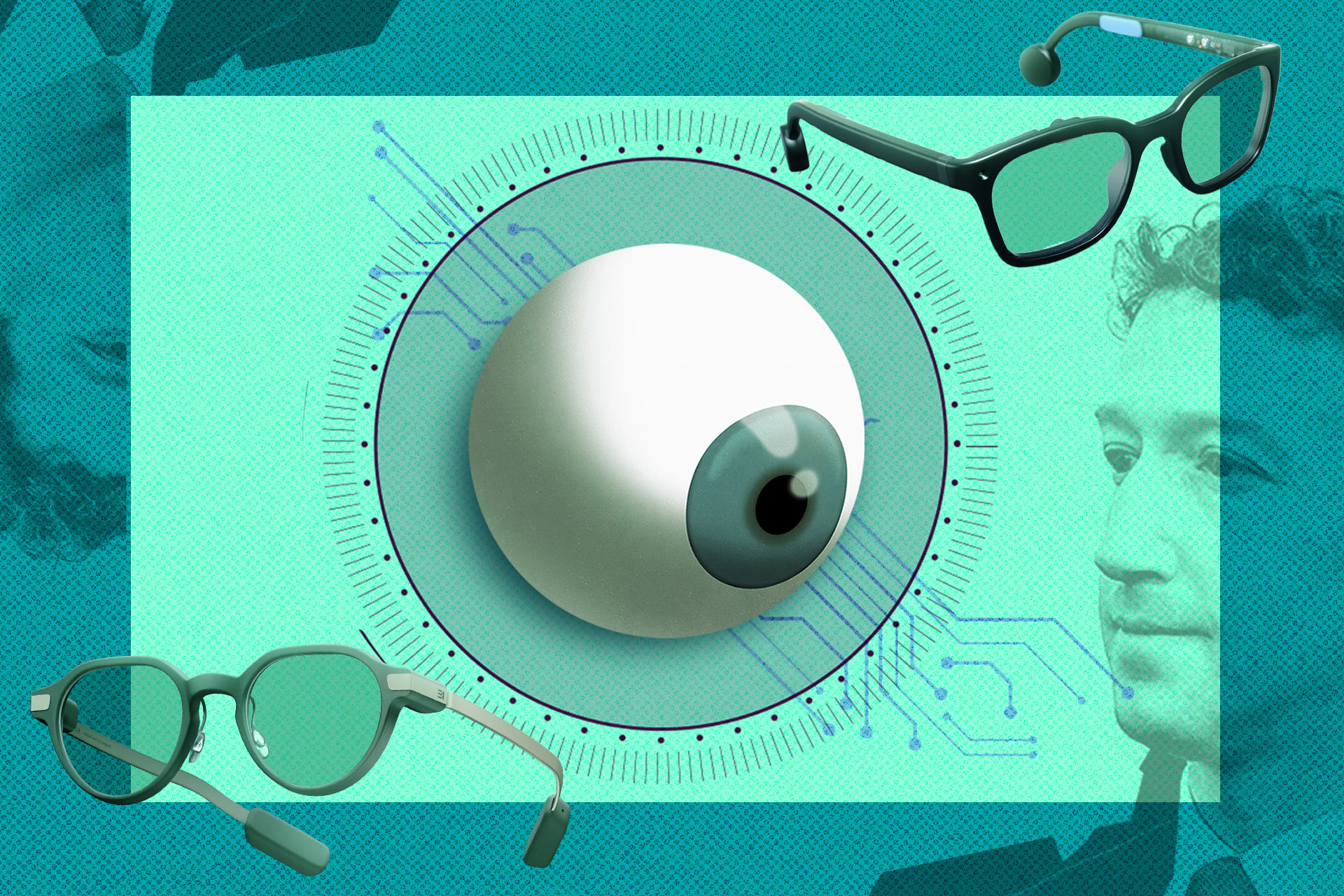
Through the most mainstream of lenses, it would appear that the entire category is tilting toward a repeat of Google Glass—a Glasshole 2.0, if you will—but underneath the Meta of it all, there’s dissent among purveyors of face-worn wearables, and the insider’s consensus is different from the popular one: smart glasses, they say, don’t have to suck when it comes to privacy.
The anti-Meta plan
Maybe the most resonant example of a non-Meta approach to smart glasses hardware comes from a company called Even Realities. Their offering in the space, called the Even G2, has a few notable differences from Meta’s AI glasses. The biggest difference isn’t the inclusion of a screen (the Meta Ray-Ban Display have that), it’s what the Even G2 doesn’t have: a camera and speakers.
Instead of equipping the Even G2 with a sensor for photography, videos, and camera-based AI, Even Realities envisions its smart glasses as more like traditional eyewear. While the Even G2 are light and almost completely indiscernible from regular glasses, they still have a waveguide display in the lenses that can surface relevant information like texts, emails, weather, and even turn-by-turn directions.

What makes Even Realities’ choice of not including cameras and speakers even more interesting is that it isn’t just a technical decision to make the smart glasses smaller and lighter; it’s a philosophical one.
“You just cannot have a camera; it’s irresponsible,” Even Realities CEO Will Wang tells Gizmodo. “You need to make sure all the regulations—essentially all the policymaking—and the data pipeline are sorted out, and people actually have trust in how the data will be handled.”
And user privacy is only part of the equation, Wang says. There’s also the whole other issue of what people will do once they have the ability to record things discreetly from their faces. Spoiler alert: it’s not all family photos and action sports.
“You cannot blame the users, like ‘okay, you shouldn’t use it that way,’ because you actually gave it to them,” Wang says. “And I know that people wanted to make the analogy that ‘the gun has no fault,’ but you gave the gun to the public.”
Privacy advocates seem to agree with Wang’s general sentiments. There have been calls now from dozens of groups to regulate the use of smart glasses, and almost all of those pleas are fixated on the potential misuse of cameras. Meta, for example, has reportedly been mulling plans to include facial recognition on its Ray-Ban Meta AI glasses, which has riled not only privacy watchdogs, but also caught the attention of the U.S. Senate. Members of the Senate publicly pressed for more information on Meta’s plans earlier this year in an open letter to the company, though not much has come of it.
Meta, for its part, hasn’t ruled out facial recognition and recently claimed that if it did roll out any such feature, it would do so in a “thoughtful” way. As for its handling of user data, here’s what a Meta spokesperson told Gizmodo:
“Photos and videos are private to users. Humans review AI content to improve product performance, for which we get clear user consent.”
The fact is, smart glasses, though they can record photos and videos like other devices, are generally regarded as a different beast than your phone, and that beast has turned out to be a much bigger and scarier one for people with privacy in mind.

“[Smart glasses] are specifically designed to be worn all day long, which is just fundamentally different even from a GoPro or something that you’re wearing on your chest or a helmet,” Thorin Klosowski, senior security and privacy activist at the Electronic Frontier Foundation (EFF), tells Gizmodo. “They’re designed to be used in specific situations, and they’re designed to be invisible.”
That being said, Klosowski says there are some “obvious” things that companies could do to help mitigate the potential pitfalls of camera glasses, like including a privacy shutter so that users can wear them while respecting the privacy of those around them. There are maybe less obvious ones, too, though.
“I think being able to have full control over the glasses’ pipeline—the storage pipeline—is not something I’ve seen very often,” says Klosowski. “Maybe it’s a Bluetooth connection like you would have with a digital camera that isn’t going through a weird third-party app that is temporarily storing and analyzing a message, or just having it be a literal hardware connector that you could take, put it on the glasses, and transfer directly to a laptop or whatever.”
Whatever the answer is, Klosowski admits that smart glasses aren’t a simple category to wrap your mind around from a privacy perspective, and if companies are going to make a pair that respects both users and the people around them, they’re going to have to get creative.
And some of them really are.
Is there a good kind of camera?
Cameras might take the most heat where smart glasses are concerned, but some companies don’t see them as inherently a bad thing—or, cameras that aren’t geared specifically toward photography, at least. Brilliant Labs, for example, which is gearing up to launch its Halo smart glasses, envisions the camera as something else altogether. Instead of a conduit for recording things around you, their sensor is designed specifically to facilitate AI features.
“Our camera captures at low resolution, just minimal resolution for an AI agent to be able to do inference over that image,” Brilliant Labs CEO Bobak Tavangar tells Gizmodo. “And then we throw that image away. None of that gets stored on a server or goes anywhere creepy or surreptitious.”

The Halo, which, like the Even G2, also has a display, is looking to extend that ethos of privacy beyond just content capture. The smart glasses are built to be open source, which is a very different approach to the Ray-Ban Meta AI glasses. For one, it means anyone can audit what’s happening inside the smart glasses—at least anyone with the knowledge to understand code.
“We’re open source, which means that anyone can understand how our stuff works, not only how the software code is written and what happens to your data, but also how the hardware is designed, the nature of the sensors, how they capture what happens on the device, and what gets passed to another device or the cloud,” Tavangar says. “We think being open source is a really critical component of the privacy story.”
From a transparency perspective, the idea of open source is hard to beat, even if most people probably won’t take advantage of it. Maybe Tavangar is right, and open-source smart glasses with low-res cameras are the combination to crack the privacy case wide open, but it’s hard to say since Brilliant Labs has yet to unveil its smart glasses to the world after multiple delays. For now, they feel more like an interesting idea, and one that doesn’t necessarily have a lot of time to incubate before the market gets crowded.
The privacy train has left the station
Whatever the solution is to make smart glasses that feel privacy-friendly (or whether there is one), there’s a chance that Meta may not be a part of it. In all of the pushback against potential plans for facial recognition or perceived misuse of user data, Meta has been fairly silent, save for a small acknowledgement on an Instagram Q&A with Meta’s CTO, Andrew Bosworth. (Spoiler alert: Bosworth thinks users should do a better job of reading its terms of service). In a statement to Gizmodo, Meta reiterated that position.
“Any technology, whether it’s cameras, smartphones, or AI glasses, comes with the same basic expectation: people should behave responsibly,” a Meta spokesperson says. “We have teams dedicated to limiting and combating misuse, but as with any technology, the onus is ultimately on individual people to not actively exploit it.”
Still, silent or not, Meta has continued to push public perception, and not always for the better, which, for companies like Even Realities and other upstarts, could be an existential threat.

“Definitely, there is the risk. That’s why we wanted to really speak up at this time, because Meta owns the share of mind,” Wang says. “I was actually in the Bay Area, and I was talking to folks about smart glasses. Everybody was like, ‘Oh, smart glasses—that’s Meta,” or ‘Smart glasses have cameras that take pictures all the time.’ And we were like, ‘Okay, we actually offer a different option.'”
Tavangar and Brilliant Labs, however, see Meta’s outsized influence a bit differently—bittersweet might be the word.
“I think for everything that Meta is doing to create that kind of paint-everything-with-one-brush perception, they’re also doing a lot to create the market, notoriously bleeding billions of dollars trying to make this product,” Tavangar says. “But for us and for every other smaller company, that’s sort of like a bulldozer, paving the path… though that comes with some unfortunate kind of side effects; it might mean that a lot of people are like a bit icked out from what that means from a privacy standpoint because they look at what Meta’s done and undoubtedly will continue doing.”
The good (and potentially bad) news for companies with creative ideas on making more private smart glasses is that Meta might not be the only gravitational force for long. Google is clearly interested in getting in on the trend, and its first pair of smart glasses—er, intelligent eyewear—are slated for the fall, though it’s unclear what those glasses will bring to the table privacy-wise. They do have cameras, though, despite Google billing them as “audio glasses,” and those cameras can capture photos and video. Google, it’s worth noting, doesn’t have the best track record for respecting user privacy, either.

Apple is also reportedly developing its own product, which might ultimately be a bigger blow to companies like Brilliant Labs or Even Realities since the company has often made privacy the core of its products. Those smart glasses will also reportedly have cameras, though it’s unclear what, if any, flourishes Apple will bring to the hardware to mitigate any potential privacy scandals.
One thing is certain: with increased competition from behemoths, the battle for the definition of smart glasses won’t be an easy fight. And even if Google’s, Meta’s, and Apple’s smart glasses aren’t much different from each other, it remains to be seen whether most people even want devices that are substantially different. For some, content capture is a main draw, but clearly, that’s a bet that startups making camera-free glasses are willing to make.
“To change the perspective, it cannot just be us, you also need to be a whole community behind it,” Wang says. “There’s actually this better direction that we can take, and let’s not just pin down the whole smart glasses industry just because some player did something.”