Smart glasses are attracting some big names. There’s Meta, of course, which is already well out ahead of the pack with several pairs for sale, but there’s also Samsung and Google waiting in the wings, both with confirmed ambitions in the smart glasses field. Even Apple, though it hasn’t confirmed anything yet, seems to be eyeing the space with recent reports indicating that it could have several pairs of smart glasses ready for 2027, all of which are expected to be designed in-house, unlike Google’s and Meta’s.
Clearly, big tech sees an opportunity in smart glasses, but for that last huge name, Apple, the potential reward could actually be one big risk.
The thing about smart glasses is they’re not like other gadgets. Sure, they have some of the same functionality as wireless earbuds, or a phone, or a smartwatch, but there are specific quirks that make them stand out, like the fact that they’re inherently discreet.

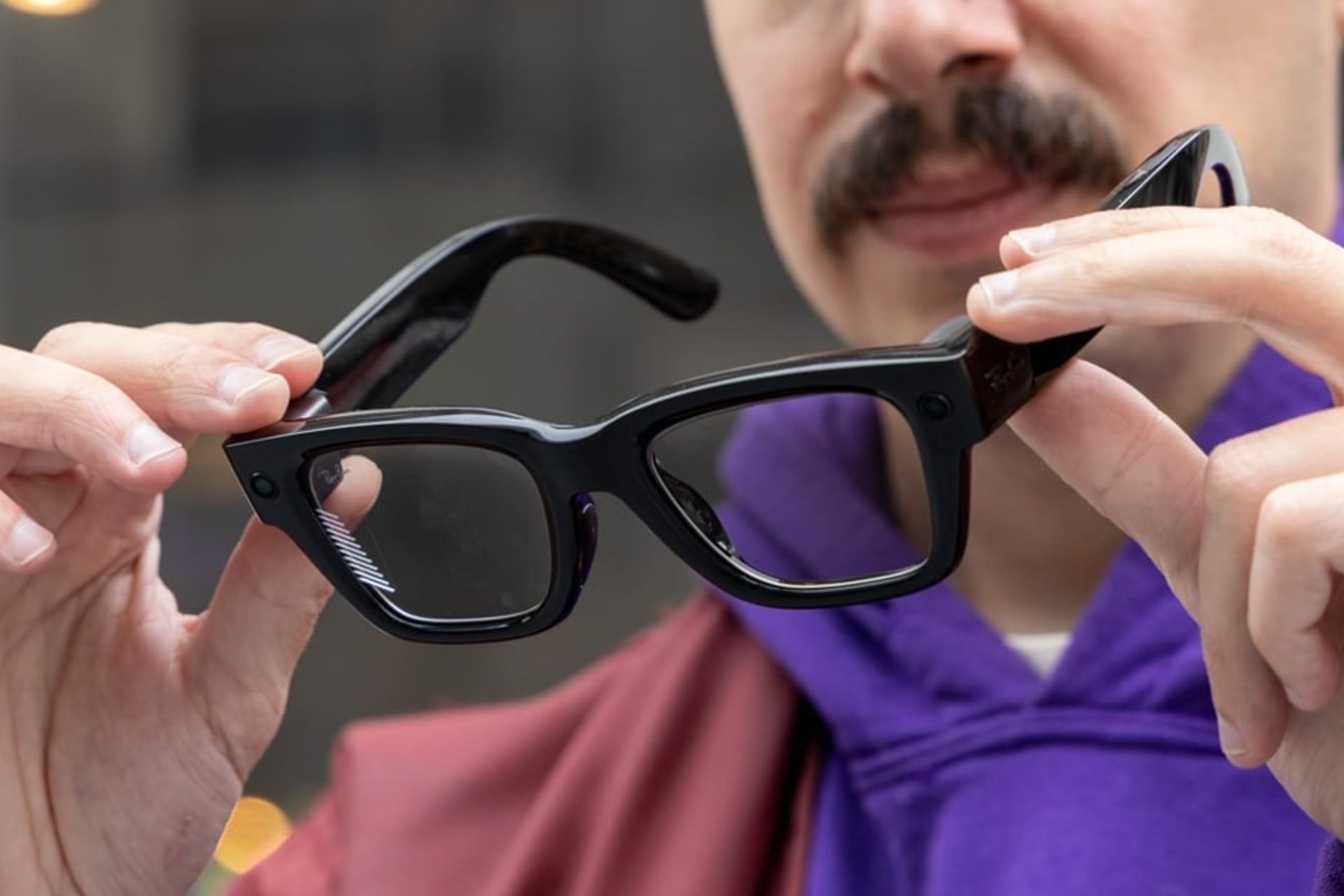
If you’re looking for the cameras on a pair of Ray-Ban Meta AI glasses, you’ll see them, but for the most part, they blend in. In my experience testing smart glasses, most people don’t realize I even have them on—and I’ve asked specifically. And the safety features meant to make them more obvious might not be as obvious as we would like. The Ray-Ban Meta AI glasses, for example, have a privacy light (an LED on the front) that’s meant to tell people when you’re recording, but it’s not always easy to spot, and even if someone does see it, there’s no guarantee that that person will know what it means.
All of those potential privacy pitfalls aren’t even counting the fact that smart glasses—at least the way Meta has envisioned them—have also been a liability for the people using them. Earlier this year, Meta came under scrutiny for harvesting Ray-Ban user videos and sending them to human contractors tasked with helping train its AI. Those videos, as it turns out, contained sensitive content like people having sex, undressing, using the bathroom, and even bank and credit card information. The worst part is that some of those videos appear to have been recorded accidentally, according to whistleblowers.
If you’re picking up the vibe that smart glasses are a privacy nightmare, then you’re not alone. Plenty of civil rights groups have recently said as much, penning open letters to Meta and regulators that caution against Meta’s potential plans to add facial recognition to its Ray-Ban Meta AI glasses. The whole thing is a mess, and for Apple, a company that’s built around privacy, it could be doubly messy. That being said, there are some ways Apple could make the form factor more privacy-friendly.

One obvious way a pair of Apple smart glasses could up the privacy standard is simple: just don’t leverage data from users to train AI. That would mean Apple, unlike Meta, doesn’t collect videos or store them in any way, and it means no scandals like the one we saw with Meta earlier this year. Meta could do the same, but the entire company is built around collecting data and then using that data for financial gain—this is the mentality you get when a social media company steps into hardware. Apple doesn’t share that problem. It’s not built on collecting user data—in fact, it’s built on its reputation for not doing that.
There are tougher problems than data collection. If Apple is to put a camera on its smart glasses—and reports indicate that it will—then it’s going to have to reconcile the fact that it’s making a product that some people consider an inherent risk to privacy. As I mentioned, smart glasses are mighty good at recording people discreetly, and once they’re in the possession of someone who’s able to do that, there’s no telling how they’ll be used.
Some companies in the smart glasses space are side-stepping that minefield by making frames without cameras, but as we’ve established, Apple doesn’t seem to be doing that. More interestingly, other companies, like Brilliant Labs, which is set to release its Halo smart glasses, are only using its smart glasses for AI and nothing else—that means no photography or videos.
That AI-only approach is always an option for Apple, but the chances of it releasing a pair of smart glasses that aren’t capable of recording POV video or audio feel slim in my opinion. As problematic as putting a camera on glasses is, plenty of people buy them for legitimate reasons—recording action sports and content creation are two perfect examples. The fact is, if Apple’s smart glasses don’t have a way to record things in POV, they’re going to be considered leagues behind most people who are interested in spending money to dip their toes in the form factor. Not a good look for a late-market entry.
Obviously, Apple already sells plenty of devices capable of doing bad things when used the wrong way—you could whip out your iPhone and record someone discreetly just as easily, right? The issue is that we’re okay with the tradeoff since phones, as I’m sure most would agree, are pretty useful. Smart glasses? Well, I’m not sure people are going to be as apt to justify the privacy tradeoffs.
It’s hard to say where Apple stands on the issue since it hasn’t announced anything yet, but I’m going to assume this is all stuff it’s chewing on. Whether it will have a compelling answer is the biggest question, and on that front, my expectations are low. Data collection is one thing, but policing how people use their newfound video-recording freedom feels like too big a task, even for a company worth about $4 trillion.