Dell’s laptop rebrand in 2025 was an unmitigated disaster. Instead of simplifying the buying process, Dell replaced its established lineups like Inspiron, Latitude, and Precision with the more confusing Dell, Dell Pro, and Dell Pro Max, respectively. The Dell Plus also replaced the Inspiron Plus; Dell Pro Max replaced Precision; and Dell Premium replaced XPS. The latter was especially missed by consumers.
You knew it was a stupid idea when the company needed a 3 x 3 reference grid to explain all the new laptop names and people were still left scratching their heads.
Fortunately, Dell came to its senses and brought back the XPS brand after much backlash. So what’s changed? For better and worse… not a lot.
Dell XPS 16 (2026)
The Dell XPS 16 is a strong performer and multimedia beast. But if you’re like me, you’re going to struggle with its cluttered keyboard.
Pros
- Slick 2026 redesign
- Gorgeous OLED screen
- Strong speakers
- Long battery life
- Solid performance
Cons
- Keyboard spacing is too tight
- Short on ports
- Pricey for the components
The Dell XPS 16 (2026) delivers the same strong performance, gorgeous 16-inch display, and long battery life as its predecessors. What makes it stand apart is the subtle design changes that give it a thinner and sleeker look. However, what remained from the 2025 version is its tightly packed keyboard, which is prone to providing discomfort and typos.
Dell sent Gizmodo the $2,350 model of the XPS 16, which is outfitted with an Intel Core Ultra X7 358H CPU and 32GB of RAM. While it is a strong overall performer, it still only lands in the middle or lower end of the pack when compared to the MacBook Pro’s M5 chip and the Core Ultra X9 388H CPU. I’ll argue the differences are negligible to the average user. What I care about more, however, is its graphics. It won’t be a priority for everybody, but the integrated GPU scored playable frame rates at high settings in AAA games like Cyberpunk 2077 (an impressive win).
Unfortunately, at the XPS 16’s price point, it doesn’t make a great case against machines like the M5 MacBook Pro, which costs $250 less when similarly specced. For a similar price as the XPS 16, you can get the Asus Zenbook Duo with a beefed-up Core Ultra X9 388H (which isn’t available on the XPS 16). You’re going down a screen size to 14 inches, but you do get two displays.
As with most new laptops, I highly recommend waiting for a sale. The XPS 16 has a lot going for it, and a price cut could make it a steal for anyone looking for a top-of-the-line premium laptop. But you may need to put on some rose-colored glasses to ignore the red flag that is its keyboard. If you’re interested in the smaller, 14-inch Dell XPS 14, check out our full review here.
Re-redesigned for better and worse

Thank the manufacturer (epic Cars reference), there’s a physical function row now. In 2025, Dell went all out on design, form over function in many cases—its light-up touch-based function row being one of them. It was challenging to navigate and didn’t feel good to use. And the same could be said with the new XPS 16’s keyboard.
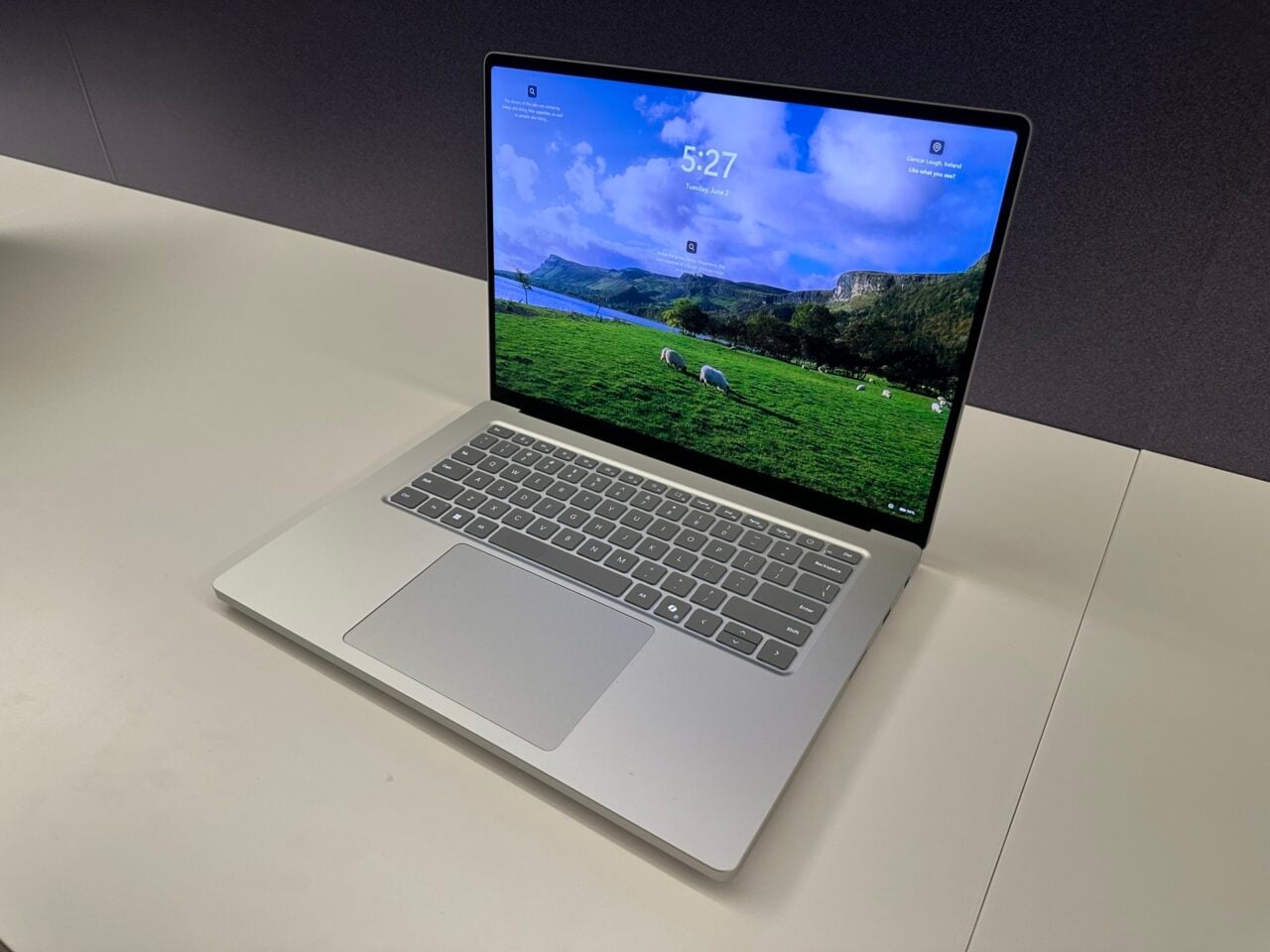
The keys are seamlessly woven into the deck, and it looks slick, like a piece of space tech, but I wish it felt as good as it looked. I spent days planning my next D&D session, and there were typos abound. There’s little space between the keys, so they all sort of blend together. Imagine me typing an elvish name like “Halafarin Ralobalar” over and over again—eventually it became “Hal.”
Despite the frustrating lack of spacing, the keys were punchy, producing a satisfying click with every stroke. This would be an excellent laptop keyboard if not for the accuracy issues. A Lenovo ThinkPad keyboard provides the same snappy feedback, but the distinction between the keys is the final touch that makes its keyboard iconic.

Then we have the latest design for the trackpad, which forgoes its previously seamless deck to add raised lines to distinguish the input surface area. It’s a haptic trackpad, so there’s no real click per se, but I do wish the feedback was stronger. I had the vibrations set to 100% and it still gave the impression of a shallow trackpad. The material is smooth to glide across, although the trackpad is big enough that some folks may experience misclicks (I recommend turning off single tap-to-click).
As someone who remembers the chunky XPS laptops of yore, pulling this XPS 16 out of the box was a pleasant surprise. My favorite new design change is the logo on the hood—“XPS” in a black, glossy, stylish font. It’s more distinguished than the old generic “Dell” logo. And at 0.58 inches, I felt like I was holding a tablet. Although a bit heavier than one, at 3.65 pounds, it still makes for an easy carry on the go.


The XPS 16’s thin chassis does come at a cost, however. There’s a total of three Thunderbolt 4 (Type-C) ports and a single headphone jack. I love a thin laptop, but some of its convenient portability is diminished when you need to drag a USB Type-C hub with you everywhere you go.
A multimedia beast
As an avid gamer and film buff, there’s nothing I love more in my laptops than a pretty OLED display, and the XPS 16 delivers. Dell’s InfinityEdge displays have been cutting down the bezel size for years, and with one of the thinnest webcams on top, the screen looks more and more like it’s floating.
At 16 inches, the touchscreen panel sports a 3,200 x 2,000 resolution with a 120Hz refresh rate. That provides both sharp and smooth visuals, making movies look more immersive and the desktop experience more seamless, respectively. The screen is also rated for 400 nits of brightness and 100% coverage of the DCI-P3 color gamut. Translation: it’s bright enough to work outdoors and vivid enough for me to fawn over Ryan Gosling’s ocean blue eyes.

Keeping up with the visual beauty, the 10W, four-speaker system is quite powerful. It filled my bedroom with the bassy synths of Au/Ra’s “Ghost” at only 50% volume. At 100%, it acted as a sufficient party speaker in the living room when I had friends over, and the quality didn’t suffer for it. Even orchestra tracks with various instruments didn’t get muddled.
Despite the XPS 16’s very tiny 4K-resolution webcam, it captured my colorful collection of figures and books without losing too much detail. There is still some light image noise and my ceiling lights were a little blown out, but not enough to make a significant impact on the overall quality. I would feel confident going into an interview with it.
Strong, but not the strongest

With an Intel Core Ultra X7 358H CPU, the XPS 16 is on the mid-to-high end in terms of performance, but at $2,350, it makes me question why it couldn’t compete with the similarly priced Asus Zenbook Duo with its top-end X9 388H CPU. The XPS 16 is a smooth operator in day-to-day tasks, with very little slowdown juggling between my disgusting cacophony of tabs and apps like Discord and Spotify in the background. But at the price, are you losing out on that extra edge?
Well, the X7 358H is roughly 4.5% weaker than the X9 388H in multi-core performance on Geekbench 6’s benchmark. It’s also only a 4% gap compared to the MacBook Pro’s M5 chip (M-series chips usually lead in synthetic performance). Unless you’re a big number-cruncher, that really isn’t much of a difference. However, it’s important to note that while the X7 is only less than 1% ahead of the ThinkPad P1’s last-gen Intel Core Ultra 7 255H, it was designed for increased efficiency as opposed to raw performance.
In terms of more real-world use, the X7 rendered a BMW in a CPU-focused Blender test in just over two minutes, which was a few seconds faster than Apple’s M5 chip and a few seconds slower than the X9 and Ultra 7 255H. Ultimately, the differences are minimal enough that the average user won’t notice the impact. But if you’re a power user, aim for the X9 or M5 chips.
Graphics capable of AAA gaming

Integrated graphics are getting stronger every year, and the XPS 16’s 12 Xe3-core Arc B390 chip pulled a surprising amount of weight across productivity and gaming tasks. It’s explicitly designed to be a graphics workhorse, but since it still doesn’t quite compete with discrete graphics, I’m not convinced it’s worth the premium price (on graphics alone). In the 3DMark “Steel Nomad” test, which measures a GPU’s rendering capability, the XPS 16 fell behind with a 19% gap against the Zenbook Duo’s X9 chipset. However, it was over 18% ahead of the M5. Comparing discrete graphics, the Acer Predator Triton 14 AI’s RTX 5070 ($2,500) showed off a 114% increase in performance from the XPS 16’s score.
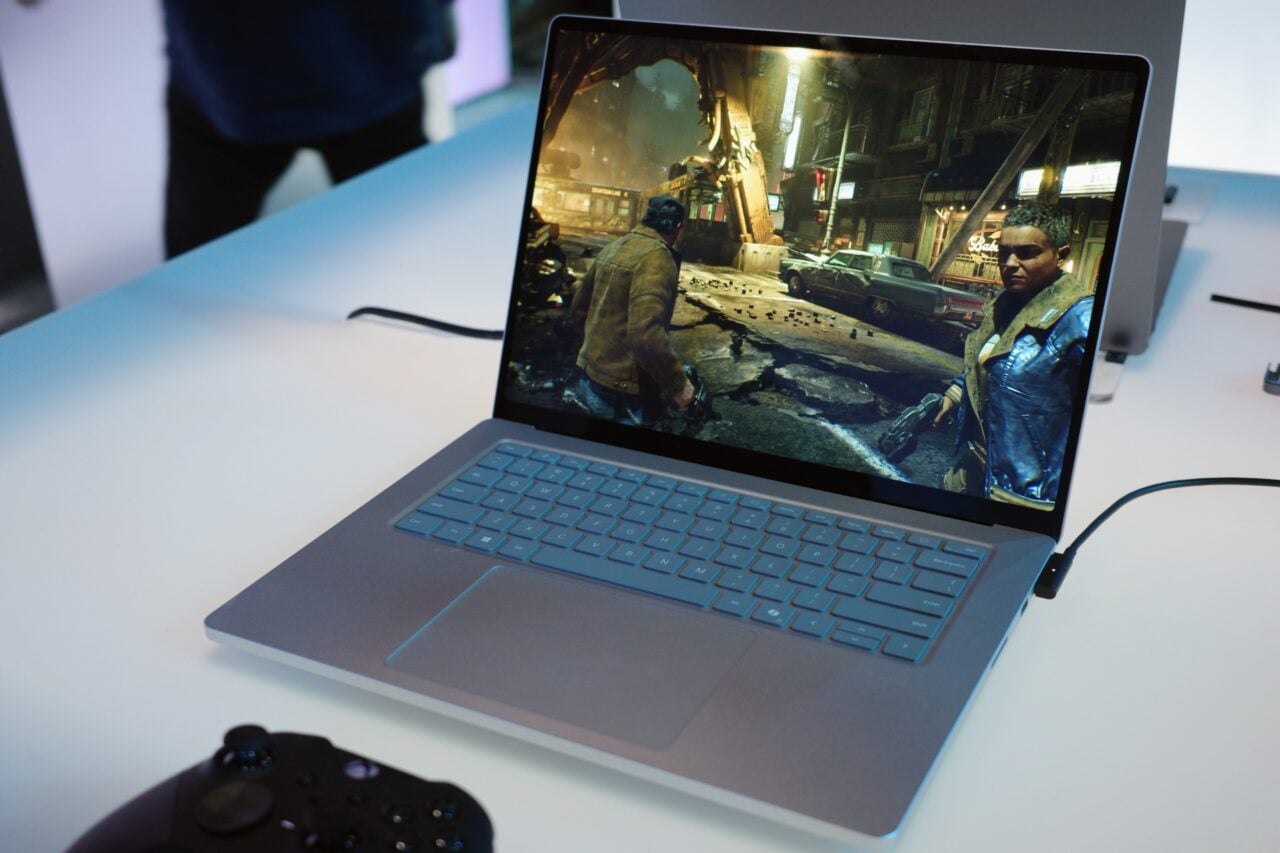
I couldn’t help but jump into Night City to see how the XPS 16 could handle a demanding AAA game like Cyberpunk 2077. At its native resolution on Ultra settings with XeSS Ultra Performance upscaling enabled, the XPS averaged 41 fps. That puts it over the 30 fps minimum for playability, and it retains its crisp visuals. Upscaling comes with its own issues like artifacting, so if you wanted to disable it, you’d need to drop to a 1200p resolution, which will put you at an acceptable 38 fps on Ultra settings (the M5 chip hit 31 fps on High).
Again, I found myself impressed with the graphics performance in games like Black Myth: Wukong, where the XPS 16 achieved 39 fps at its native resolution on High settings with XeSS upscaling. Similar to Cyberpunk 2077, you can ditch the upscaling by dropping down to a 1200p resolution for a strong 44 fps. Total War: Warhammer III was just slightly unplayable at its native resolution on High settings, but it didn’t take much tweaking to get it to above 30 fps. Still, all of this is a great showcase of what Intel’s new integrated graphics is capable of.
Typists beware

Going from a full workday to running a D&D session into the late evening, the XPS 16 hardly complained when set at 50% brightness. It was only until the end of the night that I had to finally plug it in, so it lasted around 16 hours total. This laptop could easily last a couple of workdays if you’re not using it in between.
I had “Best Power Efficiency” on battery enabled, but disabled energy saver and lowered the screen brightness. I didn’t touch any of the Dell Optimizer settings, which seemed to default to “Quiet” while unplugged.
The Dell XPS 16 is a great everyday laptop that comes with the bells and whistles I’d expect from a premium rig, though it doesn’t have a memory card reader or HDMI port of any kind that’s usually present on 16-inch laptops. It even gets some solid gaming in, which is a must-have for me. But the XPS 16 does have issues that I don’t like seeing at a $2,350 price point.
The biggest sticking point is the keyboard. Interacting with this laptop began as a frustrating experience. Eventually, I did get used to it, and my typing accuracy increased. However, that didn’t change that it felt unsatisfying to type on, enough so that I’d pull it out of my shopping cart.
Don’t get me wrong, the XPS 16 offers some great features, from its design and display to its performance and battery life. But for me, the keyboard is bad enough that I couldn’t live with it. It might be fine for a user that hasn’t touched hundreds of other, better laptop keyboards. And if you are someone who can deal with it, I’d still recommend waiting for a sale.