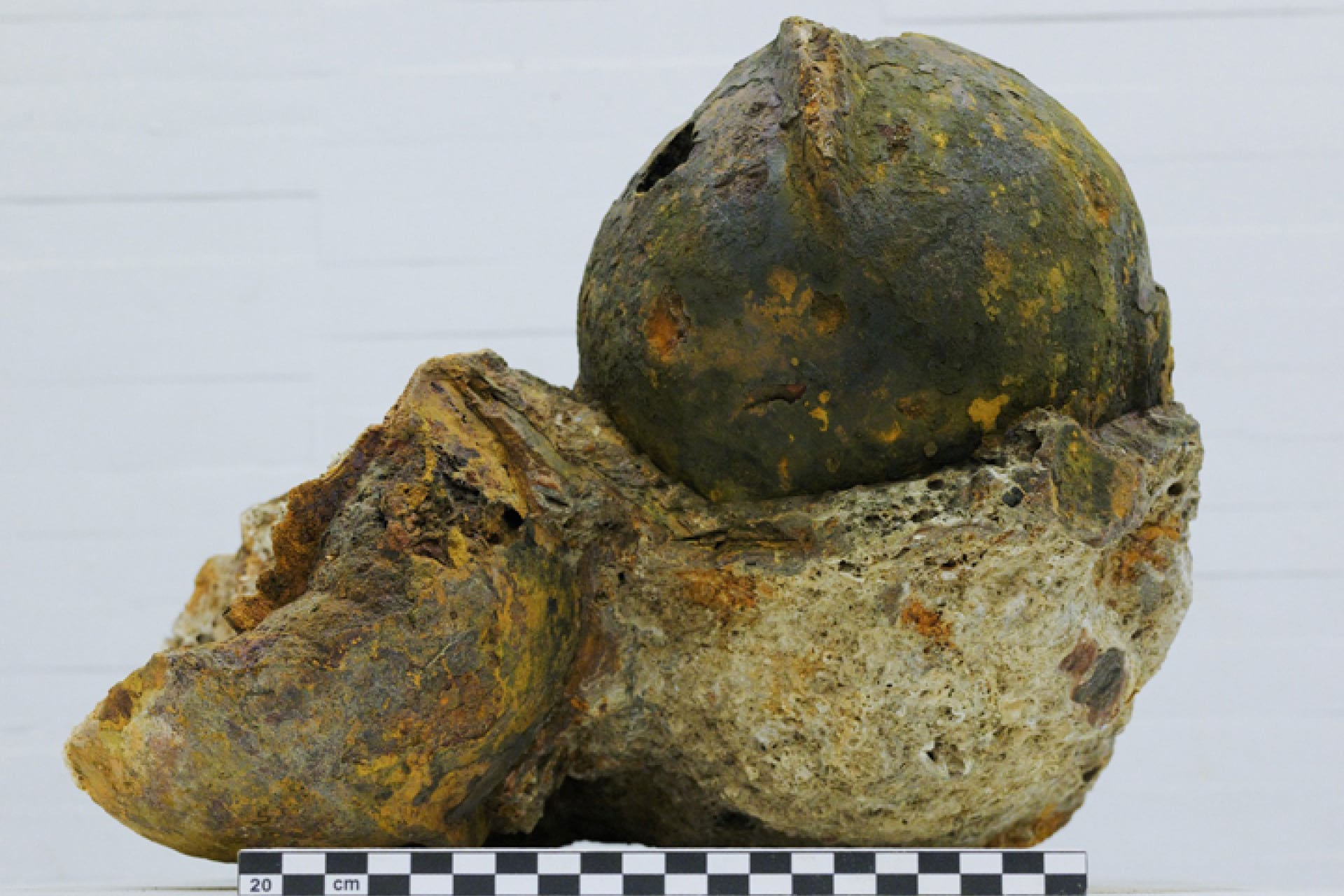
In 1990, Spanish archaeologists recovered 43 helmets from the bottom of the sea. Evidence at the time suggested the helmets were Roman, which was what researchers believed for more than 30 years. That turned out to be a big misinterpretation.
When researchers revisited the artifacts with radiocarbon dating, they placed the helmets’ age at between the late 14th and early 15th centuries—much younger than the Roman Empire. The findings, published recently in the journal Antiquity, suggest the helmets were regionally produced during a “period of maritime insecurity along the Valencian coast,” the authors noted in the paper. Assuming that the new dates are correct, the collection represents the “largest hoard of medieval helmets” ever found in the western Mediterranean, the researchers said in a statement.
“We are looking at direct evidence of large-scale arms trading,” remarked Raimon Graells, the study’s co-author and an archaeologist at the University of Alicante in Spain, in the statement. “This discovery reveals a network of exchange and communication that was far more complex than previously thought.”
To be fair…
For the initial assessment of the artifacts, researchers relied on comparisons with similar sites to determine the age of artifacts. This was what happened in 1990 with the helmets, which were found roughly 19.6 feet (6 meters) underwater near Benicarló, a municipality in northeastern Spain.
Earlier, archeologists had retrieved other material that was more obviously attributed to Roman times, and researchers thus hypothesized that the helmets came from similar periods. Additionally, according to the paper, Roman helmets popped up rather frequently in the eastern Iberian Peninsula, so it made sense for the scientists to make their assumption.
Connecting the dots
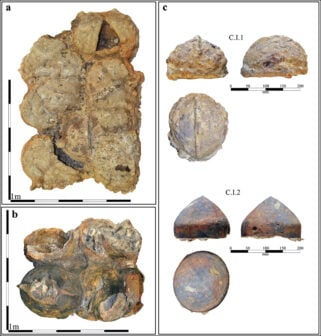
Since then, the helmets lived in labs, museums, and other institutions at various levels of preservation. For the latest study, the research team assessed the helmets and chose five that were sufficiently well preserved for detailed investigation. Then, the researchers put the samples through detailed radiocarbon dating and chemical analysis. The samples selected also had traces of lining textiles inside the helmets, which helped the researchers guess at when the helmet was actually worn.
Setting aside the assumption that the helmets were necessarily Roman posed some challenges in identifying when, if not in the Roman era, the helmets were created, according to Manuel Frallicciardi, the study’s first author, in the statement.
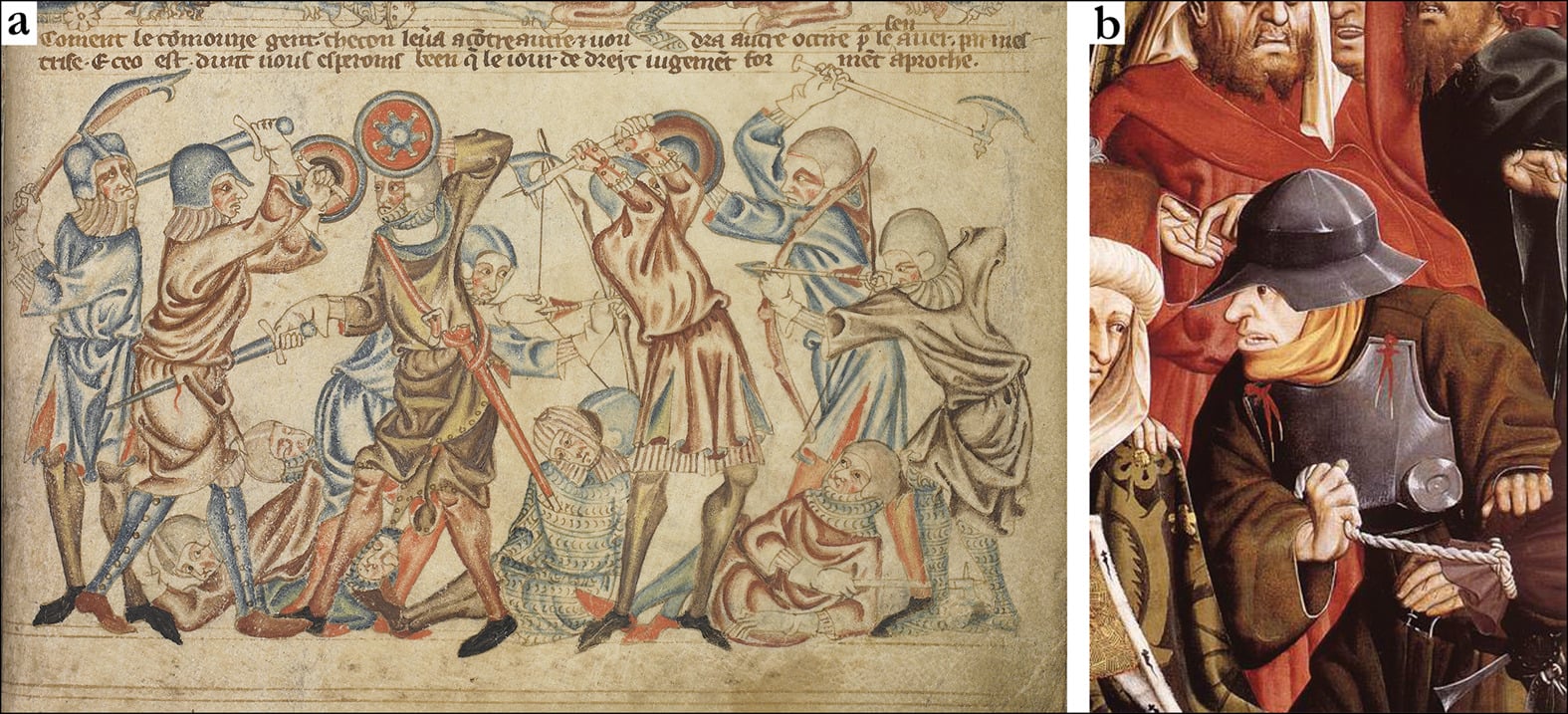
“At the beginning, it was difficult to place them in a specific era because they featured traits that recalled both Late Roman models and potential medieval pieces inspired by classical traditions,” recalled Frallicciardi, a PhD student at the University of Alicante. At best, the helmets vaguely resembled English designs from the 14th century, but there weren’t any exact matches, he said.
The science speaks
Results from radiocarbon dating—based on independent measurements from two labs—were much less abstract. The analysis placed the use and deposition of the helmets “between the third quarter of the 14th century AD and the early 15th century,” the paper reported.

The team isn’t fully certain of the relevant historical contexts of these helmets. In the paper, the researchers present some educated guesses. The helmets were probably crafted in minor production workshops before plate armor became widespread in Italy.
The particular period attributed to the helmets was “marked by profound political turbulence and frequent armed conflict,” so it’s unsurprising that military gear ended up deep underwater for centuries, according to the paper. In any case, the helmets are “rare material evidence for an intermediate phase that remains poorly documented in the archaeological record,” the study noted.