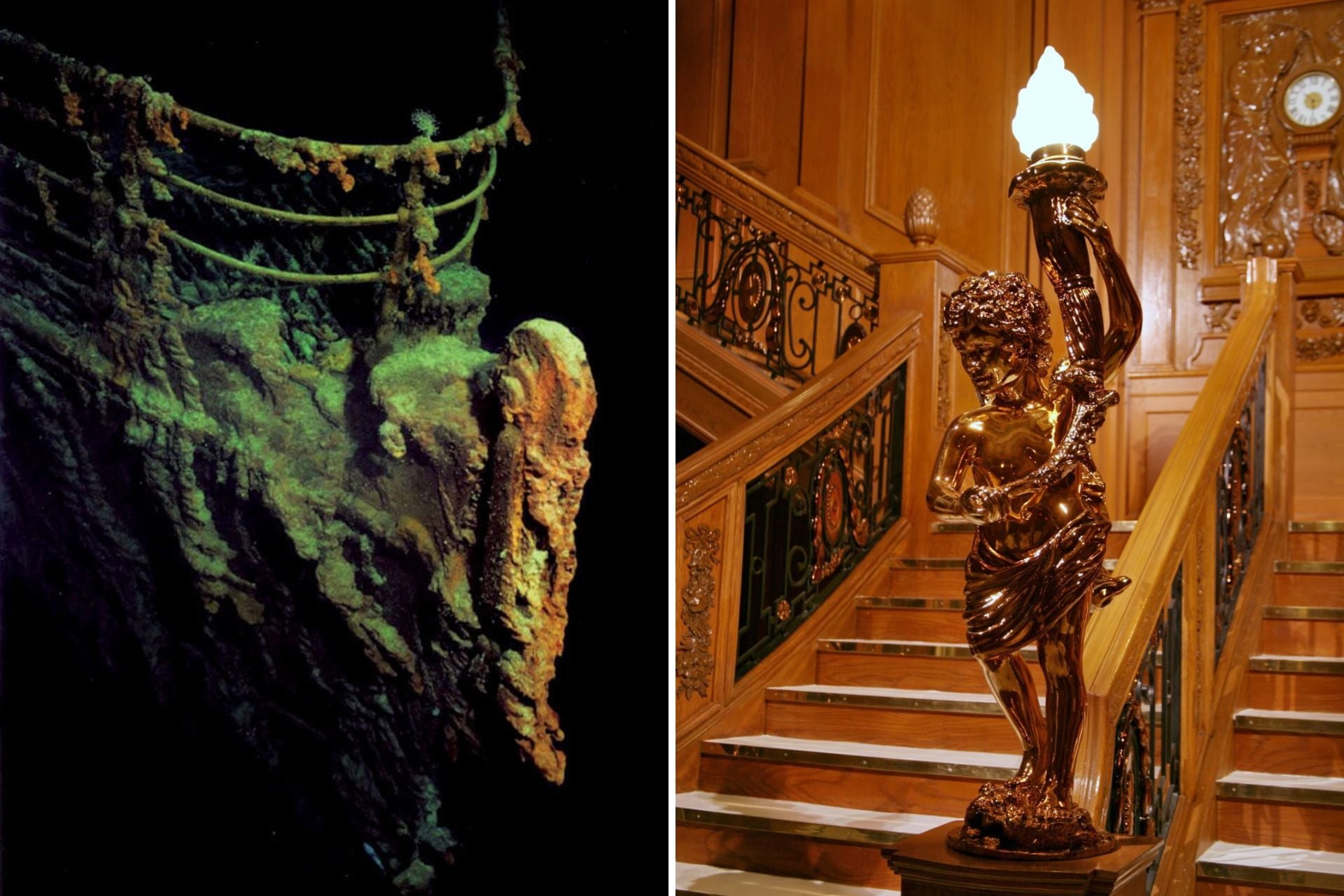
A U.S. court in Virginia that oversees the exclusive salvage rights to the infamous remains of the Titanic has moved to unseal a secret filing by the historic ship’s salvage rights-holder, which hopes to auction off 100 artifacts recovered from the wreck.
The disclosure has appalled archaeologists and historical preservationists worldwide, some of whom have written letters petitioning Judge Rebecca Beach Smith to deny the proposed sales. In what The Times of London called “an Indiana Jones touch,” marine archeologist Jeneva Wright, chair of the Advisory Council on Underwater Archaeology, urged Judge Smith to “place the Titanic collections under the curation of an accredited museum.”
Cathy Green, president of the nonprofit National Maritime Historical Society, also pleaded with the court to stop the auction: “The Titanic occupies a singular place in global maritime history,” Green wrote in a letter to the court. “The wreck site is both an internationally significant archaeological resource and the final resting place of more than 1,500 individuals.”
This isn’t the first time R.M.S. Titanic Inc., which won the “salvor-in-possession” rights to the ship in 1994, has tried to sell artifacts from one of history’s most infamous shipwrecks. The last time was in 2016, when it was teetering on the verge of financial ruin. Its parent company Premier Exhibitions—creators of the controversial human anatomy exhibit “Bodies,” which became infamous for its display of dubiously sourced actual human remains—had just filed for bankruptcy.
According to Premier’s Chapter 11 filings, the company owed about $12 million to unsecured creditors.
The French connection
The effort to sell Titanic artifacts in 2016 was ultimately thwarted by pressure from the French government, whose Office of Maritime Affairs had cosigned the company’s legal claim to some of these Titanic artifacts in 1993, under the strict proviso that the historic objects would not be sold.
Adding to the legal issues, the Titanic has now been officially protected by the United Nations Educational, Scientific, and Cultural Organization (UNESCO) for over 14 years, ever since the centennial anniversary of its fateful sinking on April 14, 1912.
Successful salvage efforts to hoist up items from the Titanic began in 1987, with the firm that would later become R.M.S. Titanic Inc. working in partnership with French research institute IFREMER, owners of the deep-diving submersible Nautile. Across seven expeditions between 1987 and 2004, the salvage company worked with various partners like IFREMER to dredge up a total of roughly 5,500 artifacts from the ship and its surrounding Atlantic seabed, before legal and financial issues slowed things down.
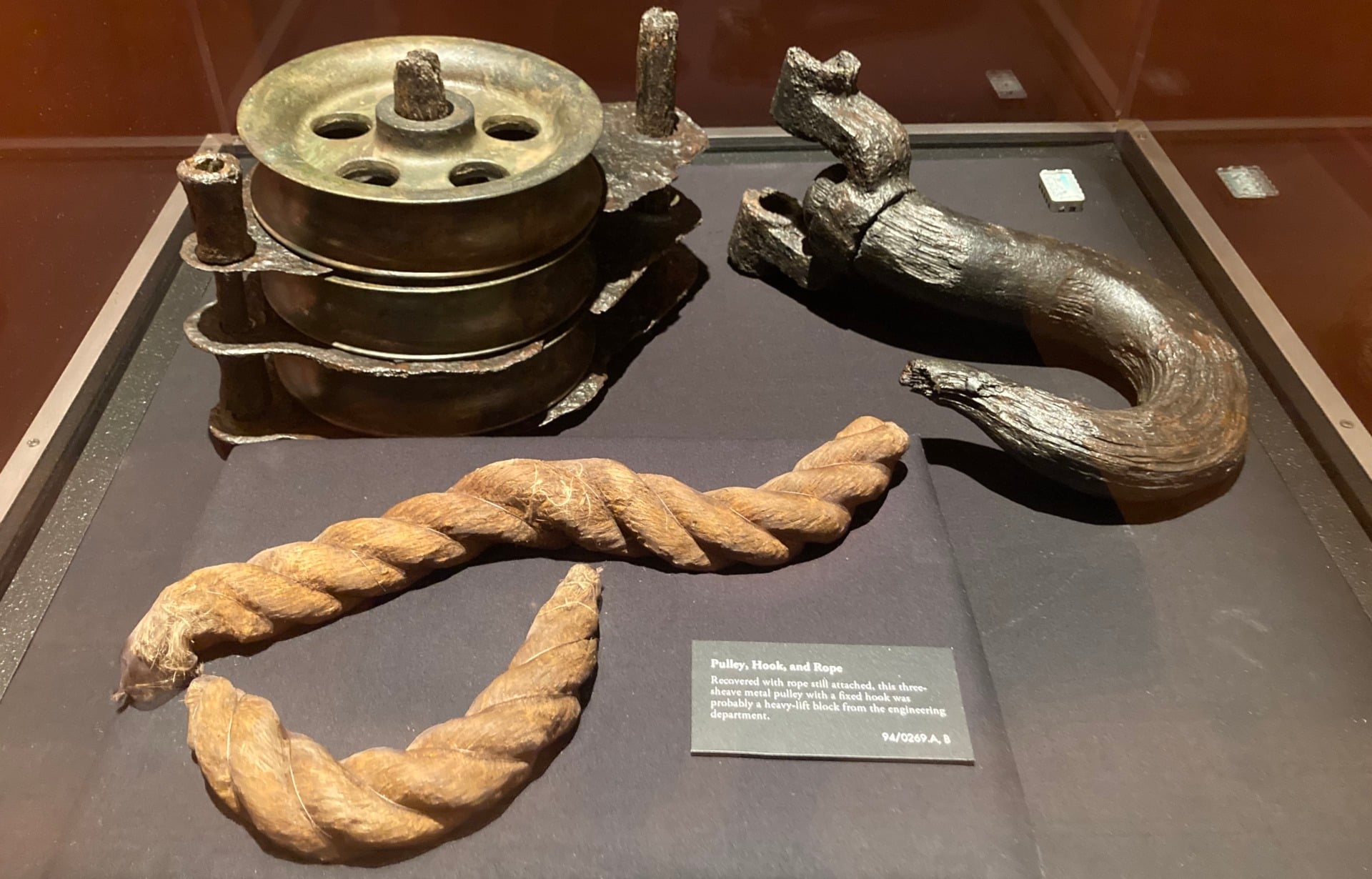
Most recently, a Louisiana-based maritime-services company sued R.M.S. Titanic Inc. for over $4 million in services and equipment, including a specialized ship and submersibles chartered to image the wreck in 2024.
While it’s unclear which 100 artifacts the company actually plans to sell, some expressed concern that a few might come from the 1,800 items recovered during that 1987 mission, now known as the “French Collection.”
“Dispersal of the French Collection will also contravene one of the fundamental articles of the UNESCO convention on underwater cultural heritage [against] cultural exploitation,” Chris Underwood, president of the International Committee on Underwater Cultural Heritage, wrote to the court. Such a precedent, he suggested, might create loopholes allowing other groups to loot historically significant undersea sites around the globe.
Selling off human history
Naturally, R.M.S. Titanic Inc. believes that it can sell whatever it wants to this day, archaeologists be damned. In early May, a lawyer for R.M.S. Titanic, Brian Wainger, issued a statement on the auction to The New York Times arguing that “the law of the case permit the sale of these artifacts.” The auction, the company maintains, is “consistent with its obligations as a respectful steward of the artifacts.”
While Wainger did not answer the paper’s questions about which specific artifacts it planned to sell, items proposed for the auction block in 2016 included a diamond and blue sapphire “moonburst” ring—which the company also sells replicas of—and a bronze cherub from the ship’s grand staircase. (According to a 2015 company press release, this cherub is technically part of that legally thorny French Collection.)
In its bid to keep details of its new auction secret, RMS Titanic Inc. argued in its filing to Judge Smith that unsealing these plans jeopardized “highly sensitive, non-public, proprietary business and financial information.”
But that secrecy comes with real consequences, according to those fighting the sale. As Fredrik Hiebert, the National Geographic Society’s archaeologist-in-residence, said the last time the company attempted to auction off these priceless artifacts (following that bankruptcy), “Human history might go on the auction block and disappear from the public domain.”