The Aftermath, and the Rings of Power
The War of the Elves and Sauron dramatically altered the landscape of Elven civilization in Eriador. With Celebrimbor’s death and the fall of Ost-in-Edhil, it was decided by the first formation of the White Council in the wake of the war’s end that Eregion would not be rebuilt, and that Imladris would become the Elven stronghold in the east of the region. With it, Gil-Galad also secretly gifted Elrond Vilya, which had been kept secreted away from Eregion during the war, and with it the title of vice-regent, establishing himself as the lord of Rivendell officially.
As well as failing to ensorcel the Elves to his sides, the arrival of the Númenórean fleet to turn the tide of war revealed the power of the island nation to Sauron for the first time—and making a new enemy for him on Middle-earth. Although it would take Sauron years to recover his forces from his defeat in Eriador, his attention now largely turned away from the Elves, and towards further corrupting the realms of men—setting the stage for his many plans for Númenór, that would go on to have dire ramifications throughout the remainder of the Second Age.
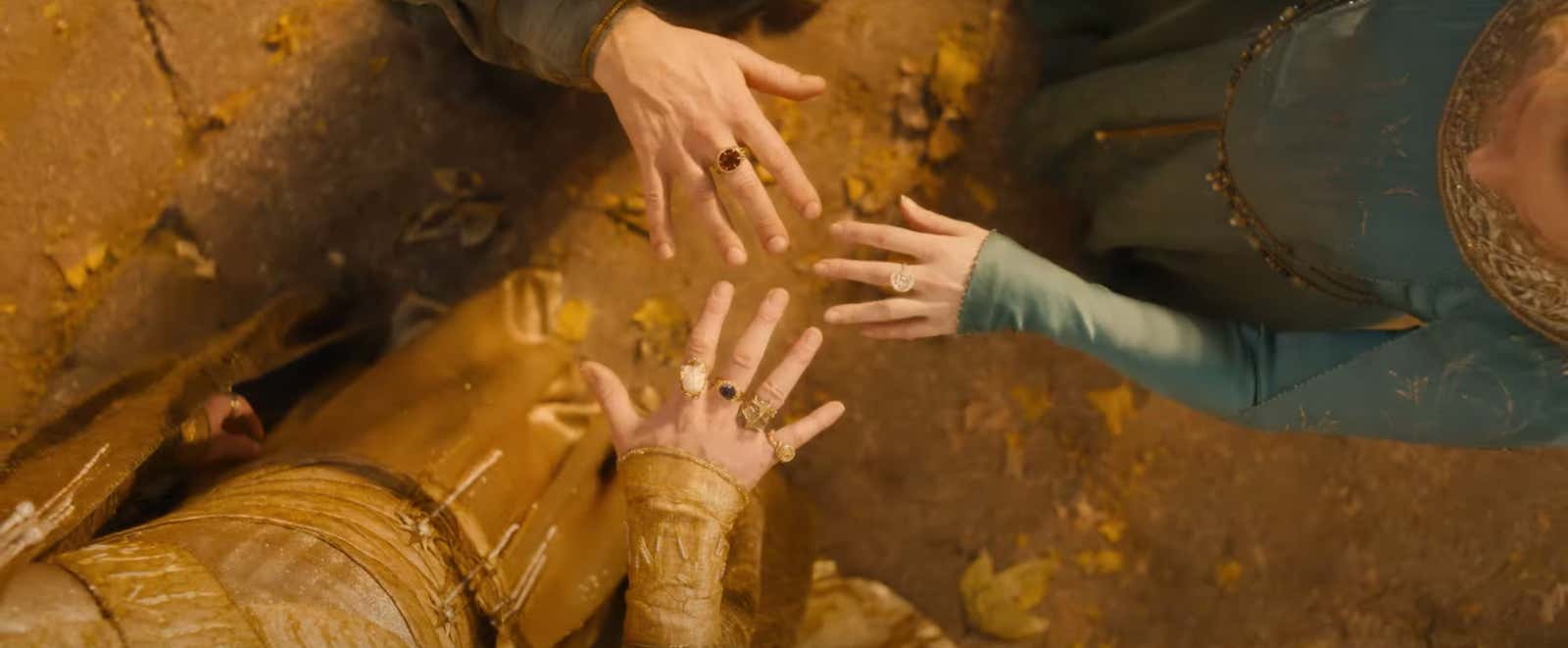
Just how much of the war we’ll see in Rings of Power’s second season remains to be seen—from the little we can see in the series’ trailer, we’ve already got plenty of glimpses of Ost-in-Edhil being besieged, Elrond commanding armed hosts, and even the three Elven rings of power being used in Lindon. It seems like the broad strokes of the conflict will play out largely as they do in Tolkien’s writings, but if anything the main thing that will change is a lot of the timing. Rings of Power has done a lot of work condensing what took decades and centuries across the thousands of years of Tolkien’s chronology into a much shorter period of time, and even if at about eight years long it’s not all that long in the grand scheme of things, Rings of Power will likely condense Sauron’s conflict with the Elves even further than this.