Ringworm
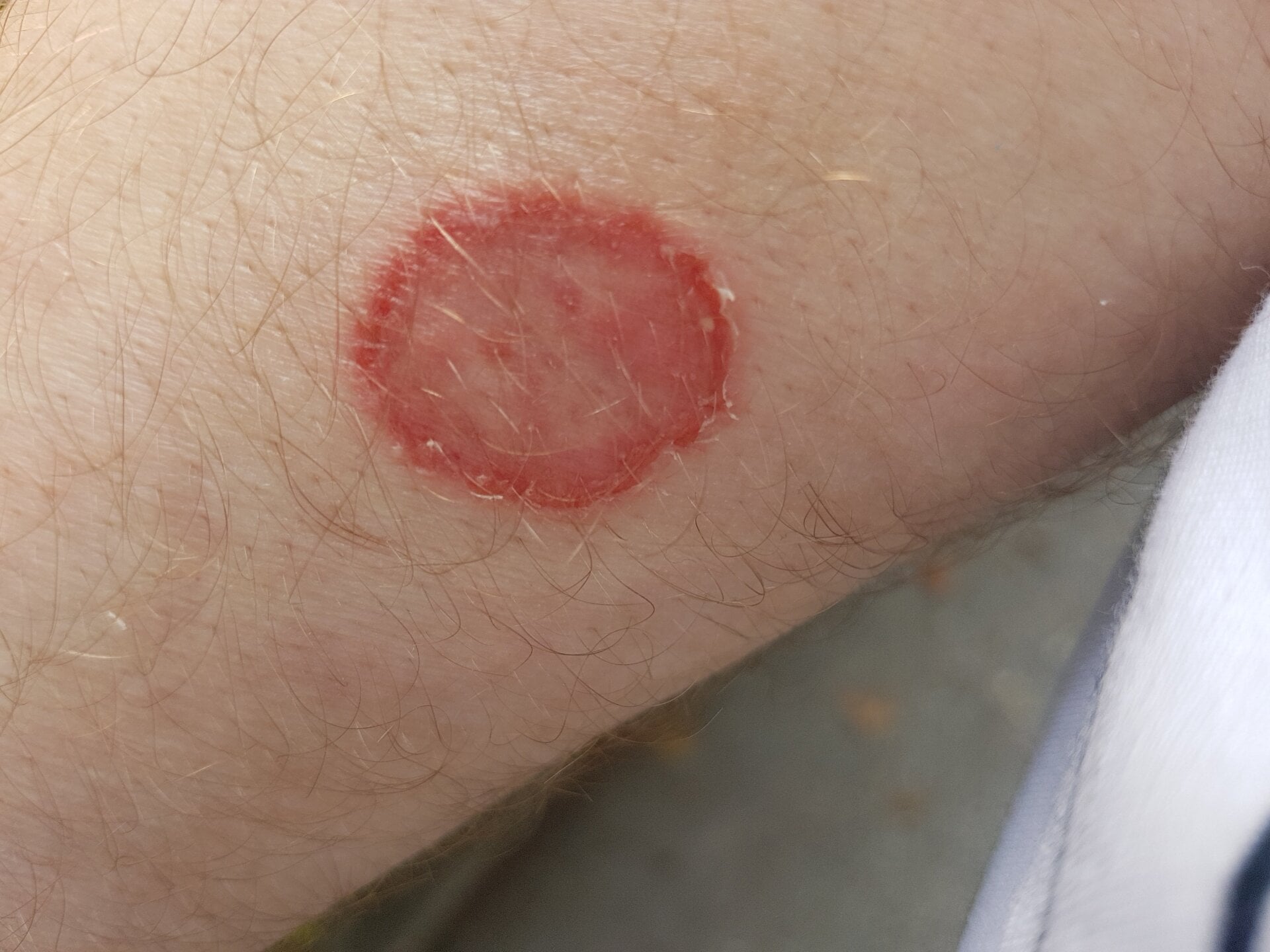
Why it happens: Ringworm (tinea) isn’t actually caused by a worm at all. It’s instead a broad term for common fungal skin infections that cause similar symptoms. More than three dozen fungal species can cause ringworm. Skin conditions like athlete’s foot (the feet) and jock itch (around the genitals) refer to such infections found on specific parts of the body.
Symptoms and treatments: The infection triggers a tell-tale circular rash, along with itchy, red, and sometimes cracked skin. If found in the scalp or other hairy places, it can also cause hair loss. Most infections can be treated easily enough with a two-to-four-week course of over-the-counter antifungal creams, lotions, or powders. But scalp infections usually require prescription oral antifungals. People with ringworm should not use steroid creams, which can help treat other rashy conditions, since these can suppress the immune system and make the infection worse.