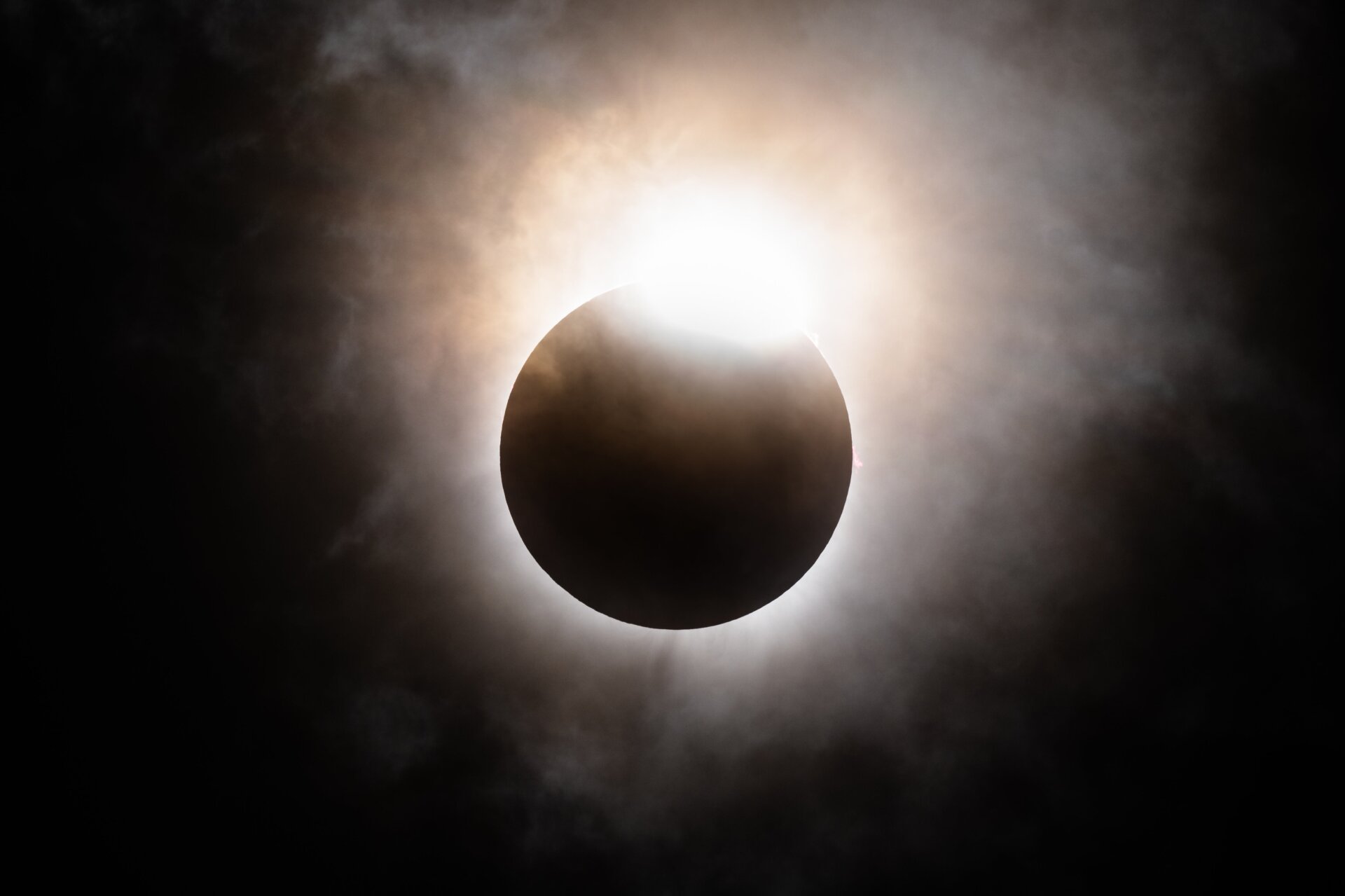
Monday’s event marked the first total solar eclipse that passed through North America in seven years, with the next one taking place on August 23, 2044. This shot was taken in Brady, Texas.
Users really trust AI chatbots, some experts say too much.
The upcoming annular eclipse will block out only a small portion of the Sun, and almost no one will be able to see it.
On Tuesday night, a celestial trifecta is set to occur as a partial lunar eclipse coincides with a Harvest Moon, which also happens to be a supermoon.
All our coverage of the Great North American Solar Eclipse, including the weather forecast, fake eclipse glasses, citizen science, and more.
Monday’s eclipse is bringing together a diverse group of citizen scientists, working to collectively enhance our knowledge of the Sun and Earth’s atmosphere.
Bad weather threatens to spoil the upcoming eclipse, but that doesn’t mean you can't experience some of the spectacle.