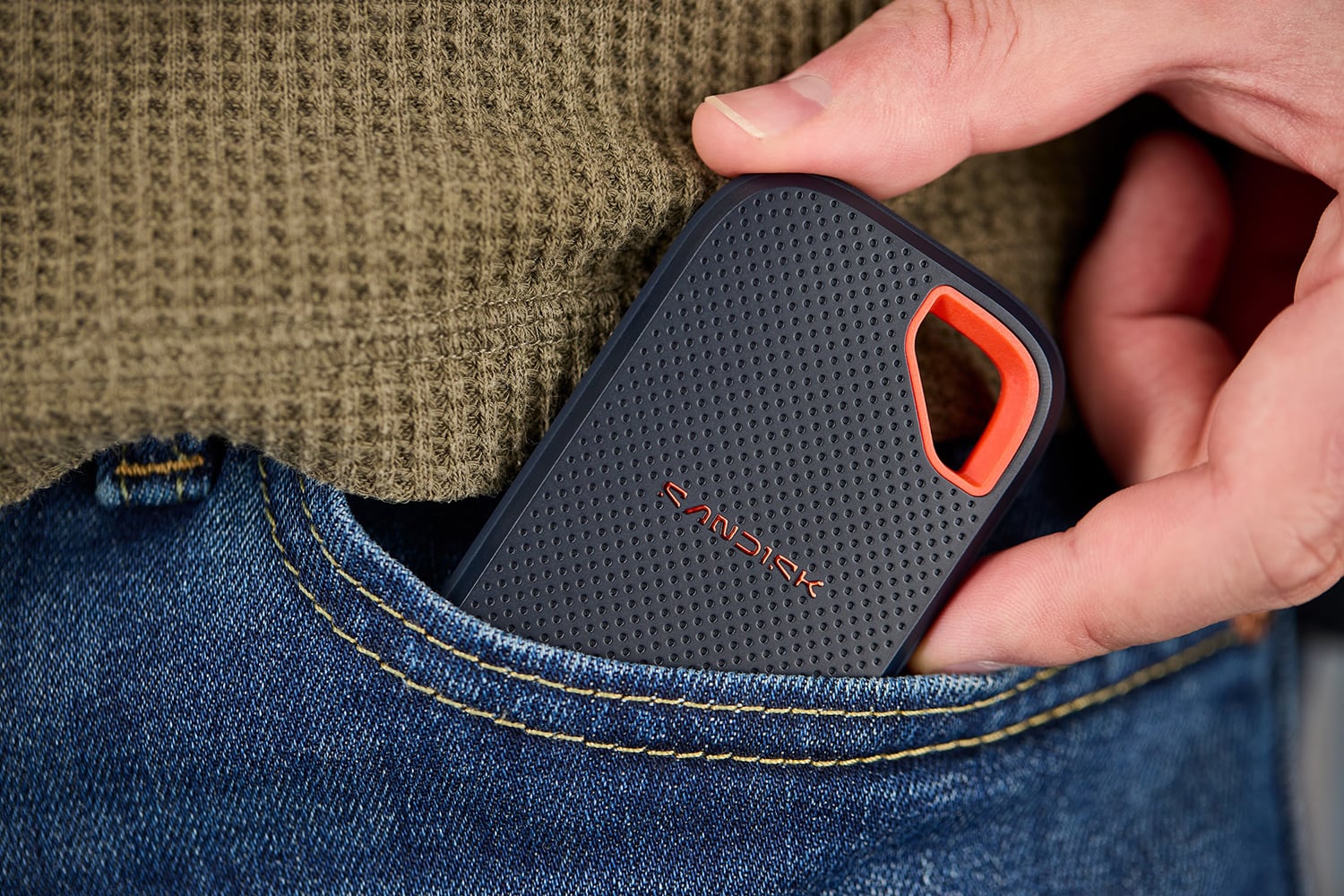
Portable storage devices are designed for dependable access on the go, and Sandisk’s newest generation of SSDs pushes that performance to the next level. The SANDISK Extreme® Portable SSD has arrived with fast, reliable, durable drives.
The new SANDISK Extreme Portable SSD is built for creatives, photographers, video editors, and professionals regularly moving or backing up large files — the people who know exactly what it feels like to sit in front of a transfer progress bar longer than they should. As part of Sandisk’s refreshed three-tier portable SSD lineup, it delivers nearly twice the speed of its predecessor alongside a durability upgrade designed for professional use in the field. It’s available now in 1TB, 2TB, and 4TB capacities1, with 500GB1 arriving later in 2026.
Ahead of the Curve
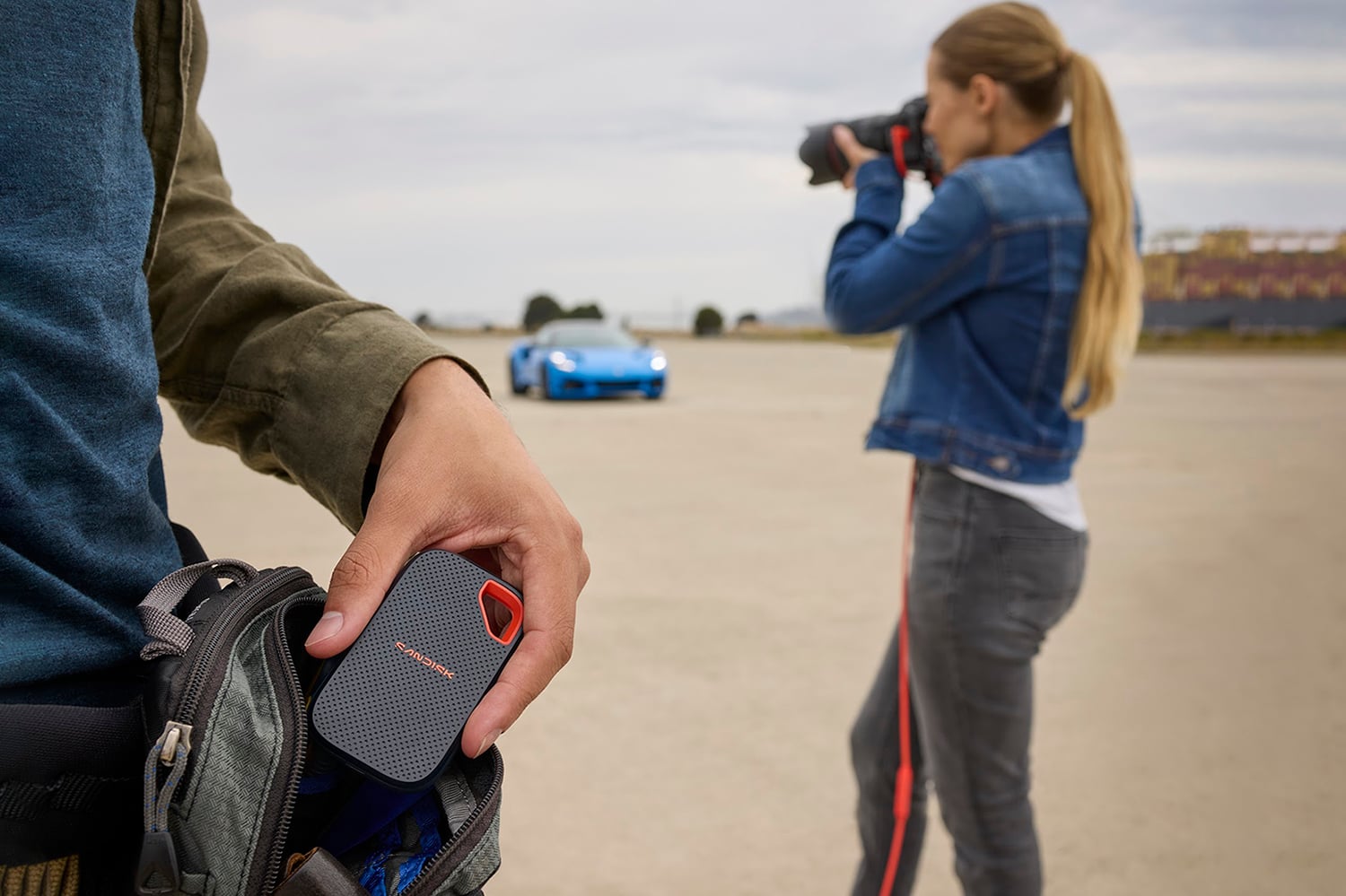
The storage pressure on modern creative workflows is real and only getting heavier. RAW files from current mirrorless cameras can routinely push 50MB each; a single day of 4K or 6K footage can fill a fast internal drive before you’ve finished reviewing clips. AI-generated content is increasingly part of creative pipelines, adding another layer of demand. Internal storage upgrades on modern laptops are expensive, difficult, or nearly impossible if you’re using the kinds of machines most creatives favor. The SANDISK Extreme Portable SSD sidesteps all of that — up to 4TB1 of capacity that can travel in a jacket pocket, with no teardown required.
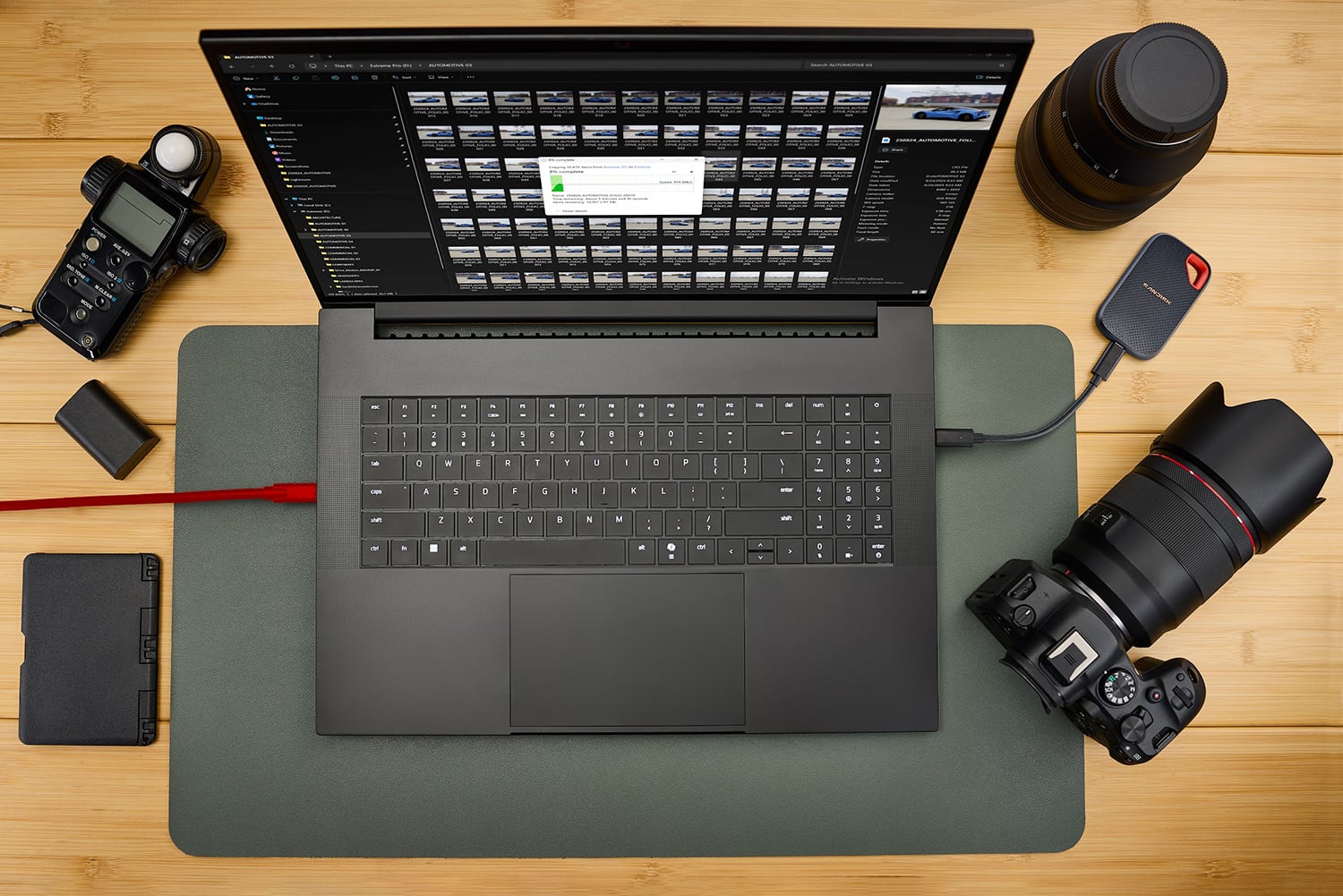
With up to 2,000MB/s2 transfer speeds, the drive moves up to 1,000 high-res photos in under 60 seconds.3 For workflows where time between shoots or editing sessions is tight, that amazing speed removes a real friction point — and for some users, editing directly from the external drive becomes a workable approach rather than a bogged-down hassle.
Pure Plug and Play
Setting up a SANDISK Extreme Portable SSD is as simple as it gets. Connect via USB-C™ and the drive is immediately available — no software installation, no configuration, no drivers to update, no disassembly. That simplicity is easy to take for granted until you’ve priced out an internal upgrade on a new computer model, where the options usually narrow down to a support appointment or a careful teardown, and neither is quick nor cheap.
With up to 3-meter drop protection and IP65 water and dust resistance4, durability is built into the design for field use. That rugged yet refined approach has already earned industry recognition, including a 2026 Red Dot Design Award. Constructed to handle the treatment a working photographer or filmmaker actually puts their gear through: bags that get tossed around, variable weather conditions, long travel days. The compact form factor tucks into a camera bag or laptop sleeve without claiming meaningful space, and it doesn’t need to be handled like something fragile. Even if you’re not an intrepid photographer or videographer and you’re just someone looking to help preserve and protect precious files, that toughness comes in very handy indeed.
In the Sweet Spot
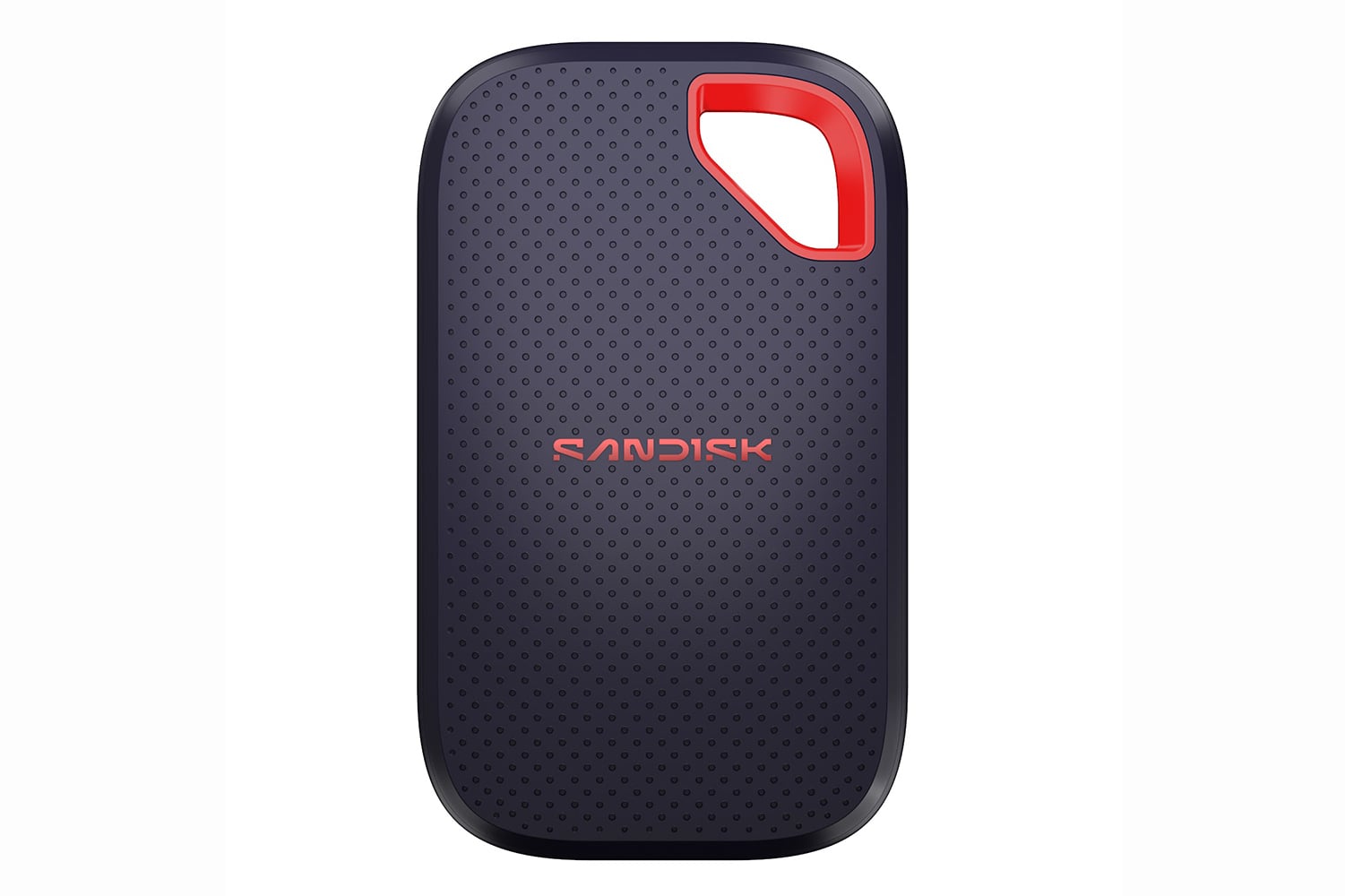
The SANDISK Extreme Portable SSD sits in the middle of Sandisk’s new three-tier portfolio — above the entry-level SANDISK® Portable SSD and below the SANDISK Extreme PRO® Portable SSD — which puts it squarely in a sweet spot for many consumers: it’s fast and spacious enough for demanding projects. For users whose current external drives are aging out or whose internal storage is perpetually maxed. It delivers strong value across a wide range of needs.
The SANDISK Extreme Portable SSD is available in 1TB, 2TB, and 4TB models1, currently starting at $260 MSRP for the 1TB1 model. That’s marked down from $325 MSRP, and the savings grow along with its capacity. Check their website for the most current deals. Getting current-generation performance at this price point is worth acting on sooner rather than later.
- 1GB=1,000,000,000 bytes. 1TB=1,000,000,000,000 bytes. Actual user storage less.
- Up to 2000MB/s read; write speed lower. Based on internal testing; performance may be lower depending on host device, interface, usage conditions and other factors. 1MB=1,000,000 bytes.
- Based on internal testing with an average PNG file size of 30.4 MB; performance may be lower depending on host device, interface, usage conditions and other factors. 1MB=1,000,000 bytes.
- Based on internal testing. IEC 60529 IP65: Tested to withstand water flow (30 kPa) at 3 min.; limited dust contact does not interfere with operation. Must be clean and dry before use.