North Cascades
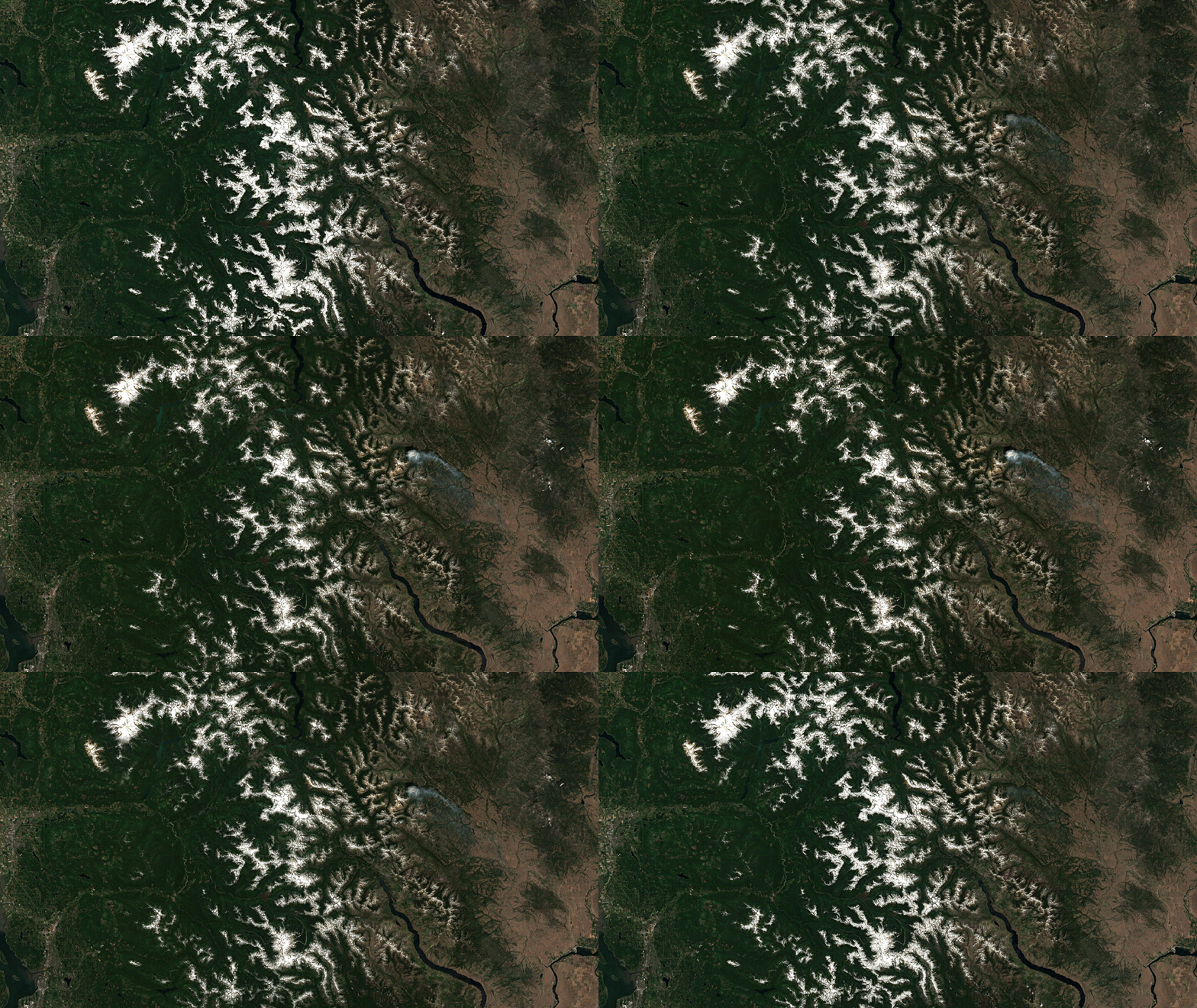
The North Cascades sit in Washington and run right up against the U.S.–Canadian border. The glaciers are an important source of water for farmers and residents. (The same is true for glaciers that dot the entire Cascade range, which runs from California to British Columbia.) In fact, the long, snake-like Lake Chelan visible in the lower part of the picture above provides drinking water for an entire district. Overall, the North Cascades glaciers provide a quarter of the region’s water supply in summer.
The glaciers and snow are also big when it comes to recreation; North Cascades National Park’s roughly 300 glaciers bring hikers and mountaineers from around the world. Mauri Pelto, the head of the North Cascades Glacier Climate Project and vice president for academic affairs at Nichols College, is leading a team into the field to see how the ice is doing this year, particularly in the wake of the heat wave. The biggest concern is what the heat wave did to the snow, which normally acts as insulation for the glacial ice underneath.
“For us, the most important thing is just really having an assessment of how much of the glacier is bare ice,” Pelto said. “[This] is really crucial because if you think back to 2015, the real problem for those glaciers was that they were essentially mostly bare ice by Aug. 1. Ice melts, 30% to 40% faster in the same place snow would.”
Back in 2015, the region saw a major heat wave in early July. This year’s heat wave, though, was even more extreme. That doesn’t bode well for the snow.
The image above gives a sense of the scope of the snow’s disappearance (as well as the appearance of a wildfire, one of hundreds raging throughout the region).