Samsung’s Galaxy XR headset is not so much its own augmented reality experience but a promise of a better, lighter device. The first headset to feature Android XR—Google’s adventure into “extended reality” devices—is transformative in ways that don’t make sense until we start to analyze the reality and possible future of “facial computing.”
The Galaxy XR is relatively compact and lightweight—but its only competition is bulky and unwieldy. Future versions of the Galaxy XR headset must become as small as a pair of glasses and as seamless as your regular phone. And Samsung already knows this.
James Choi, the executive VP in charge of Samsung’s XR R&D team, told Gizmodo over email that the entire design of the Galaxy XR “establishes a scalable ecosystem where core technologies and immersive AI experiences carry across headsets, glasses, and future formats.” Samsung has been working on its first pair of smart glasses that we may see in the coming months. Recent rumors also suggest the company is designing a pair with some sort of screen. The seeds planted with the Galaxy XR will bud in the spring of new wearables.
The Galaxy XR, which first launched more than six months ago today, is the most honest headset of this new slate of “productivity”-centric XR gadgets. That sentence alone doesn’t excite any joy in the brain, and that has to change. Samsung’s headset feels unfinished. It’s practically a tech demo that’s still working out the bugs. It’s also the first look at a future where XR devices are light and powerful—a new ecosystem where gadgets are more in your face than any smartphone.
A playground for the future
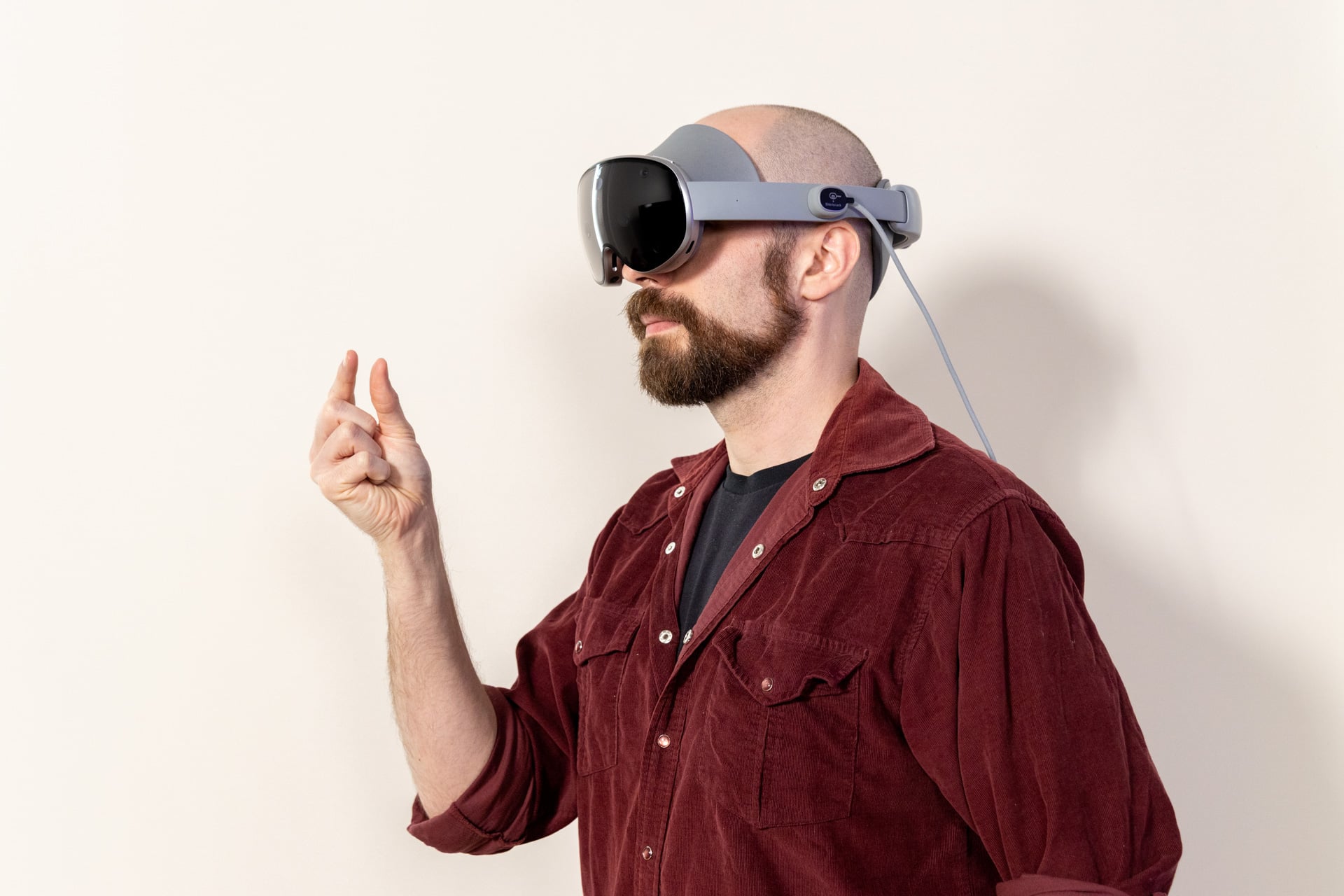
When you shove the Galaxy XR on your head, you’re looking through the lens of potential tech. Samsung likely did not expect this headset to take off. It costs $1,800 and relies mostly on passive experiences you can already do on a phone or PC. The few XR-centric capabilities are fleeting novelties. But it seems that beyond Apple’s or even Meta’s headset ventures, Samsung knows the Galaxy XR is a toy, or more practically, a playground full of nascent technologies brimming with potential.
The problem is how to scale any of this so it works in a more compact device. The Galaxy XR was built as an answer to Apple’s $3,500 Vision Pro. Despite costing nearly half of Apple’s “spatial computer,” Samsung’s headset features many of the same eye and gesture tracking capabilities. It has some beautiful 4K micro OLED optics and thankfully nixes that silly “EyeSight” external display that Apple was adamant the Vision Pro needed.
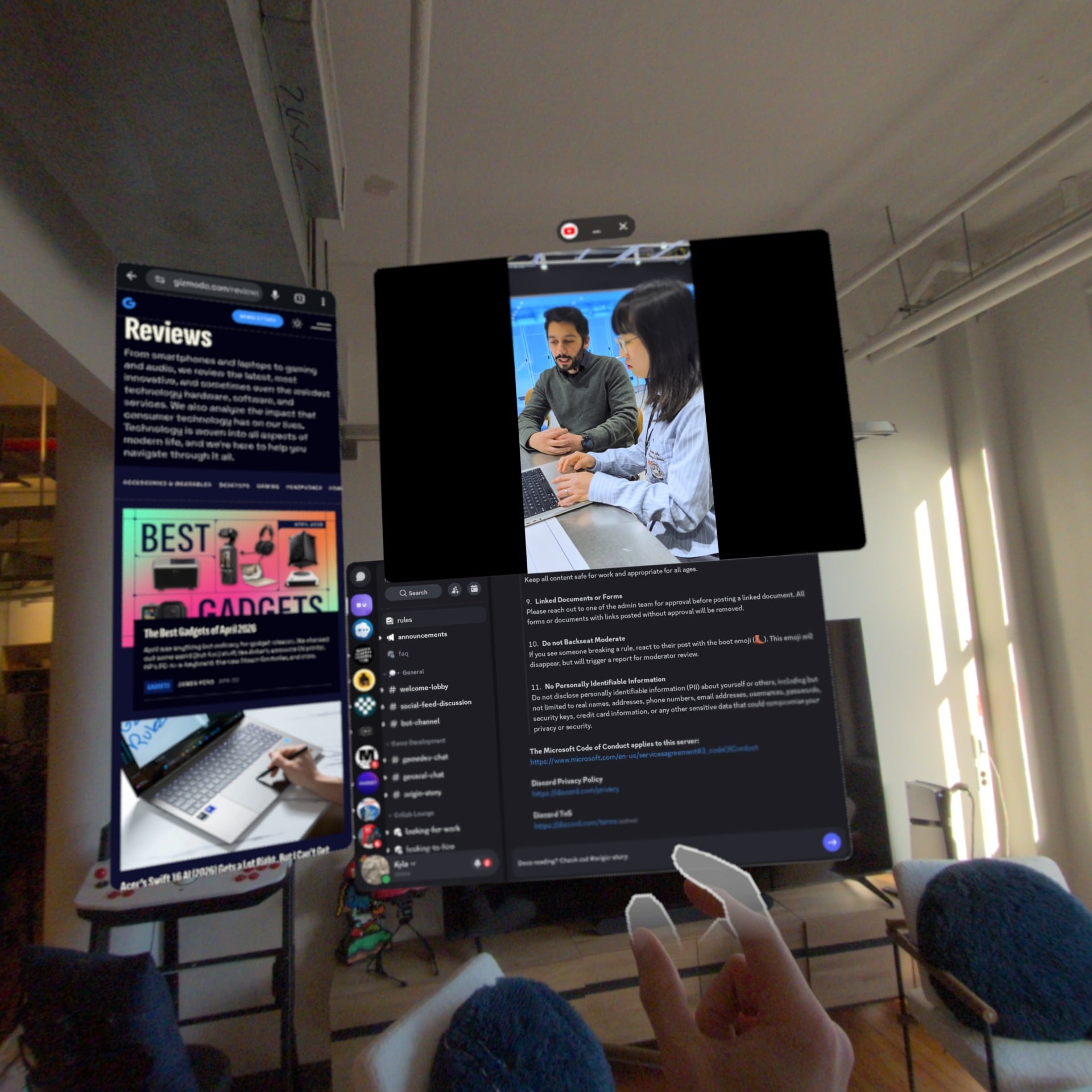
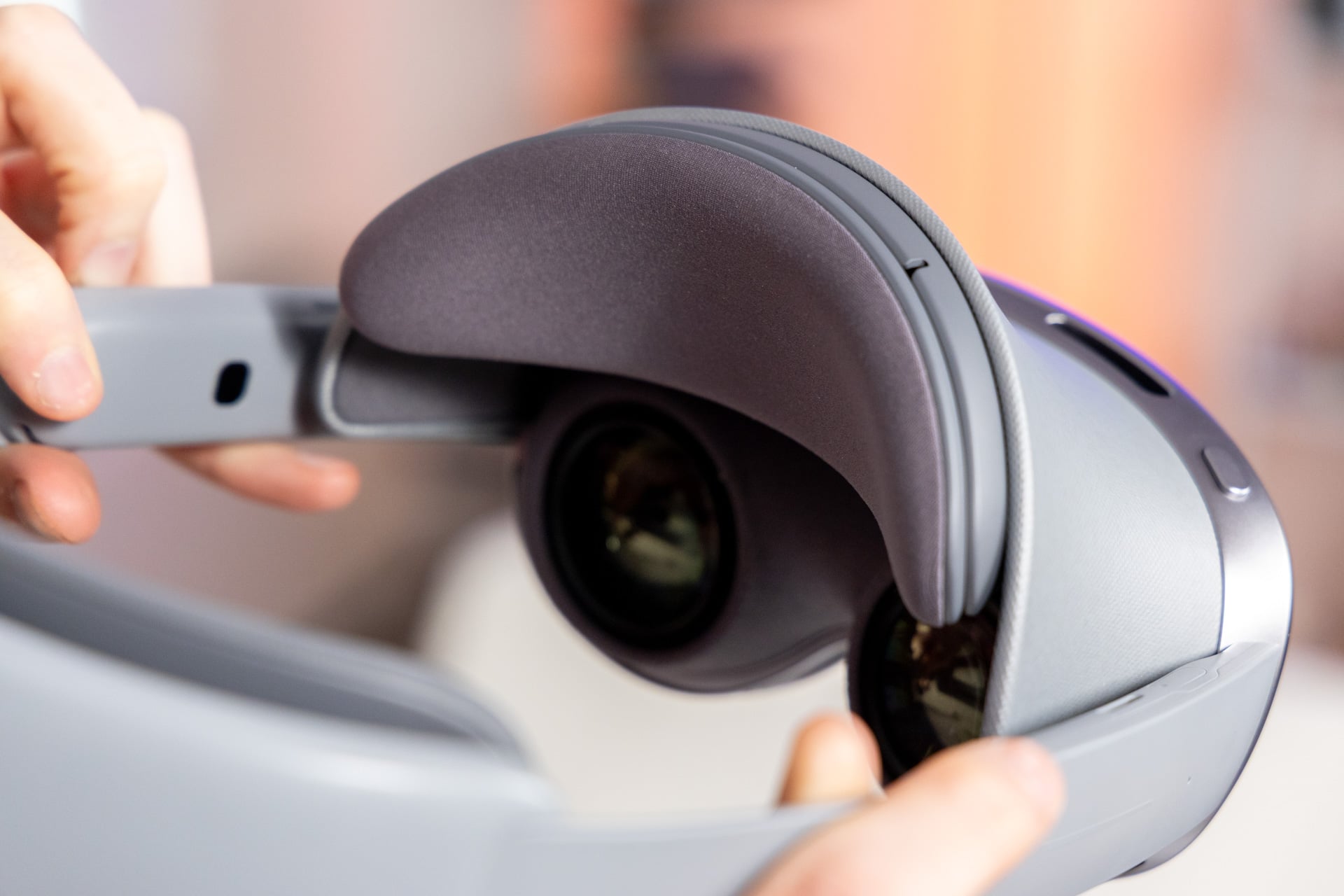
The Galaxy XR is built with comfort in mind, at least as much comfort as you can get when you wrap a frame of plastic, glass, and silicon around your noggin. There is a flexible foam pad that stretches around the back of your head and a removable cushion that holds up the device on your forehead. The ergonomics of the headset keep it from sitting on your nose or cheekbones, where it would be even more uncomfortable.
Unlike other VR or XR headsets, there is no shield on the bottom of the headset to block out ambient light. It’s designed to let you breathe—almost like a pair of glasses. That being said, you’re still front-loading your skull with 1.2 pounds of weight. Inside, you have two screens placed precariously close to your eyeballs, inevitably leading to eyestrain after a little more than an hour of use. You’ll still miss the clarity of seeing your environment without the pixelation and warping of real-time video feeds. A headset is a headset, even if it’s lighter and more comfortable than Apple’s design.
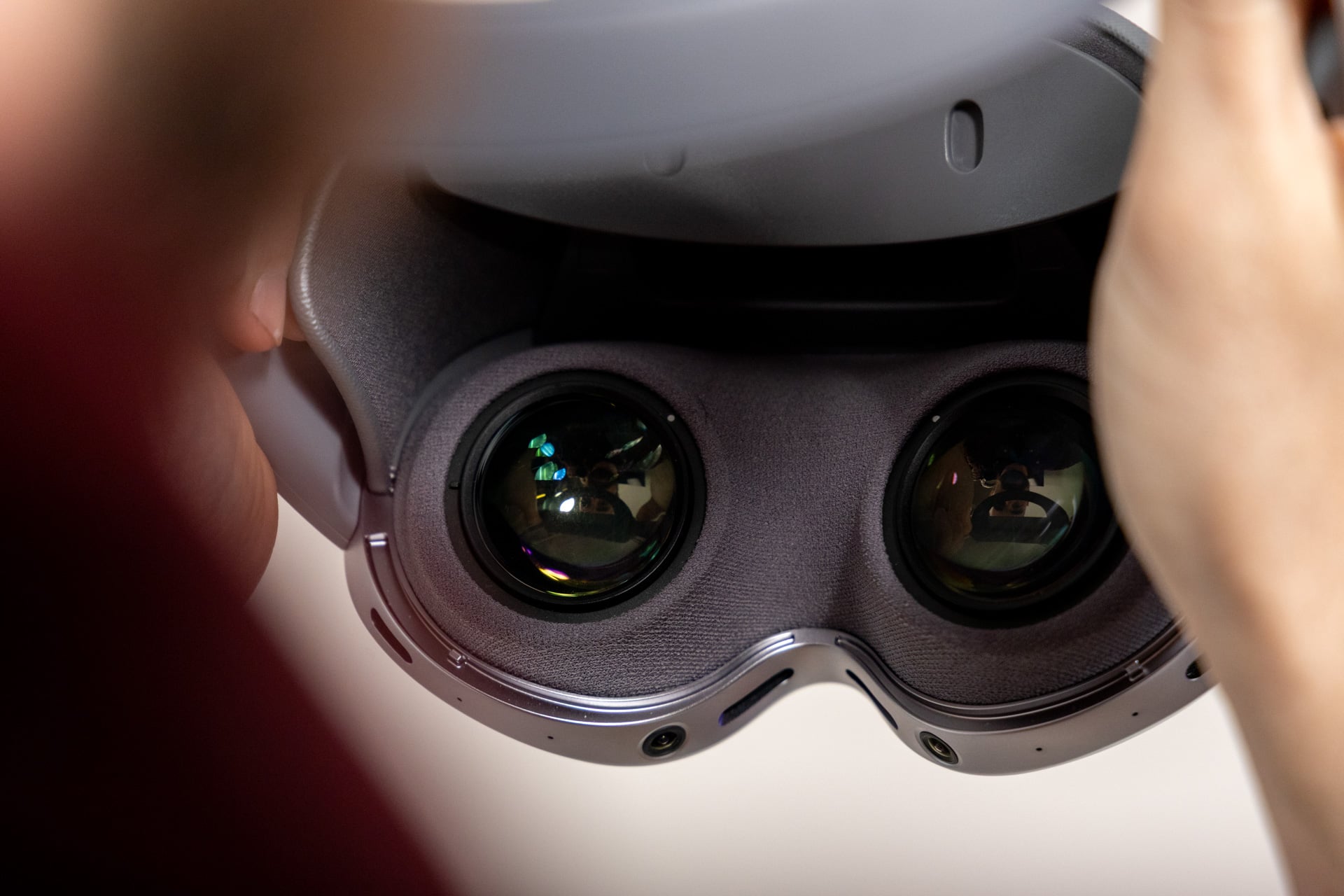
By its nature, Android XR—Google’s first operating system for AR and MR (mixed reality) devices—is less immersive on the Galaxy XR than if you tried similar apps on Apple’s Vision Pro. Samsung promotes unique app features, like an “Immersive View” mode in Google Maps that lets you stand like a god above the Earth and then zoom in on individual streets. You can watch Netflix, HBO Max, and YouTube through dedicated apps, but it won’t feel like a true movie theater experience when you keep glancing down at your IRL shoes.
Samsung also spotlights the ability to use Google’s “Circle to Search” in VR form. You can highlight objects and scenes in the air, and Gemini AI will answer your questions about it. Sure, Gemini would occasionally fail, like when it misidentified to the brand of the massive gaming PC on my desk (it was an iBuyPower Trace X desktop), but at least it knows what downtown Manhattan looks like, even if it can’t pinpoint the precise street. No, you won’t be wearing this headset to help you navigate a place like New York, not if you don’t want somebody to (deservedly) throw an egg at your $1,800 headset.
Spatial controls are still a work in progress
The Galaxy XR supports two modes of control. You can use your hand to point and pinch at what you want to select or use Vision Pro-like eye tracking. Just like Apple’s headset, you can rely on the GalaxyXR’s 13 cameras and sensors to capture your pinch even if your hand is out of view.
And it works just as well as Vision Pro, until it doesn’t. Android XR is still in development. Throughout my time using the Galaxy XR, I had routine issues simply selecting the settings menu using eye tracking and the pinch gesture. I couldn’t always line up the right place I’d need to pinch to drag windows around in AR space. Often, when I opened up one app on top of another, I’d lose track of my original one until I moved my windows around.
Samsung and Google are obviously still fine-tuning the user experience, but full individual finger tracking isn’t on par with Meta’s virtual keyboard. “As the UX and UI continue to evolve, there is potential to expand this further towards more detailed finger tracking where it adds real value,” Choi said.

These are small quibbles, but any foible of my time inside the headset is just a further reminder that my laptop offers a simpler, more streamlined experience. Whereas the Vision Pro was built for immersion, with a shield to block out most incoming light, the Galaxy XR keeps its headset completely open. This will necessarily impact the clarity from the optics. If all you want is a headset to stream 4K movies and shows, the Galaxy XR will be worse than the Vision Pro for daytime viewing.
Though Samsung sent Gizmodo the Galaxy XR unit for our testing, it didn’t include the separate $250 Galaxy XR controllers. On the outside, those VR gamepads appear like a direct copy of the Meta Quest 3’s Touch Plus controllers, down to the placement of the side and menu buttons.
There are few native games available to play on Android XR. The Google Play store highlights a few existing titles like Job Simulator and the virtual board game Demeo. You’re otherwise incentivized to stream your content. Android XR has that capability built in. Just by going through the Quick Settings menus, there’s a special Game Link app. It requires users to install Steam, SteamVR, and Samsung’s VST Link app on a gaming-capable PC. Afterwards, you can hop straight into SteamVR, so long as you have comptaible controllers sitting around.
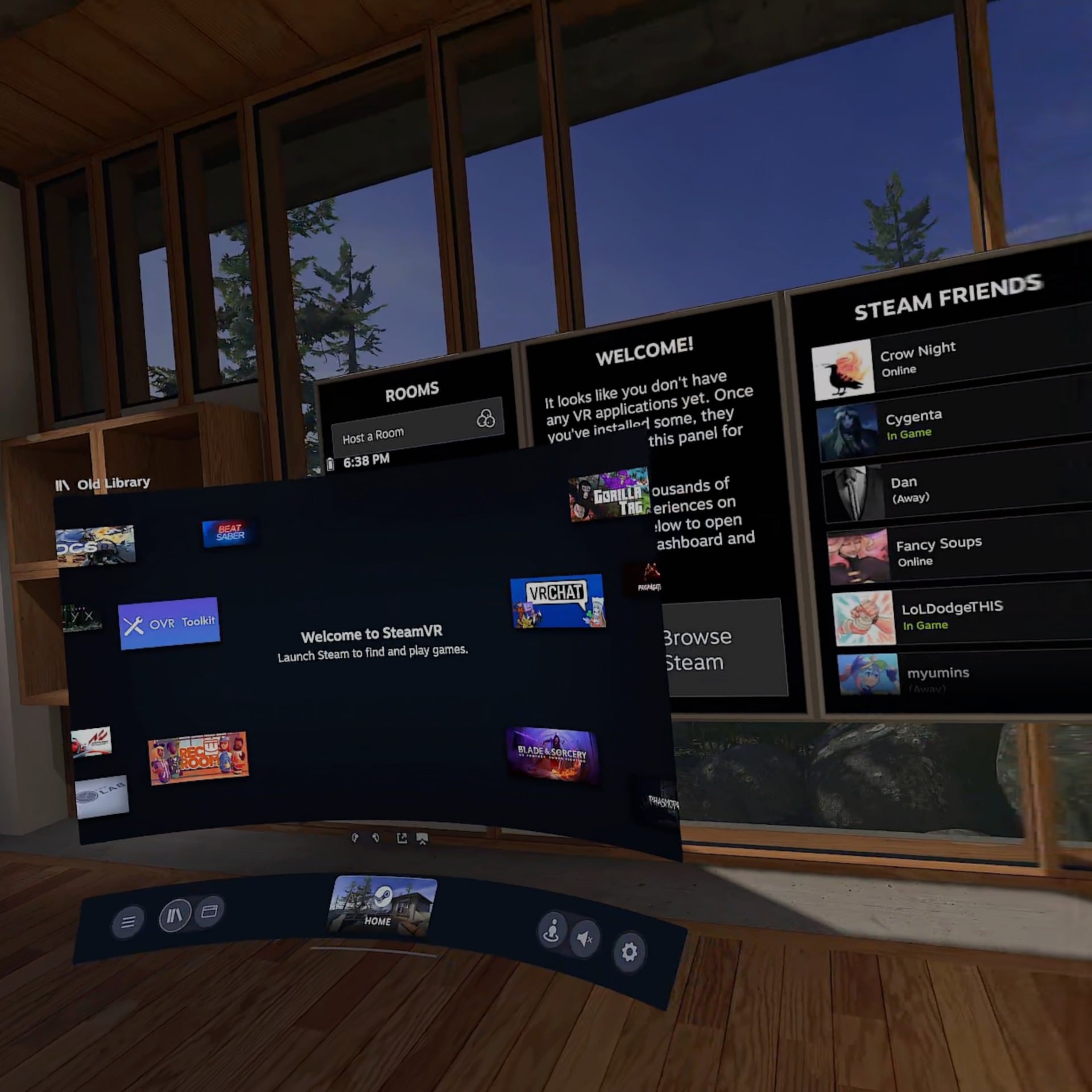
I will never complain about having more places to game. Then again, Samsung limits its native PC streaming experience exclusively to its Galaxy Book laptops, similar to Vision Pro’s Mac mirroring feature. Still, streaming will always be limited to some degree. You can download other Android apps like GeForce Now or Xbox Cloud Gaming or go through other PC mirroring apps like Virtual Desktop.
But this can’t be a gaming-focused device. Choi said gaming on the Galaxy XR was just “one small part of a broader experience.” The Meta Quest 3S, with its virtual storefront, makes it a better device for unique play experiences. Valve’s upcoming Steam Frame—a VR headset packing no external cameras for any augmented reality content—will likely be better for gaming.
The computing dilemma
The Steam Frame will run on a Qualcomm Snapdragon 8 Gen 3, a nearly three-year-old mobile chip. Valve expects players to handle some 2D content natively (the paltry few games that can support an ARM-based chip or other less-demanding titles through emulation), but in the end the company will want players to stream from a PC. As VR, AR, and XR technologies shrink and become more specialized, they will necessarily need to rely on outside computers that beam your content to the screens in front of your eyes.
The Galaxy XR runs on the Qualcomm Snapdragon XR2+ Gen 2 chip, which is just beefy enough for handling multiple apps in your field of view at once and processing the data from the 13 cameras and sensors. Since all you’re doing inside the Galaxy XR is sitting around and streaming passive content, we may not need anything so powerful in a device that’s more affordable and portable.
In an exclusive interview, Ziad Asghar, Qualcomm’s general manager of XR and wearables, told Gizmodo that the company is planning to unleash a whole slew of new chipsets designed around various kinds of AR devices, big and small. Google may share more details about its upcoming Android XR capabilities at Google I/O 2026.
Asghar leads the team that’s developing the Snapdragon XR platform as well as the Snapdragon AR chips. The difference between those chipsets is evident based on which devices you’ll find them in. Snapdragon XR, with its 3D reconstruction and 6 DoF (degrees of freedom) tracking, is built for higher-end, more powerful devices like the Galaxy XR. The smaller Snapdragon AR platform is made for smart glasses. Asghar said the end goal is to have both platforms become one—though not likely any time soon.
“So what people are moving to is almost a disaggregated sort of a [mixed reality] device where they may have a puck of sorts that’s on their belt, and then they might have a very light product that could be optical see-through capable or it could be video see-through capable.”
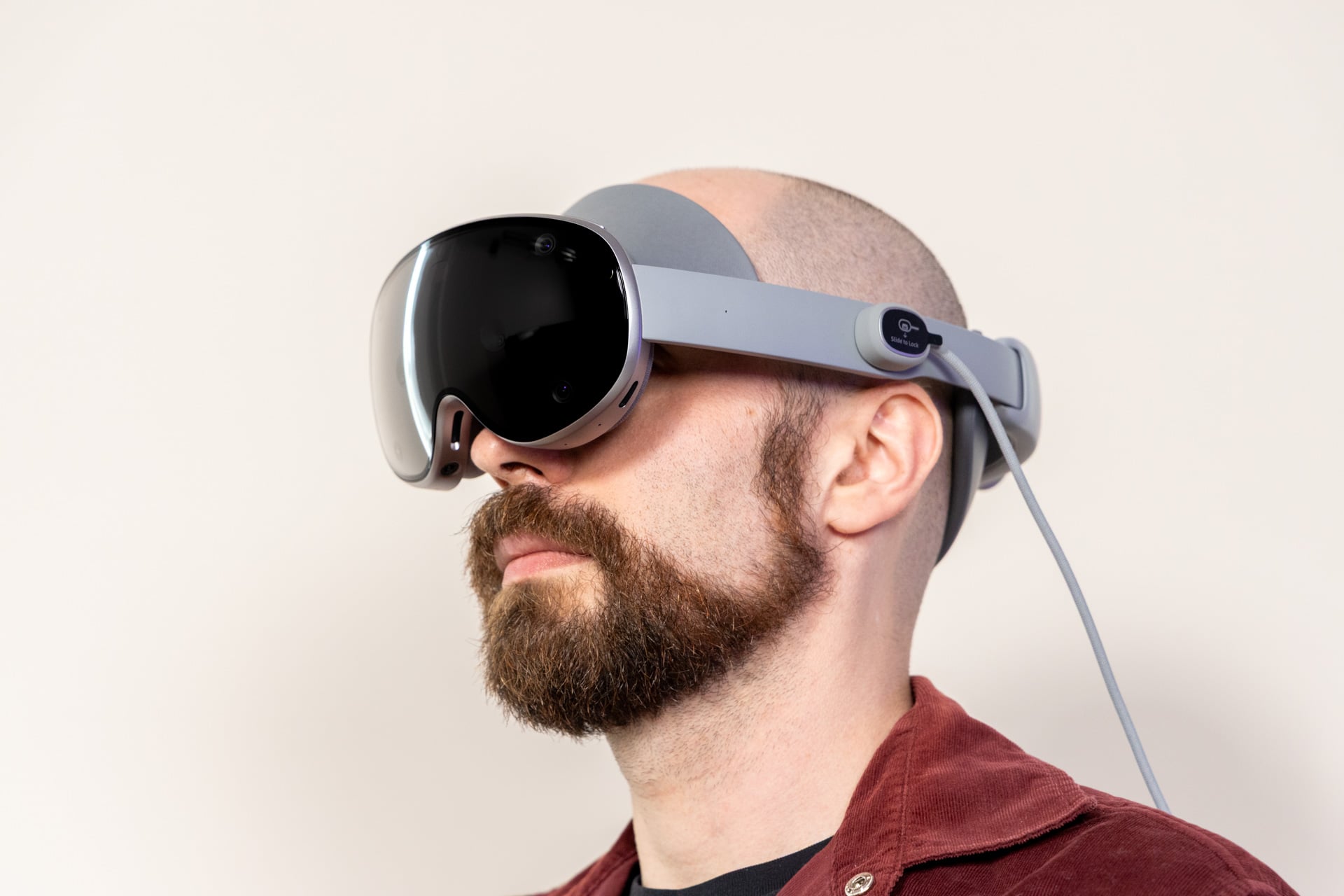
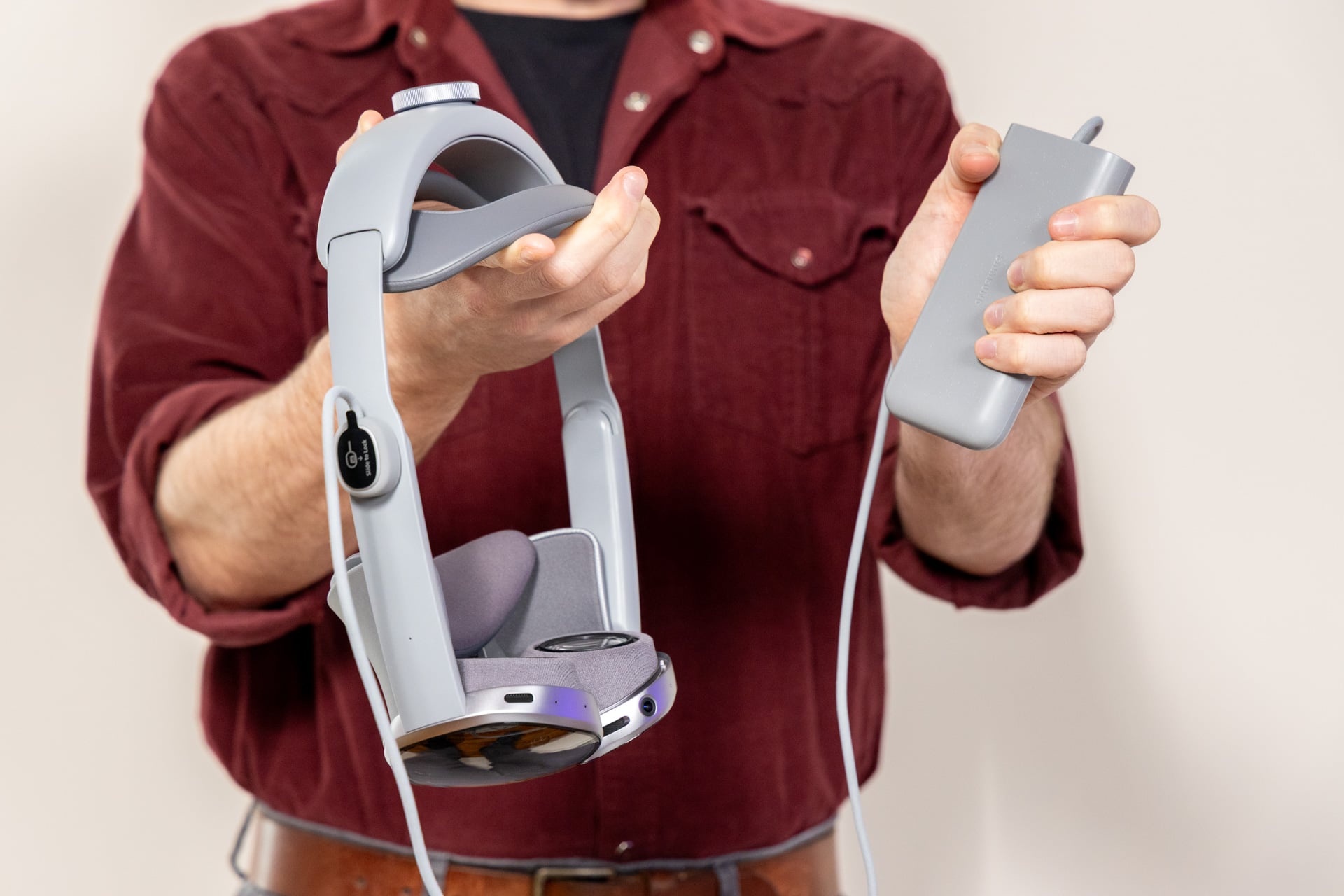
The Snapdragon XR2+ Gen 2 is such a powerful chip that it needs a large external battery pack that connects to the headset to power it. On a full charge, you can net a little more than two hours with the headset, depending on what you’re running.
Choi said the Galaxy XR is supposed to offer the full multi-modal suite of possible XR experiences. Smart glasses, on the other hand, “will serve as the companion device that works alongside an AI phone, providing a more portable way to access those capabilities on the go.” That requires Google and Samsung making exclusive experiences for both headsets and smart glasses, even if “the foundation will remain the same.”
Nobody wants to walk around with a battery pack in their pocket and a wire protruding from their skull. The difficulty will be shrinking everything for smaller form factors, whether that means running some apps on glasses or a headset and offloading heavier processes to another pocket-friendly device or the cloud.
Qualcomm has already talked about small AI models, sometimes called “small language models,” running on devices as tiny as a smartwatch or some other kind of AI-centric wearable like a pin/pendant or wireless earbuds. But the more important question is how we’ll process content like video or intensive apps on compact smart glasses.
The one option is a “compute puck.” Meta’s Orion concept AR smart glasses wirelessly connected to a puck-shaped device to process more graphics-intensive apps. The other option is streaming. That could be from a dedicated phone, if it doesn’t kill your phone battery or make it run hot enough to melt through your pants pocket. Will users truly want to carry around two devices for the sake of one experience?
Judging by what’s on the horizon, we’ll find out soon enough.