Growing Pains
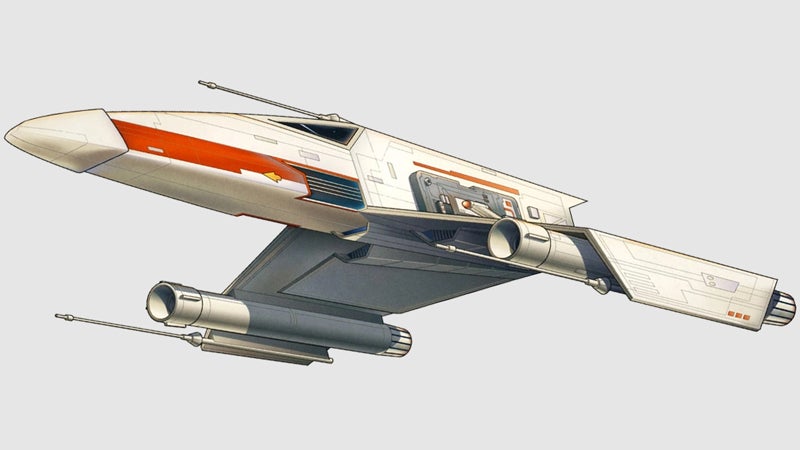
Metatextually, replacing the X-Wing is a daunting prospect: it’s arguably the most iconic starfighter design in cinema history, and one of the most memorable pieces of Star Wars iconography to this day. That’s perhaps why—even as the nascent EU introduced the E-Wing as the superior and eventual replacement to the X-Wing—it almost immediately hobbled its chances to be grasped by Star Wars readers within the fiction as well.
The rapid rollout of the E-Wing and its advanced technology led to a series of setbacks that kept the X-Wing as the de facto starfighter of choice for the New Republic in its early days. Unlike the X-Wing or the Y-Wing, the E-Wing was initially designed as the first starfighter to exclusively use R-7 series astromech droids as navigators and co-pilots, and the ship was not backwards compatible with the prior R-series astromechs already in service. It was integration of the R-7 into the E-Wing’s design that made the ship a significantly costlier vessel to produce compared to prior starfighters, but it also hindered the E-Wing’s operational ability when issues with the droids arose.
The E-Wing’s advanced weaponry also faced technical struggles in its early development as well. Although the three heavy blaster cannons of the starship had greater strength than the X-Wing’s quad-cannon setup, the synthetic gas that powered them degraded at a much faster rate, vastly reducing the E-Wing’s combat effectiveness over extended engagements. The unreliability of the initial E-Wing and the necessity for space-ready forces led to many New Republic pilots sticking to the X-Wing.