The Challenges Turtles Face in Cape Cod Bay
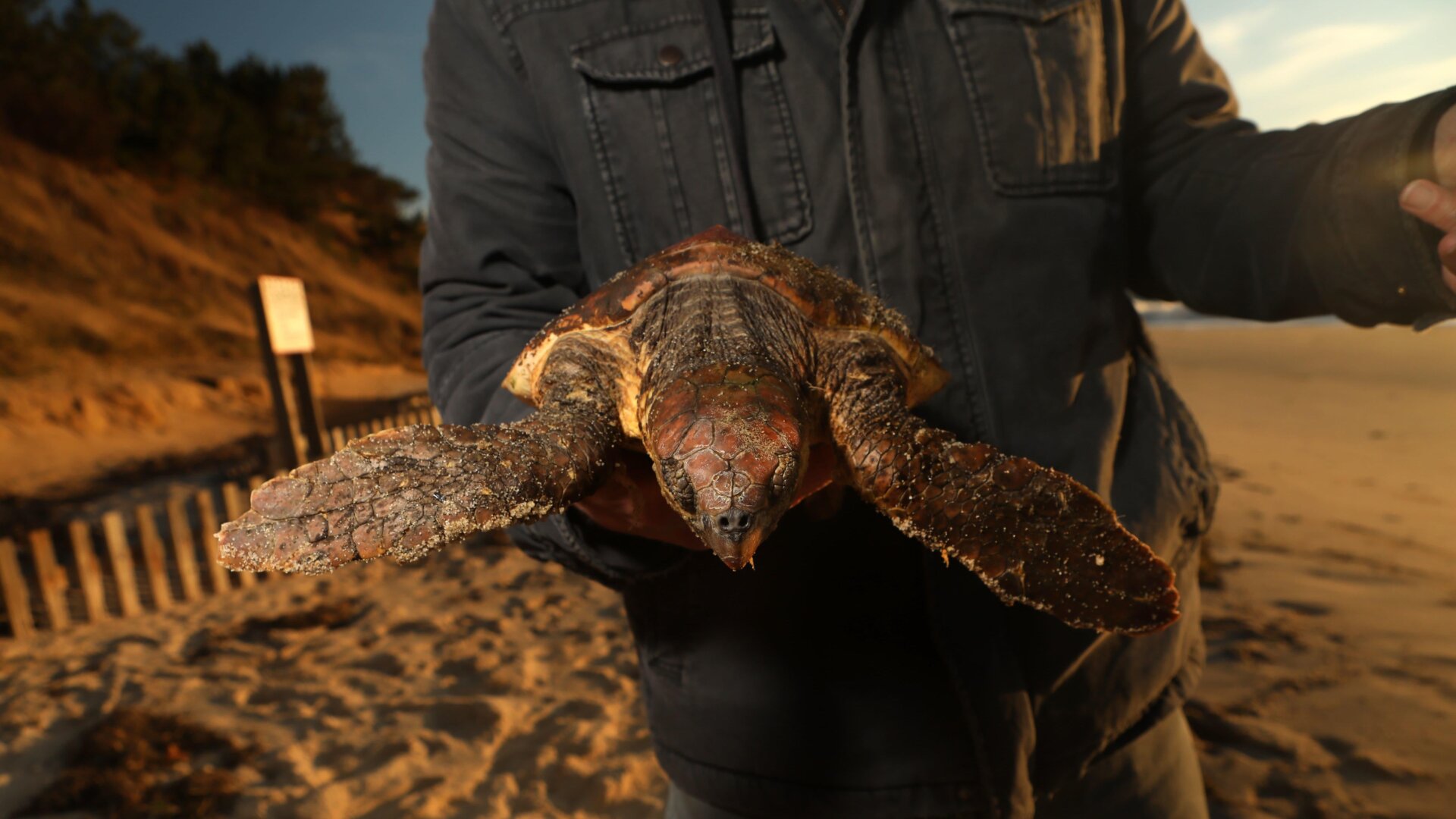
Prescott explained that the turtles his team and volunteers find in the stranding events are juveniles, which are typically between two and seven years old that were born in the Gulf of Mexico area. They arrive in the waters off Cape Cod after getting caught up in the Gulf Stream, via the Florida Current, where they drift, swim, live, and thrive for one to three years as they are carried north. When the ridleys come ashore and start feeding in spring or summer, there’s no problem. The issues begin when fall approaches.
“They’re not picking up the cues that the days are getting shorter and that the waters are getting colder and that they have to leave,” Prescott said. That leads to a number of turtles getting caught in these cold-stunning events from November through January, he said.
The Kemp’s ridley sea turtles also face natural obstacles in Cape Cod Bay. The Cape is shaped like a hook, or a bent arm that extends out to sea, and it catches the turtles and slows them down while they try to figure out how to get out of there. Prescott said that there are more natural traps in Wellfleet Harbor and Provincetown Harbor, which also confuse the turtles and can keep them near Cape Cod when the water temperatures drop.



