Titicut Follies (1967)
Library of Congress description:
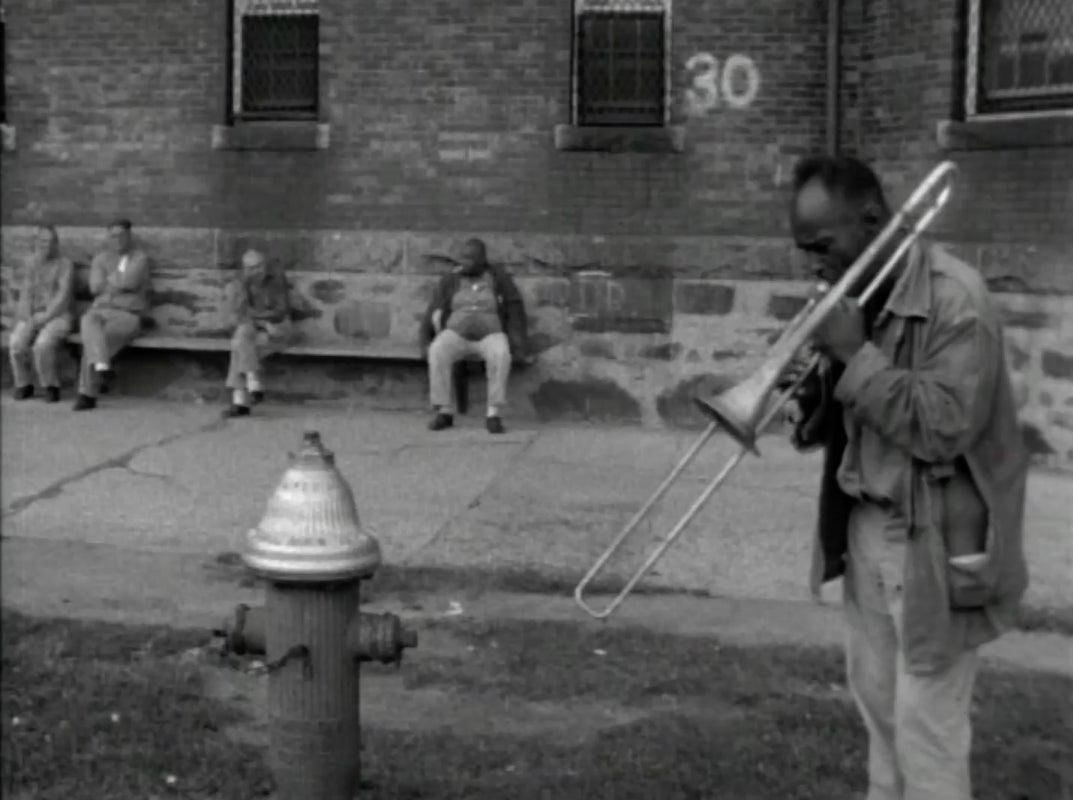
In “Titicut Follies,” as with all the nearly 50 observational documentaries he has made since this, his first, Frederick Wiseman drops his audience into goings on at a public institution and challenges them to “figure their own way out without any help from me,” he once explained. Shot at the Bridgewater State Prison for the Criminally Insane in Massachusetts, “Titicut Follies” — “Titicut” being the Native American name for the area surrounding the institution — begins and ends with an annual variety show of that name performed by inmates and guards. In between, the film confronts the viewer with a mosaic of scenes recorded unobtrusively and presented with no voiced narration of inmates undergoing strip searches, repetitive psychiatric questioning, force-feeding and finally burial in a dehumanized world revealed through the film as callous, indifferent and inescapable. “It is as grotesque a vision of human cruelty and suffering, of naked fear and loneliness, as art has ever produced,” wrote film curator Joshua Siegel about “Titicut Follies.” Wiseman stated that his documentaries focus on the relationship between the individual and the state, “especially in an age in which religion functions less.” With “Titicut Follies,” the state, in the guise of Supreme Court of Massachusetts, initially ordered the film banned and its negatives and prints destroyed. That ruling, later revised to allow only professionals in the fields of law, medicine and social services to see the film, was not overturned until 1991.
Where to stream: