Of all the things that could end our world, an asteroid strike may be the doomsday we have the most control over.
In fact, an asteroid strike is near the bottom of the list of feasible armageddons. After all, we inhabit a nuclear weapon-armed world where human activity is permanently altering habitats and changing the climate and where overuse of antibiotics is leading to deadly new strains of bacteria. But the effects of an asteroid strike—tsunamis, shock waves, and flattening winds, could be catastrophic. So, there are scientists who devote their time and research to preparing for this scenario.
Though no known asteroid has a chance of bringing about large-scale destruction in our lifetimes, potentially hazardous asteroids make daily fodder for tabloids—and the U.S. government and scientists around the world take them seriously. Just this past spring, NASA, FEMA, and other space agencies teamed up to simulate an asteroid strike, playing out the decision-making required if telescopes do chance upon a new threat.
“If you look at the consequences, they could be enormous. We’re talking about potential city killers, impacts that can wipe out an entire continent or even cause civilization to collapse. But the probability is extremely low. It’s the classic low-probability, high-consequence problem,” Mark Boslough, adjunct professor of Earth and planetary sciences at the University of New Mexico, told Gizmodo. “I don’t spend a lot of time worrying about it.”
Where they’re coming from
The solar system formed from a disk of matter surrounding the early Sun. Much but not all of that stuff coalesced into the planets. In the region between Mars and Jupiter, for example, Jupiter’s strong gravity halted planetary formation, and instead, lots of small rocky bodies crashed into one another and now live on as asteroids. Occasionally, gravitational forces from Jupiter can perturb these objects’ orbits closer to Earth. Other objects, like icy comets, will occasionally come close to Earth in their elliptical orbits. Together, these asteroids and comets make up the “Near-Earth Objects,” or NEOs. By definition, NEOs are any body within 1.3 astronomical units of the Sun, where 1 astronomical unit is approximately 93 million miles, the distance between Earth and the Sun, including comets with orbits around the Sun that take less than 200 years.

Scientists have drafted a list of NEOs we should worry about, which are called potentially hazardous asteroids. These are bodies that cross Earth’s orbit and measure 140 meters across or larger, around the size of a football stadium, and come within .05 AU to Earth, or about 20 times the average distance to the Moon. Should something this size impact Earth, it would cause regional catastrophe, Boslough explained. And there are a lot of potential catastrophes that come with one meteorite strike, from high-speed winds to tsunamis to body-cooking heat to shockwaves.
Asteroid strikes have long lived in the public concern. Paul Chodas, or as Boslough refers to him, “the Grand Master of Disaster,” engineered the 2019 Planetary Defense Conference tabletop exercise and made the decision to destroy New York City in the simulation. He explained that he was partially inspired by books he’d read as a kid, like The Conquest of Space by Willy Lee, and a painting of a burning, asteroid-struck New York City by Chesley Bonestell.

When did scientists start worrying about asteroid impacts? As early as 1694, astronomer Edmond Halley (of Halley’s comet fame) suggested that comets might be able to impact Earth, and throughout the 18th and 19th centuries, others considered comet impacts a possibility—but there were too few observed comets for these scientists to really worry, according to a NASA release. Then, in 1908, the famous Tunguska event flattened a forest in Russia, and in the 1930s, scientists began discovering large asteroids like the asteroid Hermes that passed closely by Earth—perhaps the Tunguska event was an asteroid strike, and perhaps there were more asteroids to worry about. And in 1980, father-son team Luis and Walter Alvarez alongside scientists Frank Asaro and Helen Vaughn Michel discovered the rare element iridium in a layer of rock approximately 65 million years old, which they hypothesized was brought by a large asteroid. This discovery, and other research, is now the basis of the well-accepted theory that a large impact brought about the extinction of the dinosaurs. But that theory was controversial, and it took 30 years before it reached near-consensus status (some still contest how significant the impact was to the mass extinction).
But perhaps the most important moment in modern asteroid-impact history didn’t occur on Earth. In 1993, scientists Carolyn and Eugene M. Shoemaker and David Levy discovered a comet orbiting Jupiter. Interest in comet Shoemaker-Levy 9, both public and scientific, skyrocketed as researchers realized that the comet would collide with Jupiter, which ultimately happened in July 1994, 25 years ago this month, leaving behind dark scars on the gas planet that were visible for months.
Most of the scientists I spoke to mentioned the importance of Shoemaker-Levy 9 to their study of near-Earth asteroids. The comet marked the first visit to an observatory by Kelly Fast, NASA’s Near-Earth Object Observations Program manager. Boslough’s group created some predictions and models of the comet’s impact, while Chodas was involved in predicting the comet’s orbit. In other words, if something can smash into Jupiter, then something else could hit Earth.
“It was obvious that the Earth had been impacted—there were other visible craters like the Meteor Crater in Arizona and you could see impact craters on the Moon,” Fast told Gizmodo. “But Shoemaker-Levy 9 showed us that impacts can happen today.”
Thanks to the public awareness of Shoemaker-Levy 9 and increased acceptance of the Alvarez impact theory, Congress grew interested in protecting the Earth from strikes. Congress had already requested NASA to look into a program to survey asteroids in 1992, but In 1998, they ordered NASA to catalogue all near-Earth asteroids larger than a kilometer in size within 10 years, and that summer, NASA established the Near-Earth Object Observations Program headquartered at Jet Propulsion Laboratory in Pasadena, now called the Center for Near-Earth Object Studies, which compiles and computes orbits for near-Earth asteroids. In 2005, Congress expanded the goal to include 90 percent of near-Earth objects 140 meters in size or larger by 2020.
Where we are
Planetary defense is now a multi-pronged, international enterprise with a many-million-dollar budget. For the United States, NASA’s overarching Planetary Defense Coordination Office is in charge of projects that hunt for nearby asteroids, and for communications to the government, media, and the public about potentially hazardous objects. They also develop research techniques to prevent impacts, and coordinate with the government and agencies like FEMA on how to respond to a potential strike. Space agencies around the world like the European Space Agency, the Japanese Aerospace Exploration Agency, Roscosmos, and others all run various surveys and projects with respect to monitoring and researching NEOs.

So, what are scientists doing? NASA runs the Wide-field Infrared Survey Explorer (WISE, now called NEOWISE) space telescope that surveys the sky for asteroids and the Infrared Telescope Facility (IRTF) in Hawaii, which characterizes recently discovered NEOs, while scientists run projects like the University of Arizona’s Catalina Sky Survey, the Pan-STARRS project in Hawaii, and others using general-purpose telescopes. Researchers must then follow up in order to document an asteroid’s properties and offer data for CNEOS scientists to calculate orbits and trajectories using systems first developed by Chodas. There are plenty of other surveys and NEO missions around the world.
As for whether you should be concerned, for now, there are no known asteroids worth worrying about, regardless of what an incessant stream of tabloid headlines tell you. None of the asteroid orbits now listed in the CNEOS’ database are predicted to result in an impact in the next 188 years (though there is a chance that the small asteroid 2008 ST comes close in 2104). But if there should be any worry, it’s should be about the asteroids that we haven’t yet found.
Despite the various surveys, scientists are only a third of the way to cataloguing the 25,000 estimated near-Earth objects—there just isn’t adequate infrastructure to find all of these space rocks. Some of the missions, like the WISE telescope, weren’t designed with asteroid surveying in mind. “It’s an old spacecraft. It’s way past its design life and has a number of aspects that make it not optimal for finding large numbers of near-Earth objects,” Amy Mainzer, principal investigator of NEOWISE, told Gizmodo.
The National Academies released a report this year on the state of the asteroid survey, and according to their assessment, there just isn’t the specific infrastructure required to complete it. “Although Congress has charged NASA with NEO detection and threat characterization, it has failed to provide specific funding to enable NASA to adequately pursue this task.” The report suggested pursuing a dedicated successor to NEOWISE, called NEOCam.
Then, of course, there are the smaller asteroids, which can cause local damage and strike with little-to-no warning. The 20-meter (66-foot) Chelyabinsk meteor exploded above Russia in 2013, shattering windows and injuring 1,491 people. This past December, a meteor exploded over the Bering Sea with 10 times the force of the Hiroshima bomb. These smaller impacts fall below the 140-meter limit set by Congress, but still have the potential to cause small-scale damage.
When it comes to assessing the likelihood of an impact and the damage it will cause, scientists take into account the size of Earth, as well as how often asteroids of different sizes hit. Harmless, dust grain-sized meteors hit Earth almost constantly and burn up in the atmosphere; the odds of a 1-meter asteroid striking Earth amounts to around one impact per year and then become less likely with the size of the asteroid squared; the odds of a 100-meter rock striking are once per 10,000 years and a 1,000-meter asteroid once per million years, according to one Tufts University fact sheet. “Another one of these Chelyabinsk-type events can easily happen in our lifetime,” Boslough said. But as far as what to worry about, “There have only been a handful of these events, whereas typhoons, hurricanes, and major flooding events happen every year somewhere on Earth.”
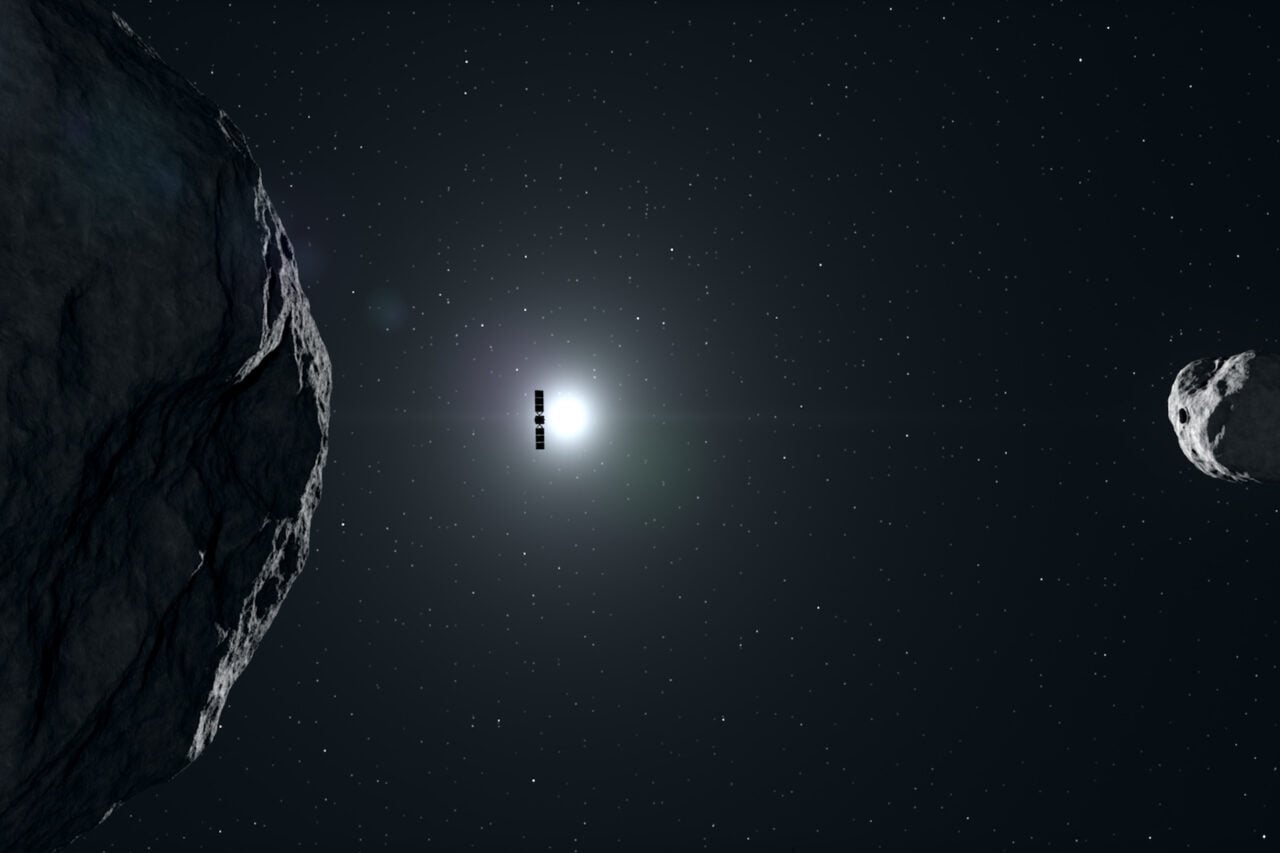
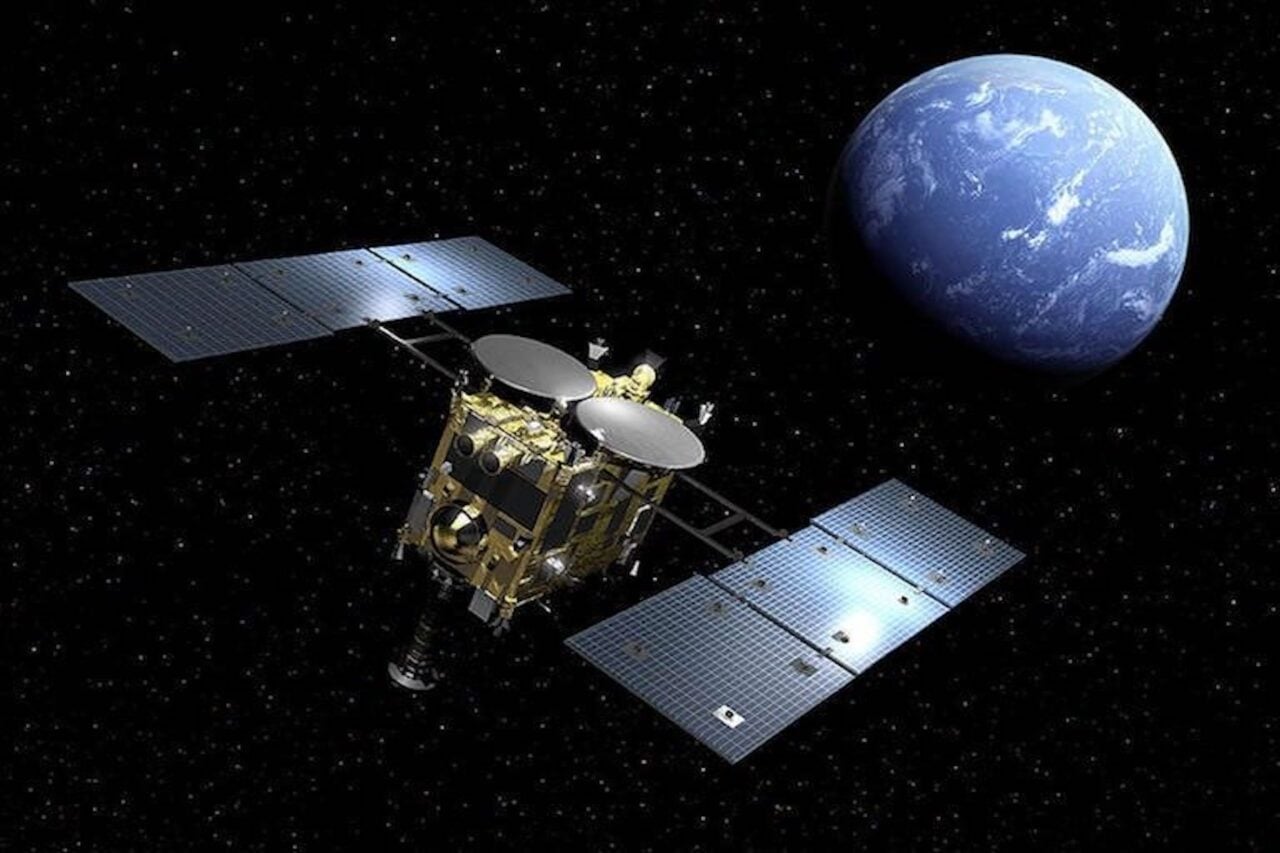
And as for larger events, they’re potentially preventable with enough lead time. For example, NASA’s OSIRIS-REx mission is studying the properties of asteroid Bennu, a potentially hazardous asteroid with the potential to threaten Earth in the next few centuries. Then there’s the Double Asteroid Redirection Test (DART) mission, a demonstration that will slam a spacecraft into the smaller asteroid in the (65803) Didymos binary at 3.7 miles per second, or 13,320 miles per hour. The ESA’s Hera mission will follow up and take observations of the collision’s effects. Scientists hope these missions will change the smaller asteroid’s orbit around the larger asteroid, and that in the future, NASA or other space agencies could use these “kinectic impactor” missions to change a future threatening asteroid’s orbit enough to miss Earth.
There are other ideas for changing potentially hazardous asteroids’ orbits as well. Space agencies could just put a really heavy thing next to the asteroid to redirect it via the force of gravity, or remove matter from the asteroid’s surface. Of course, there’s always the last-minute option of nuking an asteroid that presents an imminent threat—but in this year’s Planetary Defense Conference tabletop exercise, scientists chose to nuke a large asteroid that would have leveled Denver, a decision that inadvertently destroyed New York City.
Scientists now take this threat seriously. Despite the low probability of an asteroid impact, its dire consequences mean that this will continue to be an important area of research, one that requires probably about the amount of attention it presently receives—but maybe not any more or less.
“Doom is pretty much out of the picture in our lifetimes and the lifetimes of our kids and grandkids,” Boslough said. “Once you get out to 100 years, future generations can keep looking, and if they find something they can do something about it.”