Get the timing right
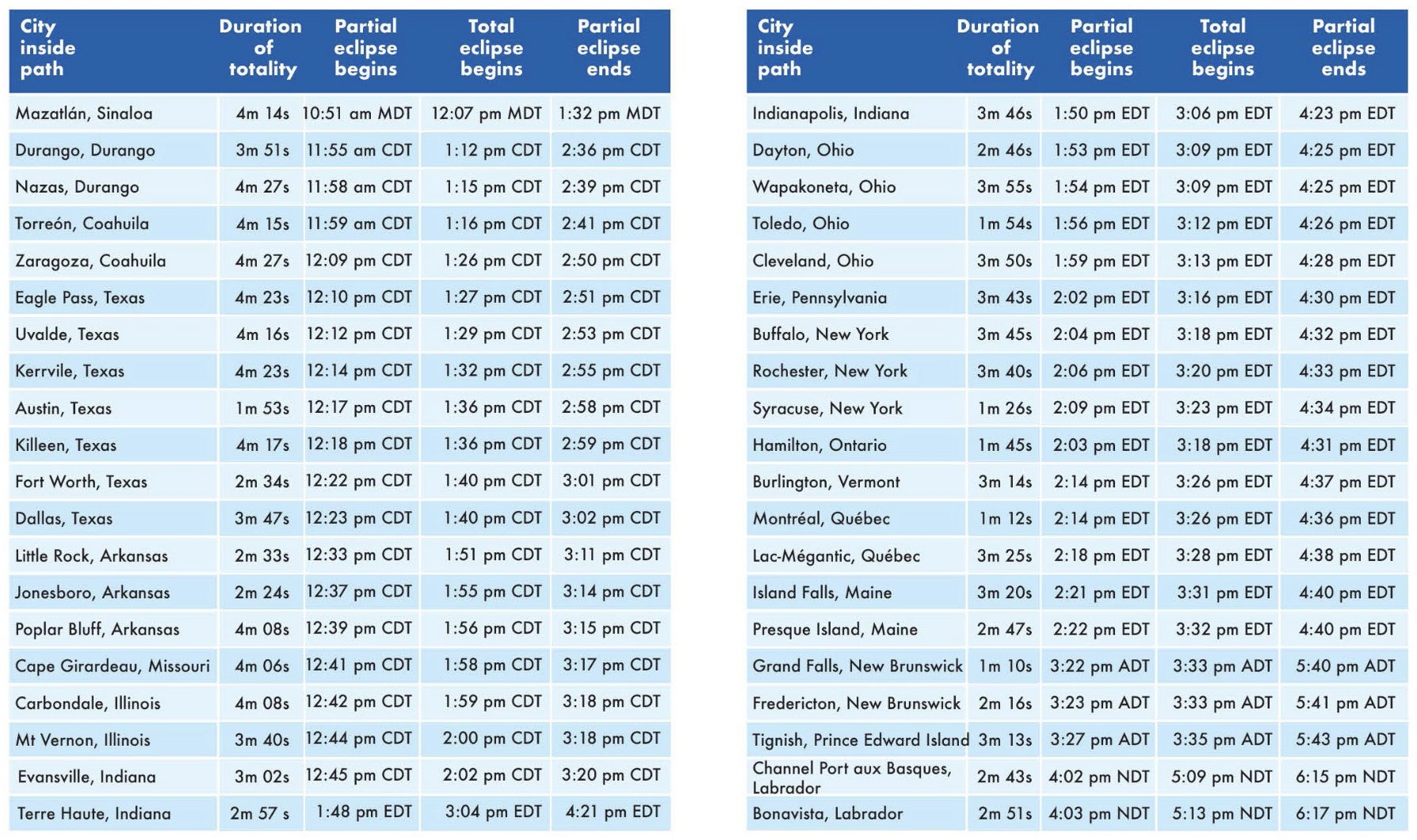
A total solar eclipse doesn’t happen all at once; the Moon slowly moves across the surface of the Sun in a process that can last for upwards of 160 minutes. Totality itself—happening in the middle of this process—can last for a few seconds to four minutes depending on your location.
At my chosen spot in southern Ontario, for example, the eclipse will begin at 2:03 p.m. ET, achieve totality at 3:18 p.m., and end at 4:31 p.m., for a total of 148 minutes. Totality at my spot will last for roughly 3 minutes and 30 seconds. NASA has an Eclipse Explorer to help you determine the times at your exact location, while the chart above can also help.