Even Optimistic Capacity Additions Aren’t Enough
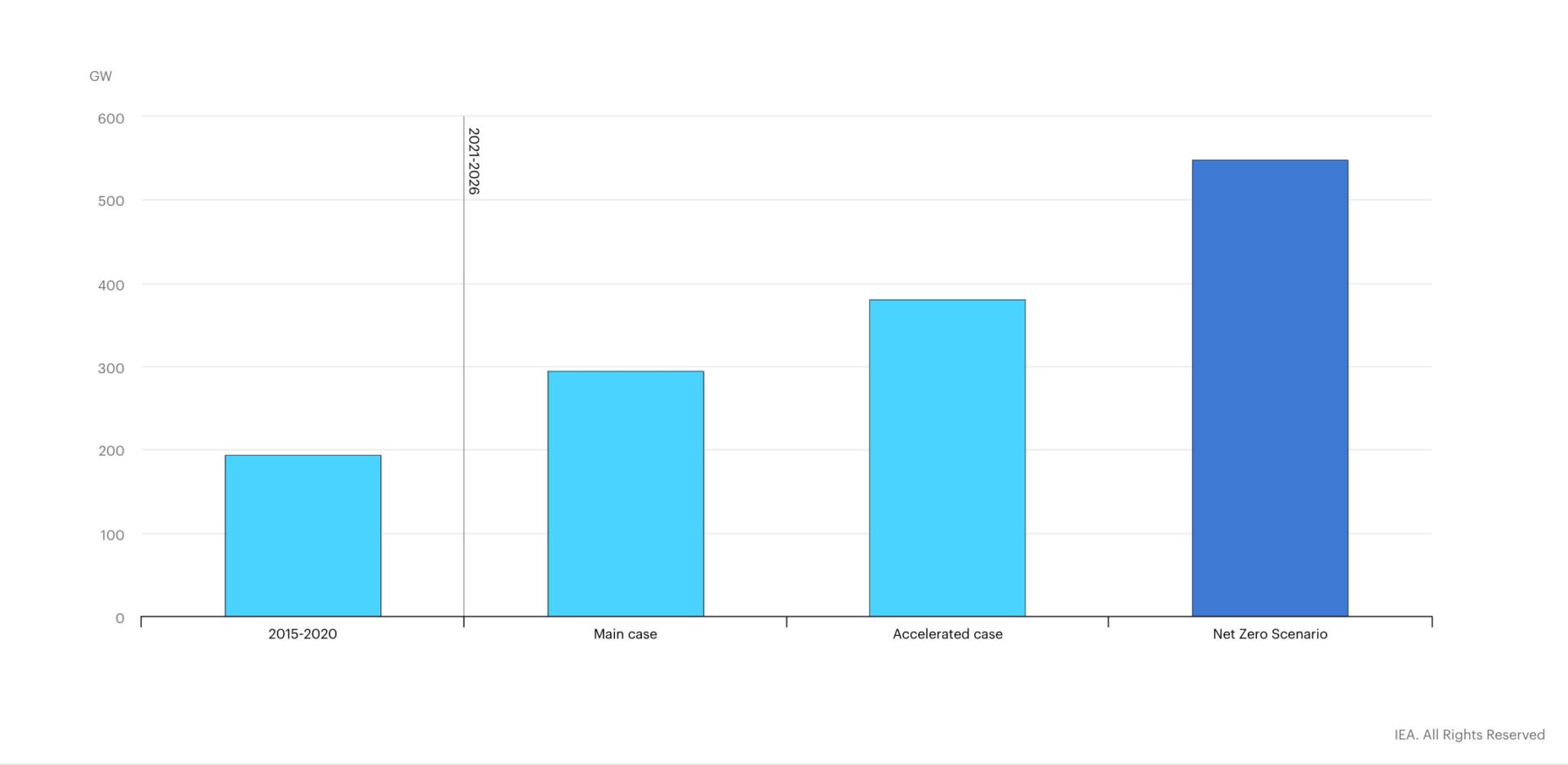
Countries around the world are making some meaningful inroads and investments in renewable energy, but even the best-estimated cases fall far short of the capacity needed for a net zero scenario. The IEA expects 294 gigawatts of average annual renewable capacity additions between 2021 and 2026.
That figure jumps up to 381 gigawatts in its “accelerated” case, which would occur if major policy and regulatory challenges were addressed in the next year or two. But even that still falls below the 548 gigawatts of annual average capacity additions needed for the world to be on track for a world that reaches net zero emissions by 2050. That goal is what’s needed to have a decent shot at limiting global warming to 1.5 degrees Celsius (2.7 degrees Fahrenheit), a target policymakers have deemed a relatively safe level of heating.
A big part of reaching that goal isn’t just installing more renewables; it’s also ending fossil fuel use. Another report from the IEA released this year shows that new oil and gas exploration need to stop at the end of this year (yes, in four weeks) to maintain a reasonable shot at net zero by 2050. And on that front, there’s a lot of work to do.