Earth’s geosynchronous orbit (GEO) holds some of the most valuable satellites that carry out tasks for phones, television, and radio, as well as weather and environmental monitoring. As new research points out, these precious devices may be under threat from tiny pieces of space junk that have gone previously undetected until now.
A team of astronomers from the University of Warwick found faint fragments of space debris in geosynchronous orbit, which are at risk of colliding with satellites flying over Earth’s equator. The tiny fragments, measuring at only 2 inches (5 centimeters) big, have never been observed before.
A closer look
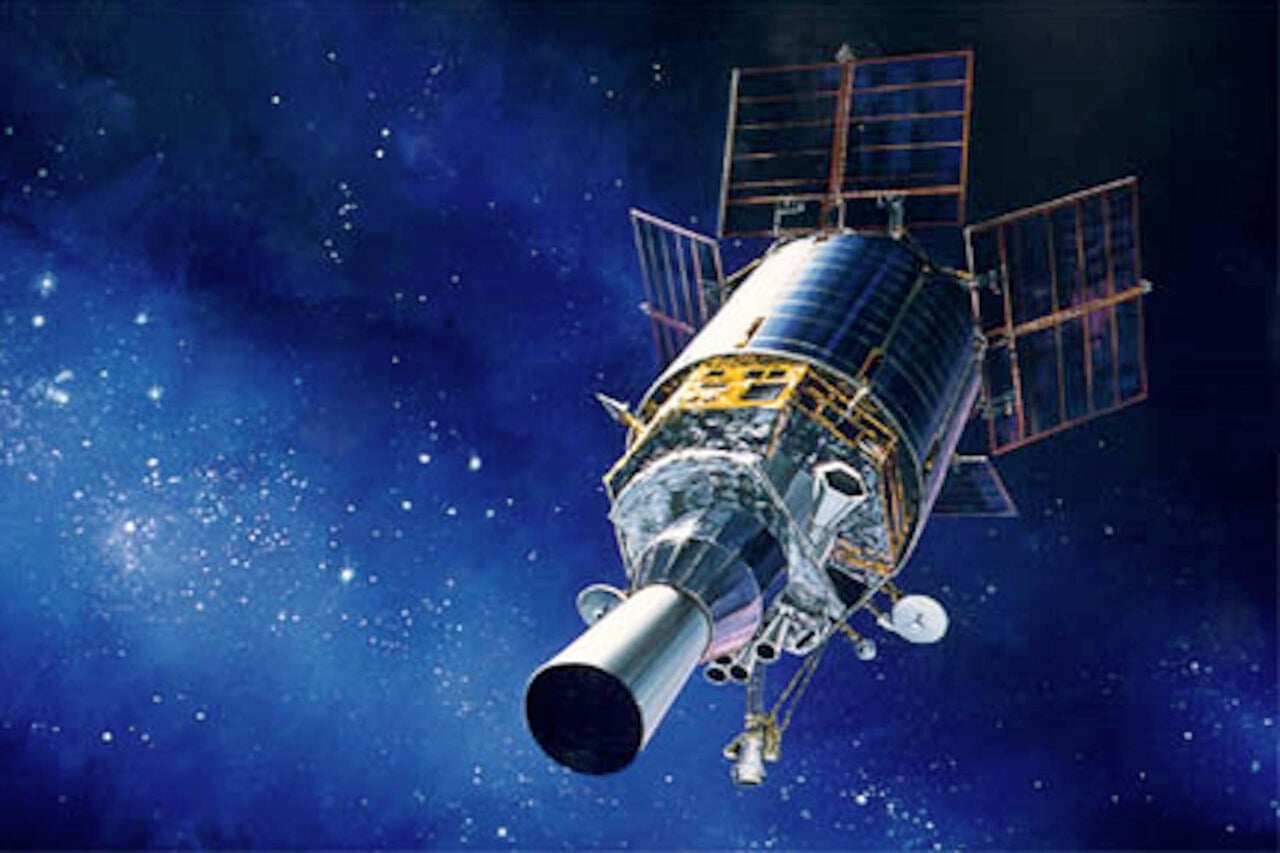
Satellites in geosynchronous orbit fly in sync with Earth’s rotation on its axis. The satellites are at a high altitude of approximately 22,236 miles (35,786 kilometers) above Earth’s equator, which allows them to keep pace with our planet.
Geosynchronous orbit is generally reserved for communication, weather monitoring, and navigation satellites. Due to their high altitude, GEO space junk is particularly hard to detect, and much of it has remained largely invisible.
In a new study published in the Journal of Astronautical Sciences, astronomers reexamined an archival dataset from a previous survey of debris in geosynchronous orbit using the Isaac Newton Telescope (INT) in La Palma, Canary Islands. By processing the images using newly developed algorithms, the team behind the study found 25 previously missed debris tracks.
“Debris in the neighborhood of the geostationary belt is particularly concerning,” James Blake, research fellow at Warwick’s Centre for Space Domain Awareness and lead author of the study, said in a statement. “It’s very far away, well above the Earth’s atmosphere, so small objects tend to be incredibly faint and difficult to detect, and any debris that’s generated will stick around indefinitely.”
Size does matter
Nearly 80% of the faint objects found in the study were generated by previously undocumented incidents, which highlights the need for a more thorough survey of GEO debris.
“The debris in geosynchronous orbit is a potential minefield,” Stuart Eves, space consultant at SJE Space Ltd. and co-author of the study, said in a statement. “No-one in their right mind would enter a terrestrial minefield without a mine detector. Similarly, no-one in their right mind should launch a satellite to GEO without an adequate debris survey.”
The team behind the new study was able to detect the tiny space debris using a blind stacking technique. This new method has the potential to improve the sensitivity limit of observational datasets to detect faint objects in space, according to the researchers.
“It involves testing many potential paths in an image sequence along which hidden targets might be moving and stacking the images to help bring those targets above the noise floor,” Ben Cooke, research fellow at the University of Warwick and co-author of the study, said in a statement. “This project shows a successful, real-world application of the method—any dataset containing linearly moving targets is an applicable use-case.”
The team is now hoping to broaden its search for faint objects in geosynchronous orbit using different telescopes to get a better sense of how much debris is out there.
“Pieces of space junk can be moving very quickly relative to one another, as much as several kilometres every second,” Blake said. “The energies involved are really high, and even small debris can cause a lot of damage to very expensive satellites, so small things really matter.”