Compaq Research Personal Jukebox PJB-100
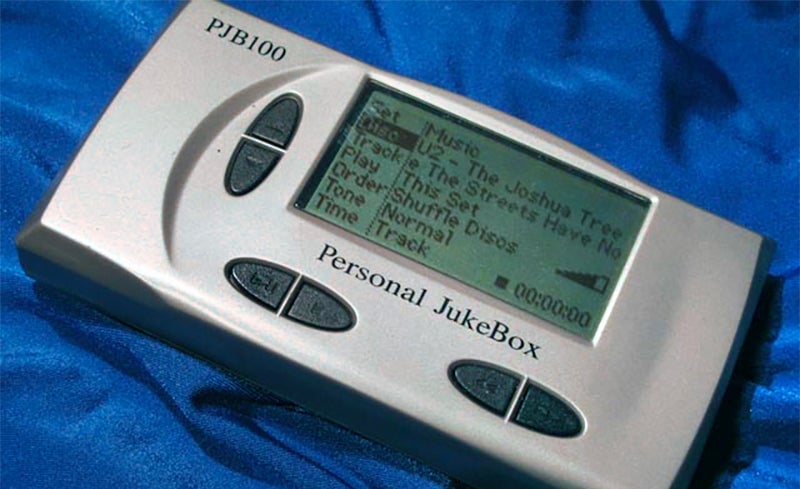
If you’re wondering how music fans survived on just 32MB of storage in an MP3 player in 1998, you’re not alone. Limited capacities were a big issue with the earliest MP3 players, but that would be solved in 1999 when Compaq Research and the Palo Alto Advanced Development group designed and developed the Personal Jukebox PJB-100. This player traded expensive flash memory for a 2.5-inch laptop hard drive with a capacity of 4.86GB.
The PJB-100, licensed to and sold by South Korea’s HanGo Electronics, could hold around 100 CDs worth of music (1,200+ songs) and transferred music from a PC using the newer USB port interface instead of parallel port, which would have taken ages to move across a large MP3 collection. It was by no means a tiny MP3 player, but it featured a generously sized screen for the time, and its rechargeable battery was boosted through 12MB of DRAM, which allowed about 12 minutes of music to be cached so the player’s hard drive could be engaged less often.