A Dragonfly on Saturn moon’s Titan

As NASA’s Ingenuity helicopter has successfully demonstrated on Mars, it’s possible for us to fly aircraft on other worlds. The next important phase in this capability is Dragonfly—a rotorcraft that’s set to arrive on Saturn’s moon Titan in 2034. Over the duration of its planned 2.7-year mission, NASA’s Dragonfly will explore Titan’s sand dunes, study the moon’s complex weather and atmosphere, and hunt for signs of prebiotic chemical processes. Dragonfly is expected to launch in 2027.
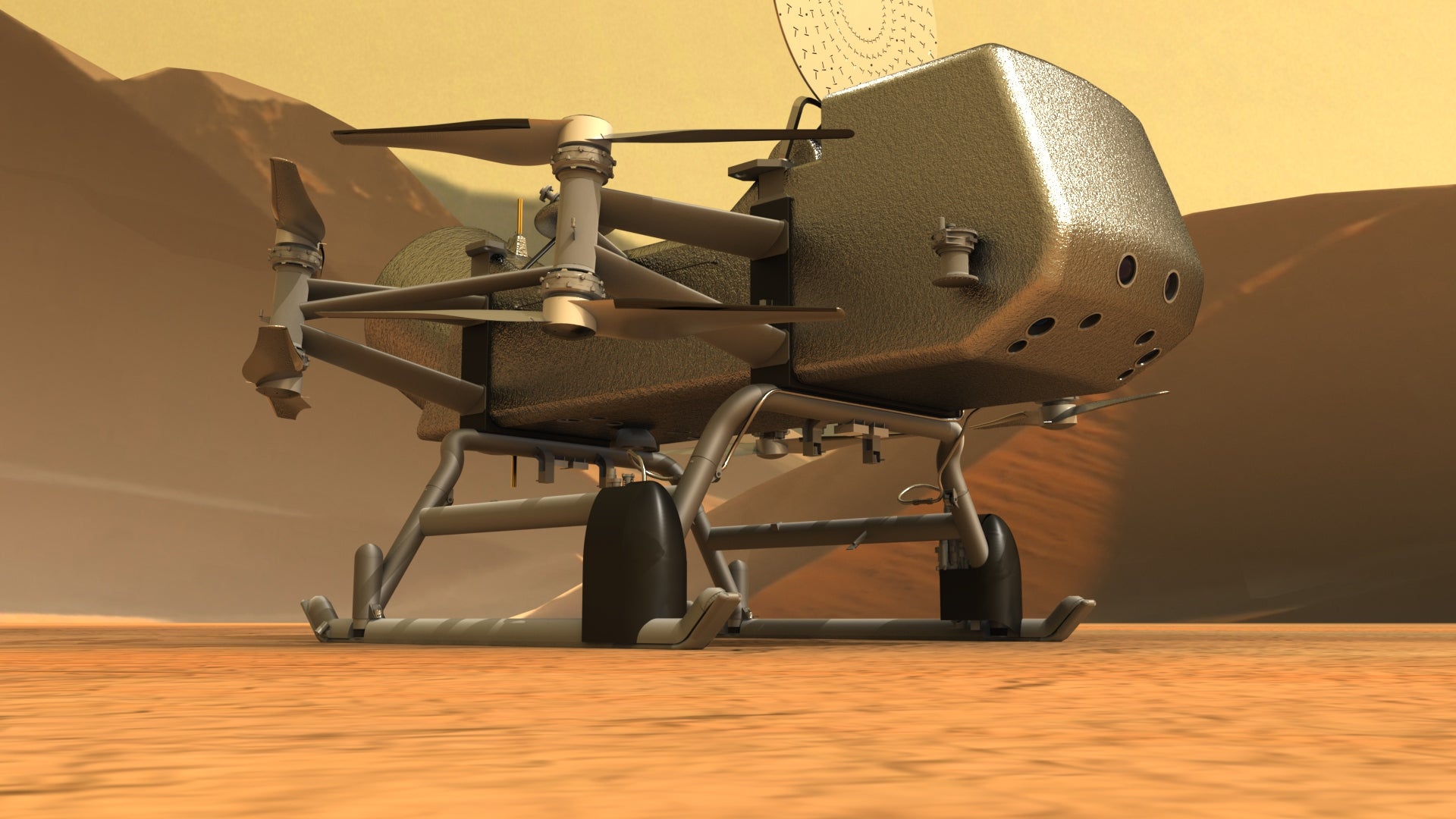
The dual-quadrotor drone will have no difficulties flying through Titan’s thick atmosphere, but it will have to endure temperatures as low as -300 degrees Fahrenheit. Should all go well, Dragonfly will perform around 25 flights and fly a total distance of roughly 110 miles (180 kilometers). Personally, I can’t wait for high-resolution images of Titan’s methane lakes.