End Notes
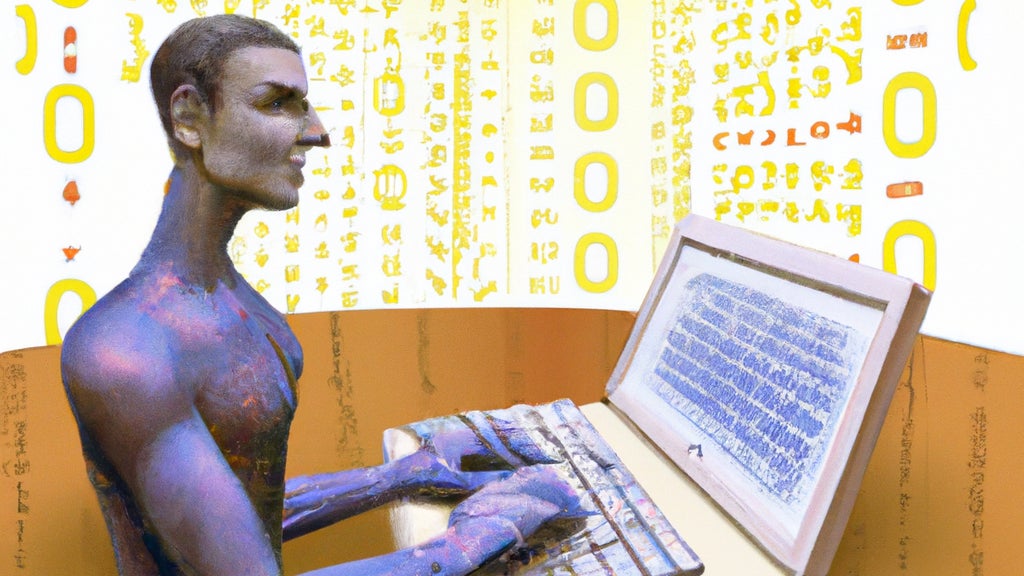
So there you have it, folks—a science fiction story written by a robot. Before you leave your glowing reviews in the comment section (as Gizmodo readers are wont to do), allow me to provide a little bit more context on how the story was actually constructed.
The original prompt was: “Write a story in the style of H.P. Lovecraft. Tell the story of an ambitious young tech entrepreneur named Sam who hopes to enrich himself by inventing a groundbreaking artificial intelligence program. However, things don’t go according to plan and the story takes a dark turn.”
From this, ChatGPT came up with the idea that Sam would (somehow) awaken an ancient and demonic spirit that would threaten to take over the world. It also came up with a lot of the story’s minor details. The name of the evil spirit, Xalathotep, was a ChatGPT creation, as was the name of Sam’s invention, the “Mind Bridge,” and the location of Sam’s remote hideout (Silverton, Colorado). Meanwhile, I came up with the story’s basic narrative arc (Sam causes mayhem, goes into hiding, and returns to face the monster he has unleashed) as well as its dumbest plot twists (the drone attack, hacking the SFPD, Sam’s gymnastics/kung-fu skills learned from YouTube, and his decision to become a lounge singer at the end of the story). With the exception of the previously mentioned sentence, the prose was all a creation of the chatbot. Admittedly, that prose isn’t great, but it’s also not that bad, either. It reminds me of a high-schooler’s attempts at fiction writing.
As easy as robo-writing might sound, it should also be noted that using ChatGPT to write this story wasn’t altogether straight forward. For one thing, the robot kept freezing, which would cause it to forget where we were in the story. I would then have to restart my conversation with it, prompting it to remember what had happened so far. As a result, a lot of the material for “Evil” was created via a diverse series of prompts, then broadly synthesized by me. I would move paragraphs around for coherency’s sake but refrained from making major changes to the words. This was a frustrating and time-consuming process but, admittedly, it still took less time than it would have for me to write my own 3,000 word story.
One other note: we didn’t have that much time to put this together. In the course of several hours, I stumbled through a series of prompts, getting the chatbot to meander awkwardly from one plot point to the next. If we had more “pre-production” time, so to speak—to conceptualize the story and plan how to communicate with the chatbot—I believe it could have been turned out slightly better. That said, it’s still shockingly cogent for a story written by a computer program. And who knows where this tech will be in several years? Automated fiction writing might actually be a thing.