AMD doesn’t have to do much to stay on the top of the heap for PC gaming CPUs. The class-leading Ryzen 7 9850X3D doesn’t have any real competition. So what does Team Red do instead? Reconfigure its much-touted 3D cache, double it, and shove it onto a “developer and creator” CPU instead. Now, devs can make your games with even more on-chip memory than they can use to play those games.
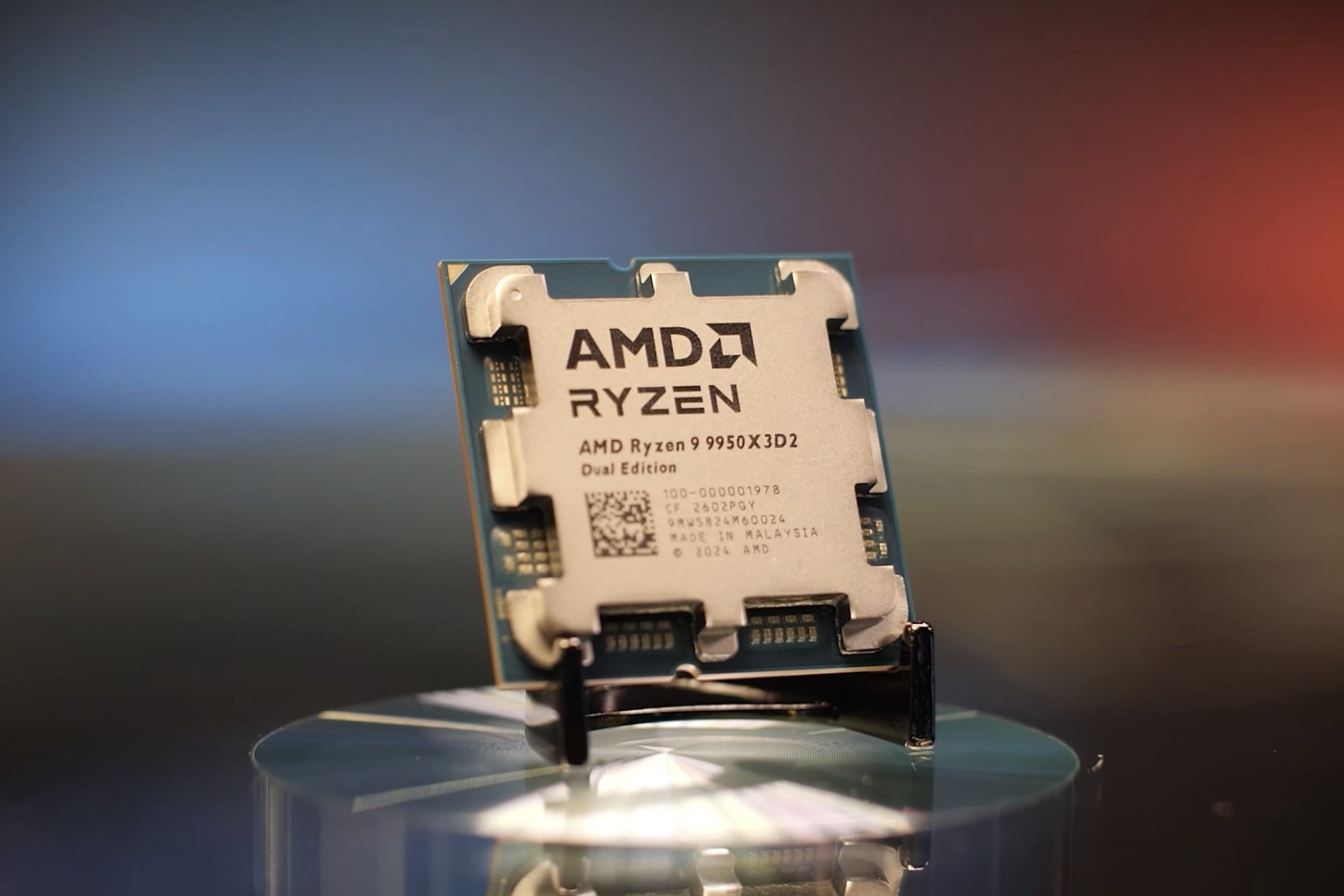
So now we have to figure out where the AMD Ryzen 9 9950X3D2 Dual Edition fits into AMD’s current desktop silicon lexicon. We heard rumors of the supposed doubled-up 3D cache last year. AMD’s head of computing and graphics, Jack Huynh, described how it built the chip so “you no longer have to choose between a gaming or creator CPU.” The new chip now features 3D cache across two core complex dies (CCDs) instead of just one.
This chip is still the same 16-core, 32-thread configuration of the previous top-end Ryzen 9 9950X3D. That silicon was built for “creators who demand elite gaming performance as well.” The Dual Edition chip sports 208MB across the chip die compared to 144MB from before.
It now carries a TDP, or total design power, of 200W. This makes this chip demand more juice than any of AMD’s current CPU slate. Despite that, the new chip’s frequency is turned down a smidge. It now hits a 5.6GHz boost clock compared to 5.7GHz on the 9950X3D.
What is AMD’s extra 3D cache actually doing?

AMD’s 3D cache is a relatively simple concept. The company stacks layers of its cache directly on top of the CPU die. This allows the chip to access more memory faster, leading to better performance from applications that benefit from having even faster access to that memory. Previously, it was mostly games. Now, AMD supposes creative types could also make use of the extra memory. AMD’s documents claim the new Ryzen 9 9950X3D2 chip may boost speeds by a modest amount—between 7% and 13%—when doing tasks like rendering 3D graphics or compiling in Unreal Engine.
The Ryzen 9 9950X3D contained 144MB of cache. To put it in perspective, the AMD Ryzen 7 9800X3D contains 104MB of cache. Even with twice the memory, it’s unclear how much this results in better performance across non-creative apps. The Ryzen 7 is an 8-core, 16-thread CPU, but despite thread counts, the reason why it was perfect for gaming was because of the faster access to memory. There may be a point of diminishing returns, even with today’s most demanding games.
What’s more, we still don’t know how much it will cost. The Ryzen 9 9950X3D CPU costs $700. That’s even more than the Ryzen 7 9850X3D at $500. All the extra on-die memory usually mandates a higher price point. The Ryzen 9 9950X3D2 Dual Edition is set to launch on April 22, so we’ll likely know more before then.
Intel’s recent answer to AMD’s gaming chip dominance came in the form of midrange CPUs. The Core Ultra 200S Plus series was built to offer Intel’s best performance for gaming ever. A $300 Arrow Lake CPU still isn’t going to beat AMD’s $500 X3D processor. Intel confirmed with German outlet PC Games Hardware it’s not making any kind of high-end Core Ultra 9 290K Plus to compete again at high-end CPUs. We are still likely a whole generation away from the next big thing.