The question of life’s origins is a chicken-and-egg problem that is perhaps best explained by the ribosome. These tiny intercellular structures translate genes into proteins, a process essential to life. And yet, ribosomes themselves are made of proteins and RNA. So which came first, the ribosomes that make proteins, or the proteins that make ribosomes?
In the early 1960s, the RNA world hypothesis emerged as an answer to this question. RNA is the single-stranded cousin of DNA, the molecule that contains the genetic information for cellular biology. Often called the “workhorse molecule” of cells, RNA can take three different forms to serve three different functions. Messenger RNA (mRNA) carries genetic instructions from DNA to protein-making ribosomes, ribosomal RNA (rRNA) helps make the ribosomes themselves, and transfer RNA (tRNA) synthesizes proteins from mRNA.
The RNA world hypothesis suggests that life on Earth began with self-replicating RNA molecules. After all, RNA is much simpler than DNA, so it makes sense that it would appear first. In this scenario, the first single-celled lifeforms would have used RNA to both store genetic information and create other molecules. Today, cells split these tasks between DNA and RNA.
But when, exactly, did the RNA world emerge? If this was truly the starting point for life, answering that question is key to understanding our origins—and whether life could arise in a similar way on other planets. A study published today in the journal Nature Communications suggests that conditions became optimal for an RNA world about 4.33 billion years ago, offering a more precise timeline for the origin of life.
Life springs from chaos
Early Earth was a violent place. Our young planet was constantly bombarded by asteroids and other debris from planet formation, and these impacts superheated its surface. This rendered Earth inhospitable to prebiotic chemistry, the chemical reactions that give way to life. For the RNA world to emerge, the deluge of space rocks needed to slow enough for the planet to cool.
To figure out when that transition might have occurred, researchers led by Oleg Abramov, a senior scientist at the Planetary Science Institute in Tucson, Arizona, used a three-dimensional computer model to simulate the thermal effects of impacts on Earth’s crust between 4.5 billion and 3.5 billion years ago.
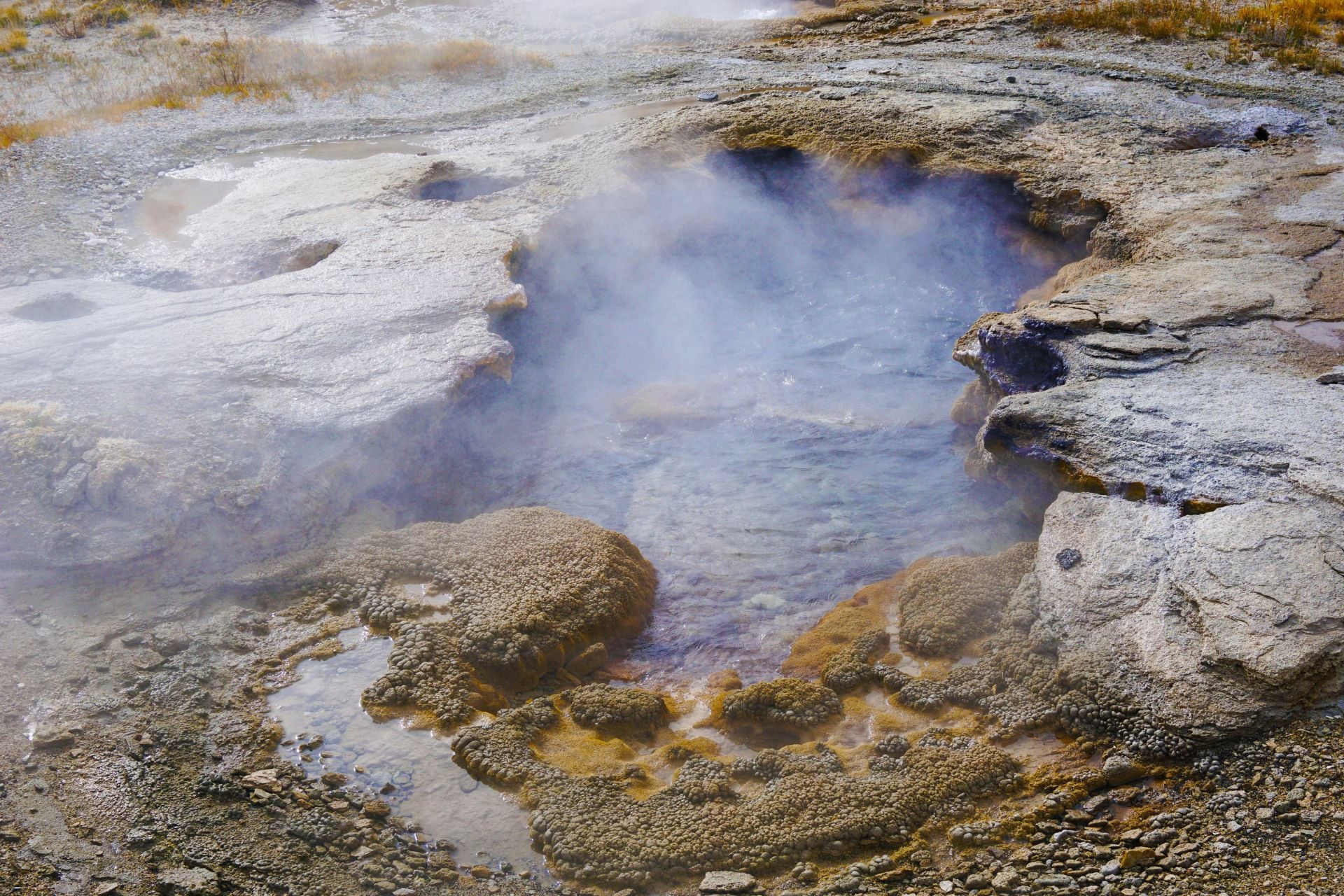
“We used a different approach than previous studies, which were based on geochemical modeling, biomolecular analyses, and models of early atmospheric chemistry,” Abramov told Gizmodo in an email. “We examined both detrimental effects of impacts, such as temperature-induced degradation of key biomolecules, and effects conducive to life, such as generation of hydrothermal systems.”
The model simulated temperatures in the upper crust alongside the thermal stability limits of RNA and other life-giving molecules. The analysis revealed that Earth’s temperature likely became suitable for the RNA world between 4.4 billion and 4.3 billion years ago, with optimal conditions arising around 4.33 billion years ago.
However, this estimate assumes that other necessary environmental conditions were already in place. “RNA chemistry still needs liquid water, reduced nitrogen and other key elements, and a way to concentrate them,” Abramov explained. “Local chemistry also matters: pH, salinity, water activity, mineral surfaces, and whether the setting is a subaerial wet-dry aquifer or a hydrothermal system.”
The model does not account for those variables, and RNA chemistry could still have failed in a thermally favorable crust if any one of these conditions was not present. The study therefore narrows the timeline for the emergence of life on Earth but does not pinpoint exactly when the first RNA lifeforms could have appeared.
The search for life on other words
Geological evidence could help validate this estimated timeline. According to Abramov, his team’s prediction is already consistent with evidence from zircon crystals showing that liquid water was present on Earth by about 4.4 billion years ago.
Researchers could look for other clues in samples of Earth’s mantle, or more zircon crystals that serve as records of water, reduction-oxidation reactions, or mineral changes that arise from interactions with fluids at relatively low temperatures. More dated lunar samples could also help constrain the impact environment of early Earth, Abramov said.
As scientists hone in on the beginning of Earth’s habitability window, he hopes this work will help answer questions about the habitability of other planets, such as Mars.
“One intriguing question is the timing of the habitability window on Mars, which likely opened significantly earlier than on Earth due to Mars’ smaller size and lower average impact velocity,” Abramov said. “That is a parallel habitability question, not evidence that life began on Mars or was transferred to Earth, although that remains an intriguing possibility.”