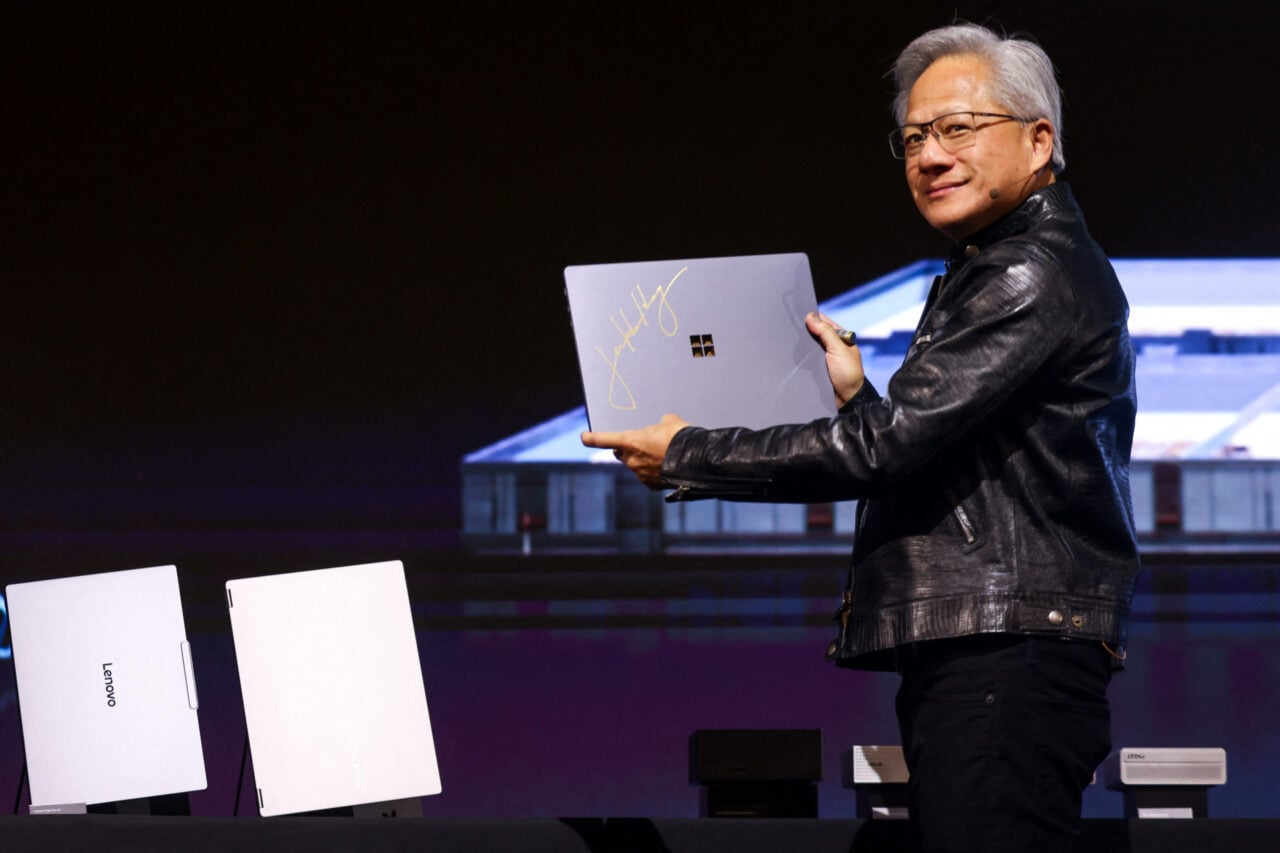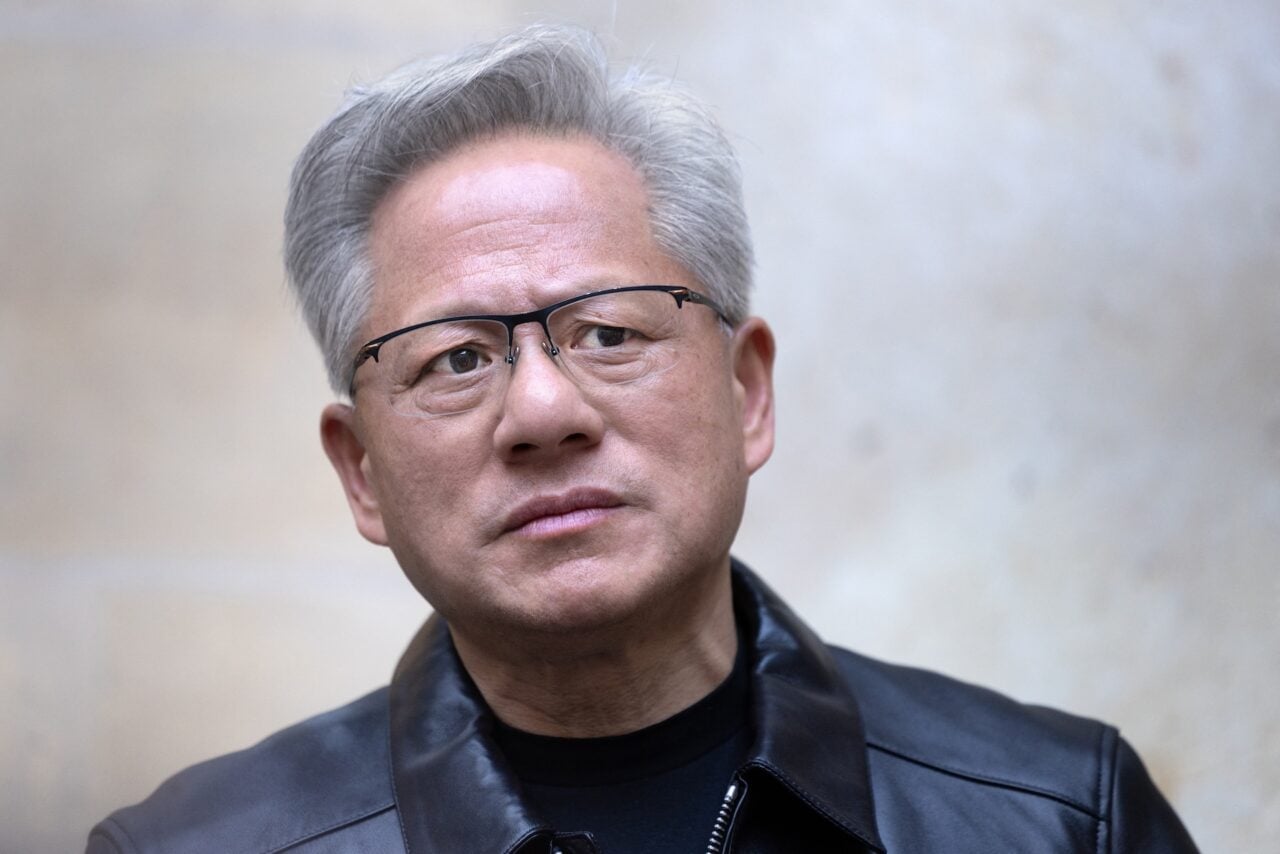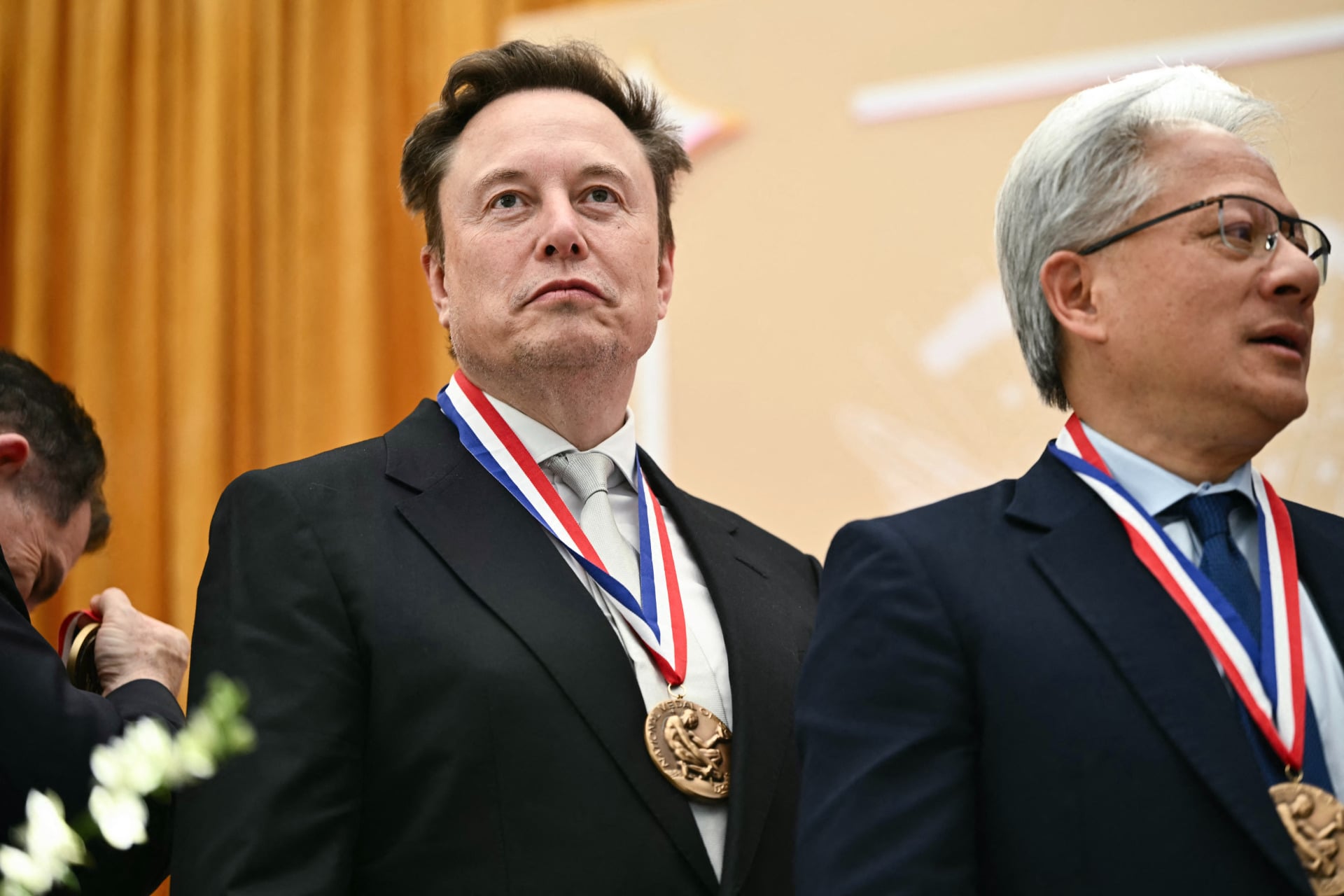
Disgraced former Nvidia CEO Jensen Huang may not have to be in the wilderness for long. Fellow international conflict-of-interest haver and alleged affair enjoyer Elon Musk said on Twitter that it “would be an honor” to hire Huang, though he didn’t specify which of his companies might take him.
Now, is it actually likely that Huang ends up at SpaceX? Probably not. The guy is still worth about $150 billion, so it’s not like he’s living paycheck to paycheck and needs to get back to work. Plus, he’s probably due to put some time in at home, assuming the locks haven’t been changed on him yet.
But Musk’s expression of interest does reveal him as a representative of a not-insignificant part of the tech world who have decided that if you build a company profitable enough, it’s okay to have a little extramarital entanglement with a woman suspected of being an intelligence asset of an adversarial country and maybe kinda help thwart US export restrictions and facilitate the alleged smuggling of billions of dollars worth of hardware to blacklisted firms as a treat.
That would be an honor
— Elon Musk (@elonmusk) November 12, 2026
The sentiment is all over Tech Twitter, where it’s become a common refrain to say that Huang just “made a mistake,” or that an affair is a “moral failing but not a business one,” apparently ignoring that one of the affairs was with an executive at a firm that allegedly smuggled Nvidia chips (and, again, a spy!) and the other was a subordinate.
But even allowing for the position that his personal sins don’t affect his abilities as an executive (except the affairs were directly related to him being an executive, but whatever), it ignores the possibility that actual, maybe literal crimes took place. The now-infamous Culper Research report, published by a firm shorting Nvidia’s stock, alleged that more than 20% of Nvidia’s fiscal 2026 compute revenue was driven by Chinese demand through schemes to illegally divert the company’s chips.
Musk, by saying it’d be an honor to hire Huang while, as best we know, not actually extending a job offer, gets to virtue signal to all those who have decided to stake out the position that being incredibly wealthy is a get out of jail free card.
And there’s no real question why Musk is drawn to that belief, given that he’s currently the richest man on Earth and is apparently Teflon to the concept of accountability. Documentarian Alex Gibney recently put together a four-hour documentary laying out Musk’s many controversies—from misleading the public about the capabilities of Tesla Self-Driving and the functionality of his Optimus humanoid robots to the bizarre and not-always-on-the-level pursuit of a legion of children with as many women as he can put on his payroll—and it barely even scratches the surface of some of the headlines that the guy has generated over the years.
One of those headlines that is relevant to Musk’s apparent willingness to look past Huang’s conduct is back in the news: A federal appeals court ruled on Tuesday that a sexual harassment and retaliation lawsuit brought by former SpaceX employees can proceed in court rather than being forced into private arbitration. The case comes from eight former employees who were fired after circulating a letter calling on SpaceX to condemn Musk following a report that Musk allegedly exposed himself to a SpaceX flight attendant and offered to buy her a horse in exchange for sex.
At the time, according to the New York Times, those employees were allegedly told by management, “SpaceX is Elon and Elon is SpaceX.” That certainly still seems to be the case, as none of the behavior the CEO has exhibited in the four years since that incident has done any meaningful damage to him or his company. SpaceX went on to have the largest IPO in history. The stock is currently climbing following Huang’s ouster at Nvidia, in part because people are shifting their bets to the next safest big player in the AI sector (even though they don’t really do the same thing at all).
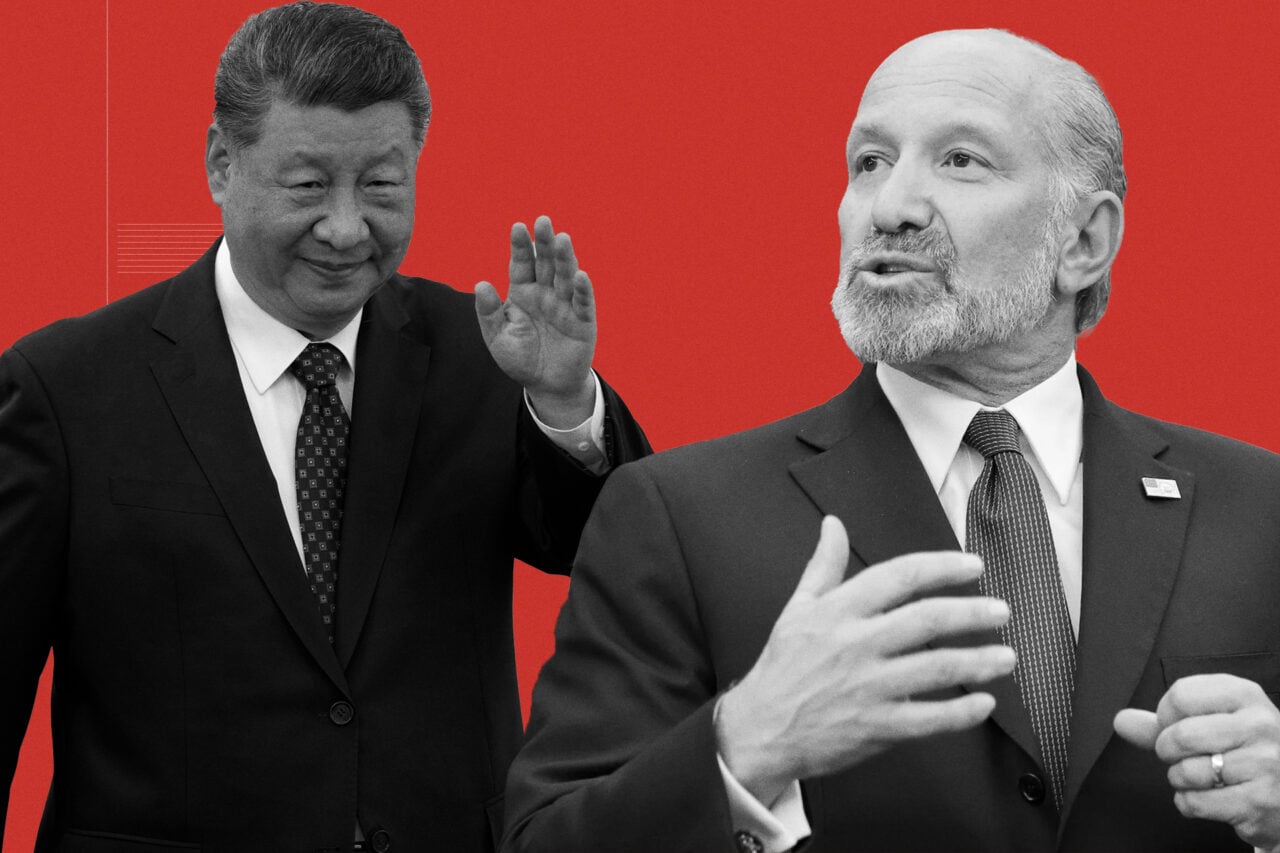
What does make Musk’s embrace of Huang odd on paper is the fact that he seemed to be on the opposite side of the aisle when it came to dealing with China. Huang publicly supported loosening restrictions on chip sales to China and became more vocal about it over the past few years, while Musk reportedly sided with China hawks inside the Trump administration to support new restrictions on companies suspected of diverting advanced Nvidia chips to China, according to Axios.
But if there’s anyone who understands strange foreign relationships and seemingly contradictory interests, it’s Musk. He’s the same guy who said he probably wouldn’t take money from Saudi Arabia, then welcomed Saudi prince Alwaleed bin Talal as an investor in his Twitter takeover and accepted a $3 billion investment from Saudi Arabia’s state-backed AI firm for xAI. He’s also allegedly maintained contact with Russian President Vladimir Putin while providing Starlink internet to Ukraine as it fought back a Russian invasion—though he’s recently reportedly throttled Ukraine’s network without warning, to devastating effect for the nation’s defense efforts.

He’s also allegedly maintained contact with Russian President Vladimir Putin while providing Starlink internet to Ukraine as it fought back a Russian invasion. And the Wall Street Journal recently reported that Musk personally ordered restrictions on Ukraine’s military satellite network, disrupting its defense efforts. Those restrictions have reportedly returned this week, though it’s unclear who ordered the latest disruption.
Up until this week, most would have assumed that Huang was in the camp of guys like Musk who are viewed as so integral to their company that there is no sin too great to forgive, and shareholder value will always weigh heavier on the perverse scale of corporate “justice.” As it turns out, Musk might stand alone there.