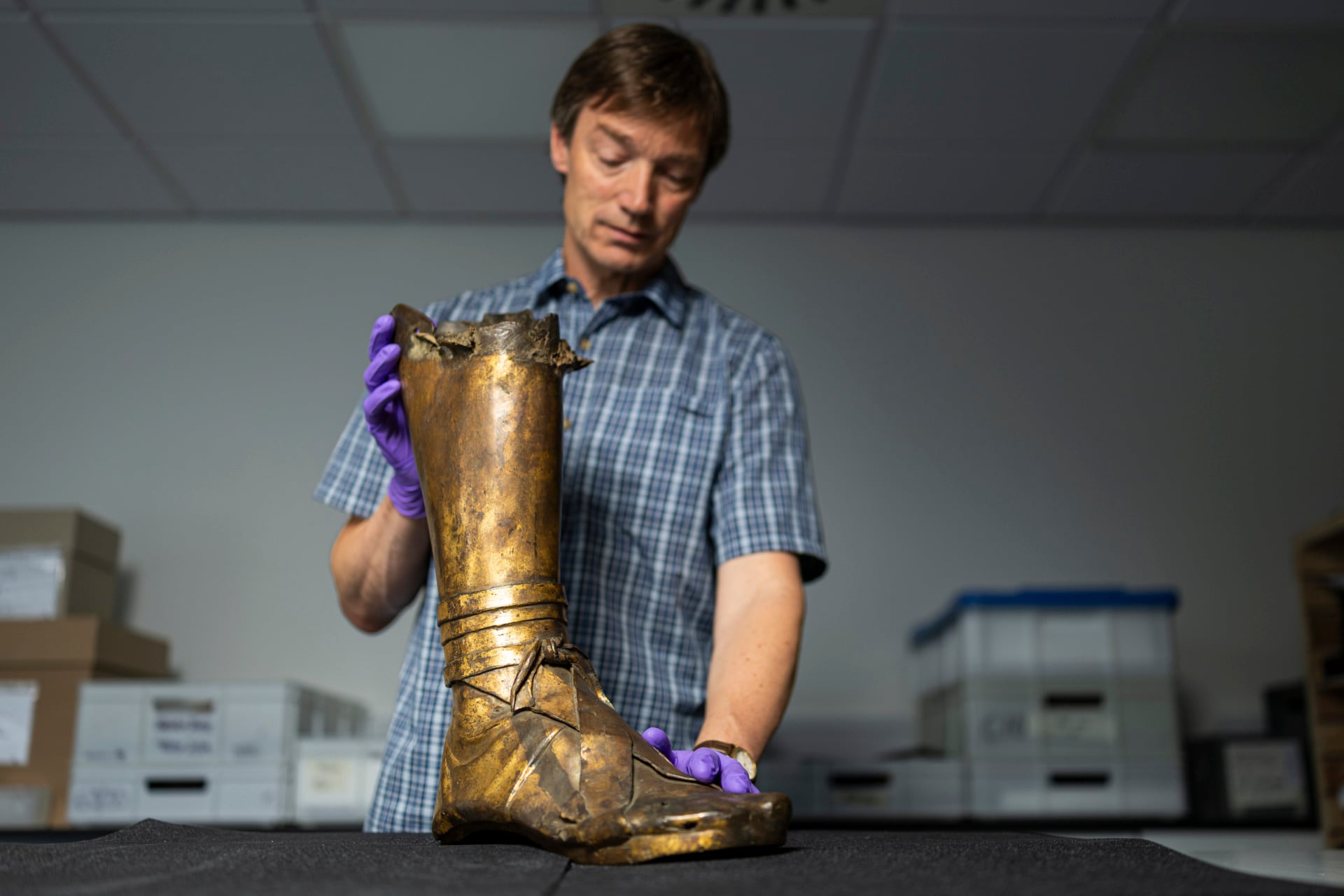
In 1820, a larger-than-life bronze boot was pulled from a Scottish bog. For centuries, experts assumed it was looted from a Roman settlement, perhaps as an odd spoil of war. But a new analysis challenges that theory, suggesting that Rome’s own soldiers deliberately dismantled the statue.
In a recent statement, National Museums Scotland announced that its team had reconstructed the full statue that once included the boot known as the Milsington Leg. During a closer analysis of the boot and other statue fragments from the Roman frontier, the researchers realized the leg appeared to have been carefully removed, not “brutally hacked off,” the museum explained. Taking into account known records of Rome’s conquest of Scotland, the team now believes the statue depicted Antoninus Pius on horseback, and the leg was removed by the Romans as they retreated from southern Scotland in the CE 160s or 180s.
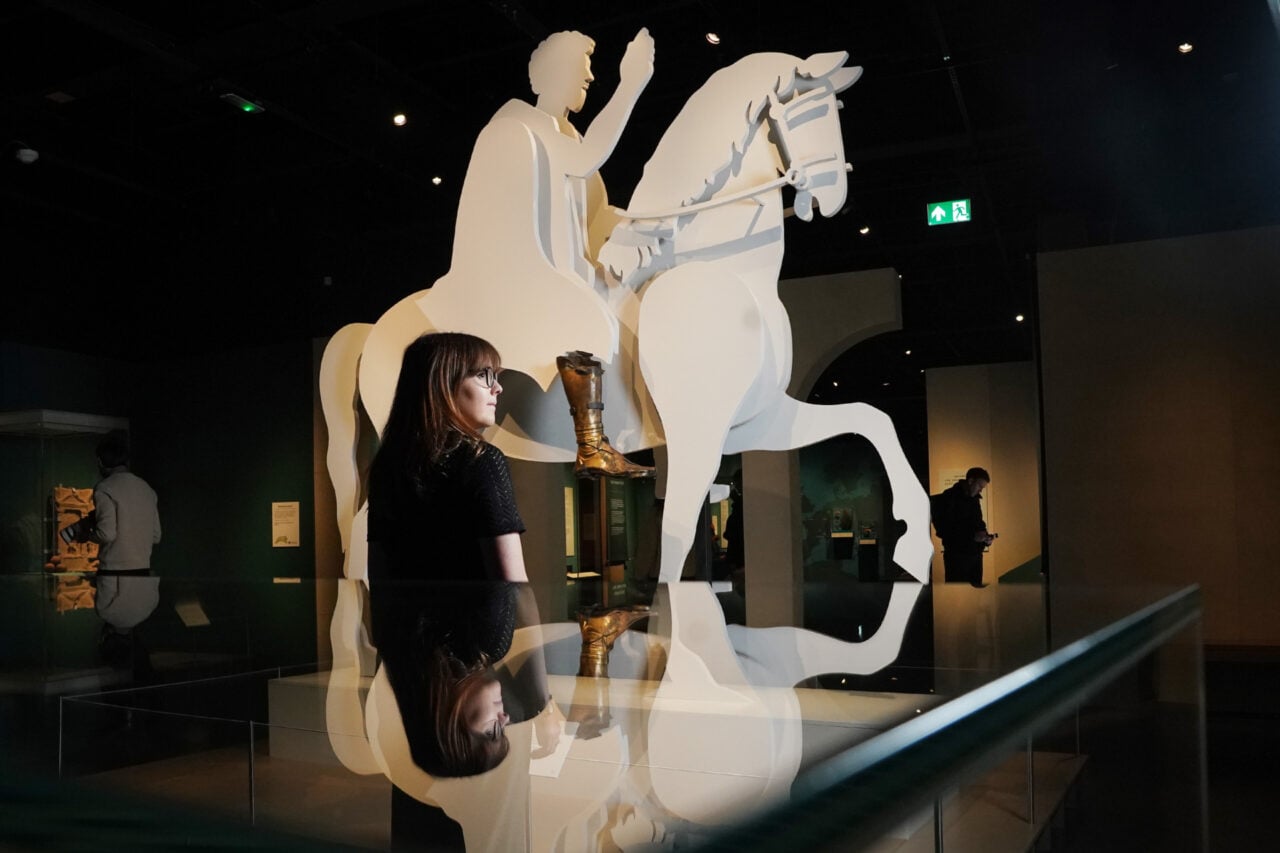
“This really turns on its head our understanding of Rome’s second attempt at conquering Scotland,” Fraser Hunter, the museum’s principal curator of prehistoric and Roman archaeology, said in the statement. “But it begs the question … where is the rest of the statue?”
Statues for an emperor
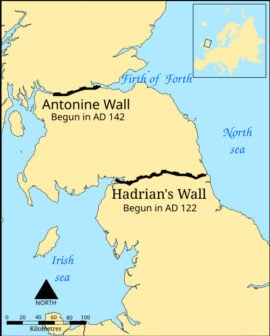
Antoninus Pius was the successor to Hadrian, who commissioned the famous eponymous wall symbolic of the Roman Empire’s conquest of what is now the United Kingdom. Antoninus was reportedly less militarily inclined than Hadrian, and his invasion of Scotland in the mid-2nd century CE may have been his attempt to “consolidate his position as emperor.”
And as part of his campaign, Antoninus ordered his own wall—the Antonine Wall—which extended the Roman frontiers roughly 100 miles north of Hadrian’s Wall and into Scotland. The museum team believes that the boot once belonged to a statue that was erected around this time, likely to commemorate Rome’s conquest of southern Scotland. The researchers used a surviving equestrian statue of Antoninus’s successor, Marcus Aurelius, as a comparison.
“This was a big deal for the Emperor, something which was worth celebrating,” Hunter explained. “It offers us a tantalizing glimpse into the kind of grand monuments which once stood in southern Scotland and shows the importance [Antoninus] Pius placed on his victories in Scotland.”
There’s a boot in my bog
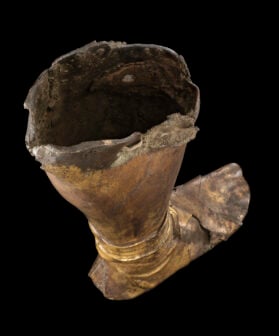
Earlier analyses dated the bronze boot to around 140 CE. Meanwhile, the Antonine Wall was abandoned shortly after Antoninus’s death in 161 CE. A closer examination of the top of the Milsington Leg by the museum team found no cut marks, and it remained “exactly as it was cast,” the researchers said. Specifically, lumps of metal at the top of the leg would have filled in the folds of a tunic or cloak and attached it to the leg.
There were noticeable differences between known examples of statues getting deliberately chopped up for scraps or to condemn an emperor’s memory, they explained. Similar instances of deliberate removals, not destructions, and burials of the relics of the Antonine conquests have been found elsewhere in Roman Scotland, they added.
As for why and how this boot ended up in the bog, experts aren’t sure yet, according to the Trimontium Museum’s description of the Milsington Leg. But the latest investigation did give the team enough pointers to restore the statue in its full glory.
And if you’re nearby, you can check it out—along with other cool relics from Roman Britain’s frontier—at the National Museum of Scotland in Edinburgh, from November 14, 2026 to April 18, 2027.