Pro Tools and the Birth of the Digital Audio Workstation
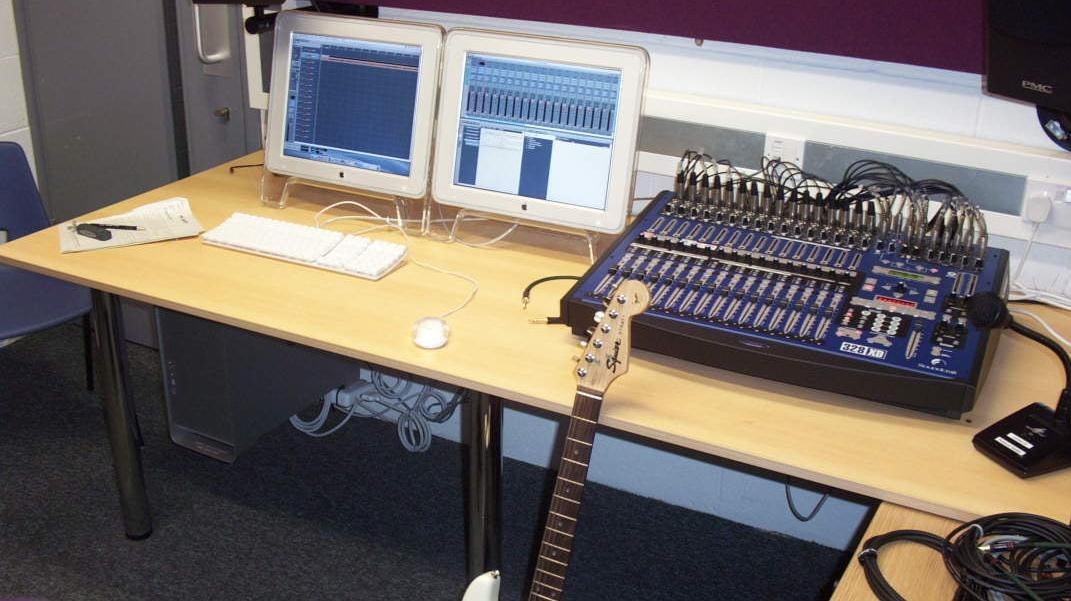
Possibly the single most crucial piece of technology responsible for transitioning music away from the limited confines of glitzy professional studios and towards everyday artists’ bedrooms was the introduction of the Digital Audio Workstation pioneered by Avid’s Pro Tools.
DAWs, now an industry standard and available in various forms (think GarageBand) to anyone with a laptop, essentially recreate a traditional studio’s tape machine, mixing console, outboard gear, and other parts of a recording studio, and jam them all into a software package. That gives artists and producers the ability to record numerous audio tracks and seamlessly pepper-in effects like reverb, limiters, compression, and EQ previously only really available to studio professionals. When used correctly, musicians can record, mix and master a song from start to finish by themselves in a DAW.
Though a plethora of alternative DAWs exists today, Pro Tools, a multi-track interface designed by a pair of U.C. Berkeley graduates and released in 1991, was the game changer. Originally designed for Macintosh computers, Pro Tools offered artists a four-channel interface with the promise of studio-quality audio all wrapped up in a slick digital interface. DAWs that are now accessible to mass audiences were originally intended for professionals and had a prohibitive $6,000 price point to match.
Like most new music tech, Pro Tools was originally written off by industry traditionalists for the early parts of the decade over fears it was less human or authentic than recording on tape in a traditional studio. That all started to change around halfway through the decade. Artists and producers were drawn to the software for its ease of use and speed for editing. Odelay, released by Beck in 1996 and Ricky Martin’s Livin’ La Vida Loca in 1999 were both reportedly recorded and produced entirely in Pro Tools and served as launching points for the industry, proving once and for all mainstream hit success could and would stem directly from DAWs.